The Federal Government, technology leaders and digital economy stakeholders have renewed calls for stronger indigenous innovation, digital infrastructure and responsible artificial intelligence (AI) development as the second edition of GITEX NIGERIA opened in Abuja.
The high-level event, which commenced on Monday, brought together senior government officials, international technology leaders, investors and other stakeholders for discussions on how Nigeria and the wider African continent can reduce dependence on foreign technology and build greater digital sovereignty.
Held under the patronage of President Bola Ahmed Tinubu, GITEX NIGERIA is taking place in Abuja and Lagos from August 31 to September 3, with the Abuja Government Leadership & AI Summit setting the tone for the opening day.
The event is supported by the Federal Ministry of Communications, Innovation and Digital Economy in collaboration with the National Information Technology Development Agency (NITDA), endorsed by the Lagos State Government and organised by KAOUN International.
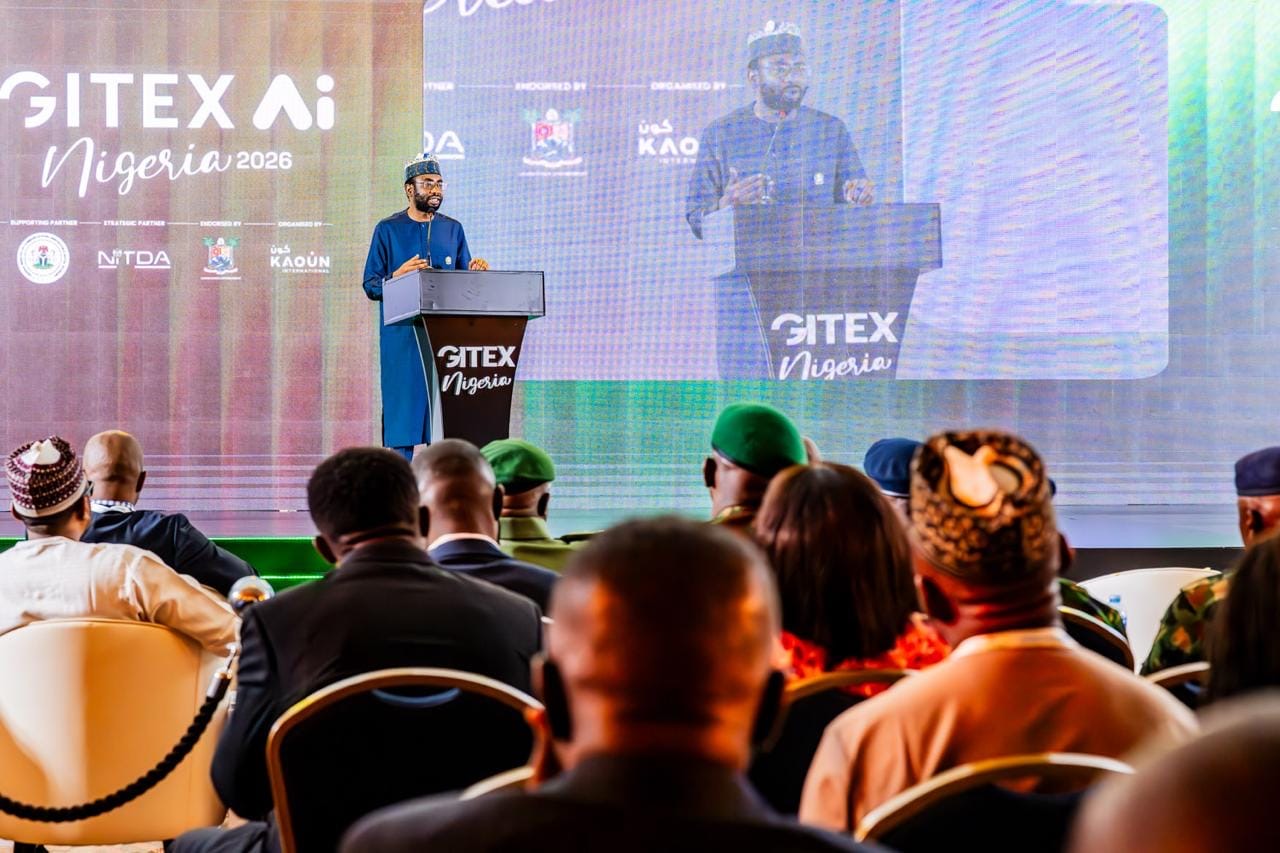
Speaking at the inauguration, NITDA Director-General, Kashifu Inuwa Abdullahi, said Nigeria was building the infrastructure, talent and regulatory frameworks required to achieve digital sovereignty and position the country as a major player in the global technology ecosystem.
Abdullahi highlighted government initiatives including DL4ALL, 3MTT and Project BRIDGE, saying they were helping to expand Nigeria’s technical talent pool and extend digital inclusion.
“Achieving true digital sovereignty means owning the capabilities, infrastructure, and intelligence that power our future,” he said.
He added that Nigeria was developing the policy and cloud infrastructure needed to host data locally, deploy AI responsibly and improve national productivity.
“GITEX NIGERIA positions our country as a global force shaping the international tech ecosystem, not just participating in it,” Abdullahi said.
Also speaking, Lagos State Governor Babajide Sanwo-Olu identified computing infrastructure and digital public services as major investment opportunities capable of accelerating Nigeria’s technology-driven economic growth.
Sanwo-Olu argued that Africa’s growing AI workloads presented an opportunity for Nigeria to develop more local computing capacity, noting that significant African AI workloads are currently processed outside the continent.
He said Lagos’ subsea cable capacity, fibre infrastructure, data-centre development and regulatory reforms positioned the state to attract investment into the continent’s emerging compute economy.
The governor also pointed to the digitalisation of government services in areas such as procurement, revenue, permitting, healthcare, transportation and land administration as opportunities for technology companies and investors.
At the Government Leadership & AI Summit, Secretary to the Government of the Federation, Senator George Akume said Nigeria must move beyond basic connectivity and build indigenous technological capabilities as part of the Federal Government’s ambition to transform the economy.
Akume said the country needed to transition from being a consumer of foreign technology to becoming a producer of technology talent, sovereign infrastructure and locally developed AI solutions.
“GITEX NIGERIA provides the strategic platform where government vision aligns with private sector execution,” he said.
The summit, held under the theme, “Beyond Connectivity, The Bridge to Sovereign AI & Innovation,” attracted more than 500 public- and private-sector leaders and investors from Nigeria, Africa and other parts of the world.
Discussions focused on digital public infrastructure, AI, cybersecurity, data sovereignty, connectivity, investment and strategic partnerships, with more than 25 international experts contributing to the sessions.
Participants also examined strategies for expanding backbone and last-mile connectivity through cables, satellites, edge infrastructure and blended finance, while another session considered ways of unlocking private capital for digital infrastructure across Africa.
The summit further explored the rapid expansion of e-government and digital interoperability on the continent, including opportunities created by digital identity, payment and data-exchange systems.
The GITEX NIGERIA programme moves to Lagos from September 2 to 3 for the Tech Expo, Future Economy Conference and FDX by GITEX, where startups and entrepreneurs will connect with investors, technology companies and international markets.
More than 200 investors from 30 countries, collectively managing about $200 billion in assets, are expected to participate in the Lagos programme.
The event is also building on investment relationships generated by the inaugural edition in 2025. Venture studio FirstFounders, for instance, connected with 18 startups during the 2025 event, while AI-powered business banking platform Vant subsequently secured a $200,000 investment from the firm.
The development underscores the growing emphasis on GITEX NIGERIA as a platform not only for technology exhibitions, but also for investment, innovation, partnerships and the broader push towards Africa’s digital sovereignty.