

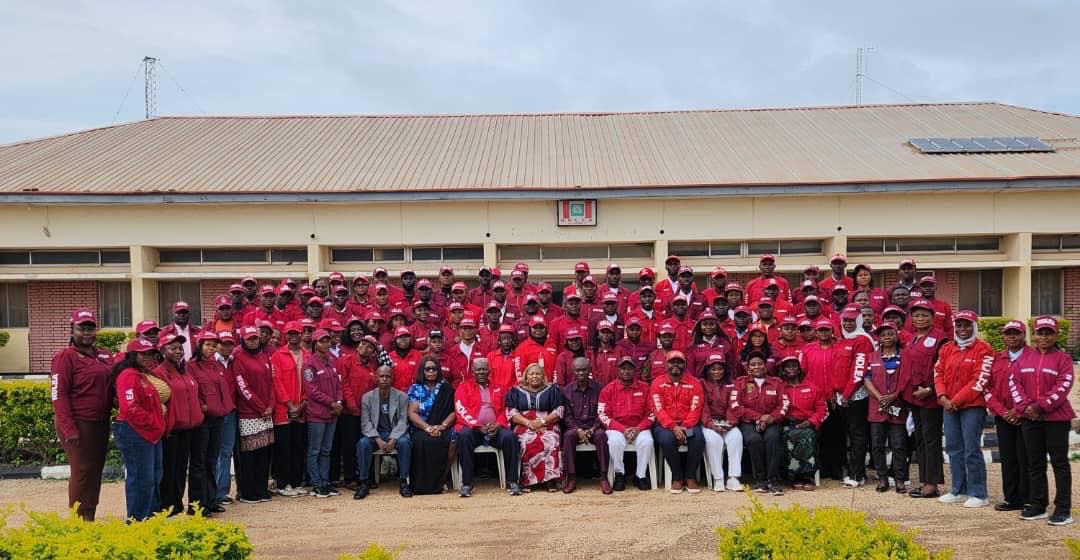
The National Drug Law Enforcement Agency (NDLEA) has commenced a nationwide training programme for more than 100 counselors as part of efforts to standardise drug treatment and rehabilitation services across its facilities and improve outcomes for persons affected by substance use disorders.
The capacity-building exercise, which commenced at the NDLEA Academy, Jos, Plateau State, is being coordinated by the Agency’s Directorate of Counseling, Treatment and Rehabilitation (DCTR) and involves counselors drawn from NDLEA formations across the country.
The training is aimed at harmonising rehabilitation practices, strengthening clinical competencies and equipping counselors with modern therapeutic tools to respond to the increasingly complex nature of substance use disorders.
According to an official statement signed by the Director, Media and Advocacy, NDLEA, Femi Babafemi, the exercise represents the first Agency-driven capacity-building programme of its kind for NDLEA counselors in several years.
Speaking at the commencement of Phase One of the training, the NDLEA Chairman/Chief Executive Officer, Brig Gen Mohamed Buba Marwa (rtd), represented by the Director, Counseling, Treatment and Rehabilitation, ACGN Bashir Ibrahim, said the initiative was critical to revitalising staff morale and strengthening the professional capacity of the Agency’s counseling workforce.
Marwa said the programme would help ensure that clients accessing NDLEA rehabilitation facilities receive consistent, evidence-based and quality interventions.
“We’ll continue to entrench best global practices in our drug demand reduction efforts and invest in the capacity of our personnel to ensure that clients across NDLEA facilities receive evidence-based, quality interventions.”
He explained that the training would establish uniform protocols across state command rehabilitation facilities, thereby reducing inconsistencies in service delivery and improving the overall quality of care.
The NDLEA Chairman said the programme would also enhance counselors’ clinical proficiency in addressing emerging psychoactive substances and substance use disorders occurring alongside mental health conditions.
He added that the training would align the Agency’s rehabilitation practices with national and international standards while strengthening professional ethics, confidentiality and quality assurance.
Marwa further identified data management as an important component of effective rehabilitation services, noting that improved data collection and management would support evidence-based policymaking and planning.
The programme also provides opportunities for continuous professional development through peer review and clinical supervision, with the ultimate objective of improving rehabilitation outcomes.
According to Marwa, “Key objectives of the training include harmonising practice through uniform protocols, enhancing clinical proficiency, strengthening ethics, confidentiality and quality assurance, improving data management and optimising rehabilitation outcomes.”
He said the initiative demonstrated the Agency’s commitment to building a resilient and well-equipped counseling workforce capable of responding effectively to Nigeria’s drug demand reduction needs.
Marwa expressed confidence that strengthening the skills of counselors would translate into improved services across NDLEA rehabilitation facilities and reinforce the country’s drug treatment and rehabilitation architecture.
The NDLEA boss also assured that the Agency would continue to invest in personnel development as part of its holistic strategy to address both drug supply and demand reduction in the country.
The nationwide training is therefore expected to provide a common professional framework for NDLEA counselors while promoting greater consistency, accountability and evidence-based practice in the treatment and rehabilitation of persons affected by substance use disorders.