

Operation HADIN KAI (OPHK) and the Centre for Humanitarian Dialogue (HD) are seeking to strengthen civil-military cooperation, capacity building and humanitarian interventions as part of efforts to promote sustainable peace and stability in the North East.
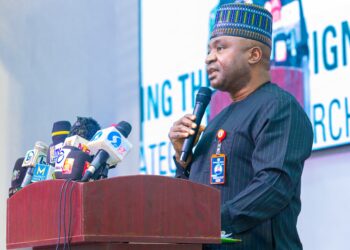
The Project Manager of the Centre for Humanitarian Dialogue, Abuja, Mr Chrisantus Lapang, made this known on Tuesday, August 11, 2026, when he led a delegation from the organisation on a courtesy visit to Headquarters Theatre Command OPHK in Maiduguri.
According to an official statement signed by Captain Mohammed Goni, Acting Military Information Officer, Headquarters Joint Task Force (North East), Operation HADIN KAI, Lapang said the Centre was committed to strengthening its partnership with OPHK through capacity building and improved humanitarian processes.
He said the Centre was ready to support efforts to build the capacity of military personnel involved in restoring peace to conflict-affected communities across the region.
Lapang explained that the visit was aimed at identifying areas of mutual interest, assessing capacity requirements and exploring practical areas of cooperation that could strengthen conflict-resolution mechanisms in the North East.
Responding, the Theatre Commander, OPHK, Major General Abdulsalam Abubakar, described the engagement as significant, saying capacity building and stronger humanitarian partnerships would contribute to restoring peace and reviving socio-economic activities across the region.
The Theatre Commander expressed optimism that OPHK would benefit from the expertise of the Centre, particularly in training and capacity development, and reaffirmed the command’s readiness to identify specific skills required to enhance the effectiveness of its personnel.
Major General Abubakar also emphasised the importance of Civil-Military Cooperation and sustained engagement with religious and traditional leaders in the ongoing counter-insurgency and counter-terrorism campaign.
He said such non-kinetic efforts had helped strengthen community trust, improve public confidence and counter narratives that could encourage support for terrorist activities.
According to him, OPHK’s non-kinetic operations had contributed to the stabilisation of affected communities, including the resettlement of thousands of internally displaced persons in their ancestral communities and the return of vulnerable populations to their farms and other sources of livelihood.
The Theatre Commander further noted that community engagement and sensitisation initiatives had complemented kinetic operations, contributing to the disruption of terrorist logistics and the recovery of arms, ammunition and other combat-enabling materials.
He added that the initiatives had also encouraged terrorists and their associates to abandon violence and surrender.
Major General Abubakar stressed that OPHK continued to conduct its operations in accordance with the Rules of Engagement and applicable International Humanitarian Law, with particular emphasis on Civilian Harm Mitigation.
He reaffirmed the command’s commitment to sustained collaboration with the Centre for Humanitarian Dialogue in advancing humanitarian interventions, peace mediation and conflict-resolution initiatives aimed at achieving lasting peace and stability in the North East.
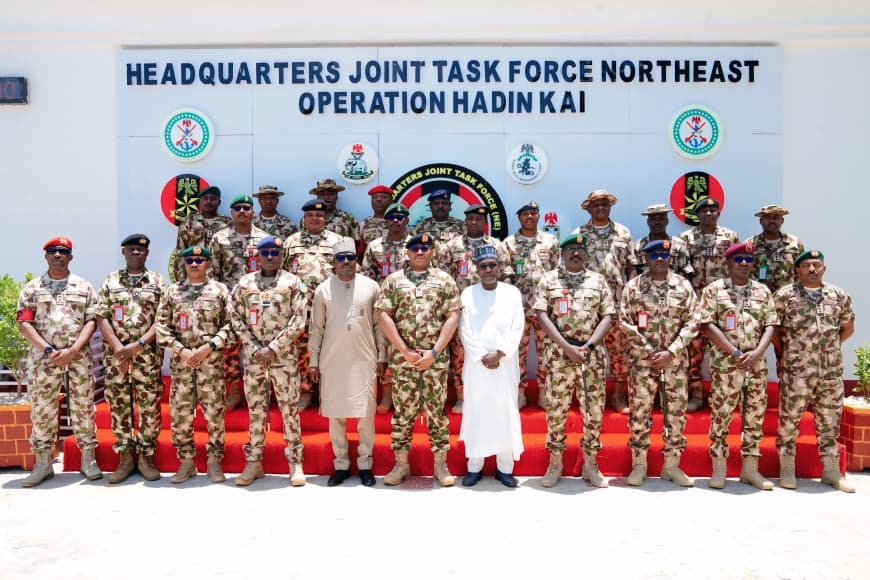
The engagement was attended by the Deputy Theatre Commander, Operation HADIN KAI, Air Vice Marshal Olusola Akinboyewa; Component Commanders; and other senior officers of the Theatre Command.
The visit featured an interactive session, signing of the visitors’ register, presentation of souvenirs and a group photograph.