

The Minister of Works, Senator Engr. David Umahi has expressed optimism about Nigeria’s economic future, saying the country’s Gross Domestic Product (GDP) is now growing faster than its population.
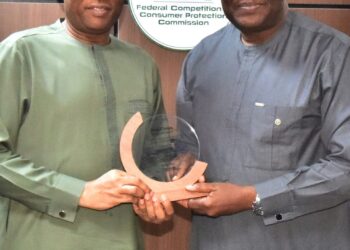
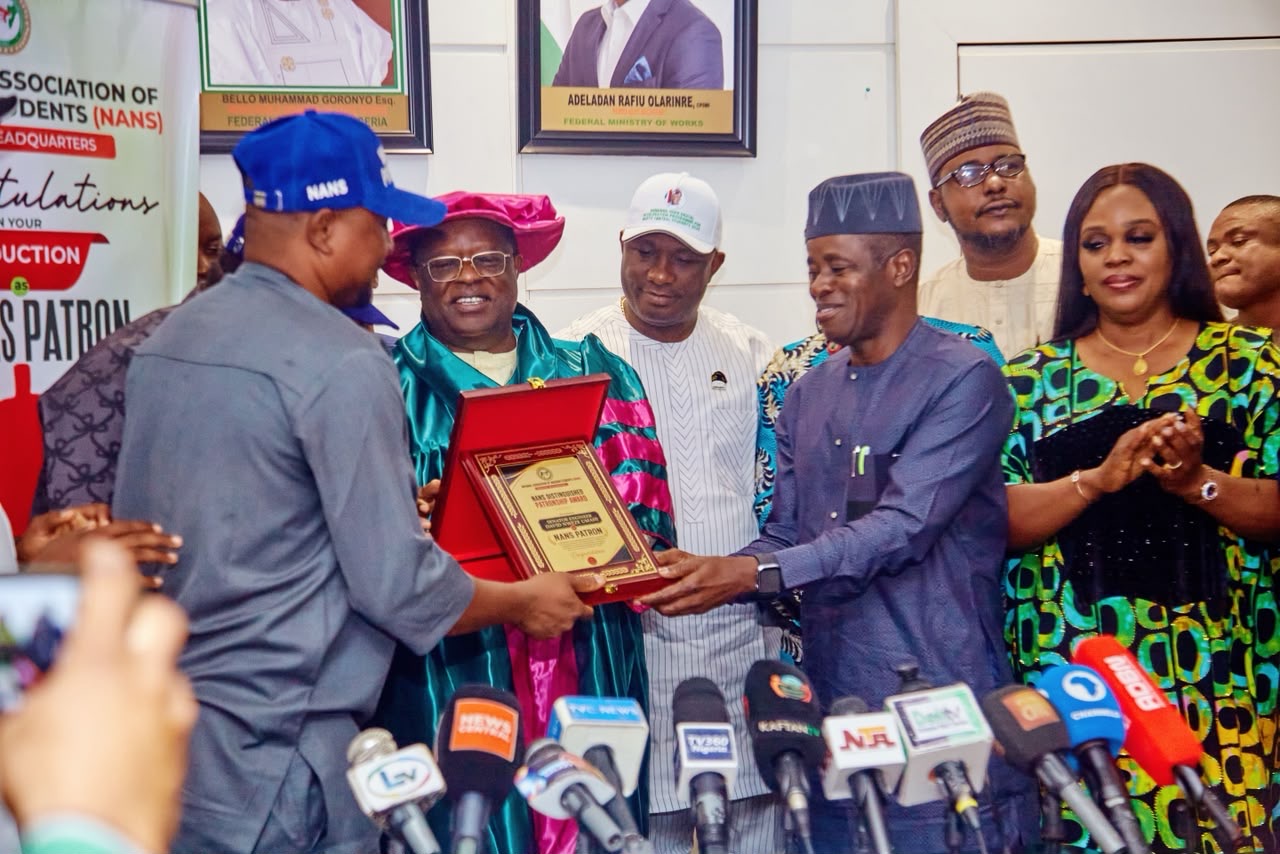
Umahi made the declaration on Monday, August 10, 2026, in Abuja, while speaking after he was formally inducted as Patron of the National Association of Nigerian Students (NANS).
The Minister said the latest economic outlook was an indication that the reforms of the administration of President Bola Ahmed Tinubu were beginning to create the foundation for sustained economic growth.
“I was enthused to find out that our GDP is growing more than our population. That means we have a future,” Umahi said.
He acknowledged that the country’s macroeconomic recovery was still at an early stage but urged Nigerians, particularly young people, to assess the ongoing reforms against the economic conditions inherited by the present administration.
“You may say that the macroeconomy is just beginning to recover. What was it like before the President took over? Everybody agrees that the macroeconomy is being fixed. It is up to you to dissect the ongoing reforms and take a position,” he said.
Umahi challenged critics of the administration to provide alternative solutions to the challenges confronting the country rather than focusing solely on criticism.
“If you say that the President is not doing well, what is your alternative?” he asked.
The Minister urged Nigerian students to become more actively involved in national affairs, stressing that young Nigerians should take informed positions on policies capable of shaping the country’s future.
“You may say that you are not politicians or that you will not take sides, but this is the time to take sides in our national affairs. It is time to take a stand,” he said.
He further urged Nigerians to remain hopeful about the country’s economic trajectory, declaring that the most difficult phase of the current adjustment may have passed.
“The worst is over. The darkest part of the night is an hour before dawn,” Umahi said.
The Minister linked the administration’s economic policies to its infrastructure drive, citing major road and bridge projects across the country as evidence of continued government investment in development.
He specifically cited the Abuja-Kaduna-Zaria-Kano road, saying more than ₦200 billion had already been spent on the project, with substantial sections of the dual carriageway completed.
“For the first time, we have been able to complete 118 kilometres of concrete pavement within 30 months. That has never happened,” Umahi said.
He also highlighted the completion of the 39.7-kilometre Bodo-Bonny Island road in Rivers State, describing the project as a major intervention that would improve transportation and economic activity in the oil-producing community.
“The 39.7-kilometre road is fully done, and the people of Bonny are very happy. They are no longer dying at sea. They are now driving through the land,” he said.
Umahi also defended the Lagos-Calabar Coastal Highway against criticisms, maintaining that the project remained strategically important to the Niger Delta and would be completed.
“That project will be completed. In fact, over 50 per cent of the entire stretch is already under construction,” he said.
The Minister said the Federal Government was similarly pursuing major infrastructure projects in the Southeast and other parts of the country to improve connectivity and strengthen national integration.
He cited the Enugu-Onitsha Expressway and Enugu-Port Harcourt Expressway, as well as the expanded Northeast Fourth Legacy Project, among projects he said were receiving sustained attention.
On transparency in project execution, Umahi said the Ministry of Works had opened its projects to scrutiny by anti-corruption agencies, including the Independent Corrupt Practices and Other Related Offences Commission (ICPC) and the Economic and Financial Crimes Commission (EFCC).
“Now, why are we doing this? Transparency. We have turned these projects over to the ICPC. They have gone round. We are ready for constructive criticism, and where necessary, we will make amends,” he said.
“We have nothing to hide in this administration.”
Earlier, the NANS President, Dist. Comr. Akinteye Babatunde Afeez, GCNS, described Umahi as “a worthy member of the Renewed Hope Cabinet” and “one of the finest public servants Nigeria has produced in the contemporary era.”
Afeez said the students’ decision to honour the Minister was based on his contributions to road infrastructure and national development, noting that improved roads directly affect students’ mobility, access to educational institutions, examinations, internships and employment opportunities.
He disclosed that NANS had reviewed project reports from the Federal Ministry of Works covering the period between May 2023 and May 2026 and would undertake nationwide tours to inspect completed and rehabilitated projects.
Afeez said the association would use its platforms to communicate the impact of government infrastructure projects to Nigerian students and the wider public.
“History will not remember public officers merely because they occupied important offices. History will remember them for what they built, what they changed and the lives they touched,” he said.
Umahi, while accepting the students’ recognition, called for deeper engagement between NANS and the Federal Ministry of Works, urging the association to organise zonal student forums where government officials could explain policies and projects and respond directly to questions.
“Ask your questions, and we will answer them,” he said.
He also called on young Nigerians to take responsibility for protecting public infrastructure and contributing to national development.
“See something, say something. Together, we can take back our country because it belongs to us,” Umahi said.
The Minister thanked NANS for the honour and pledged to strengthen collaboration with the student body, stressing that young Nigerians remained critical stakeholders in determining the country’s future.