

The Federal Government’s Lagos-Calabar Coastal Highway is making steady progress across several states, with the Minister of Works, Sen. Engr. David Umahi, CON, highlighting its growing impact on employment, security and economic activities along the corridor.
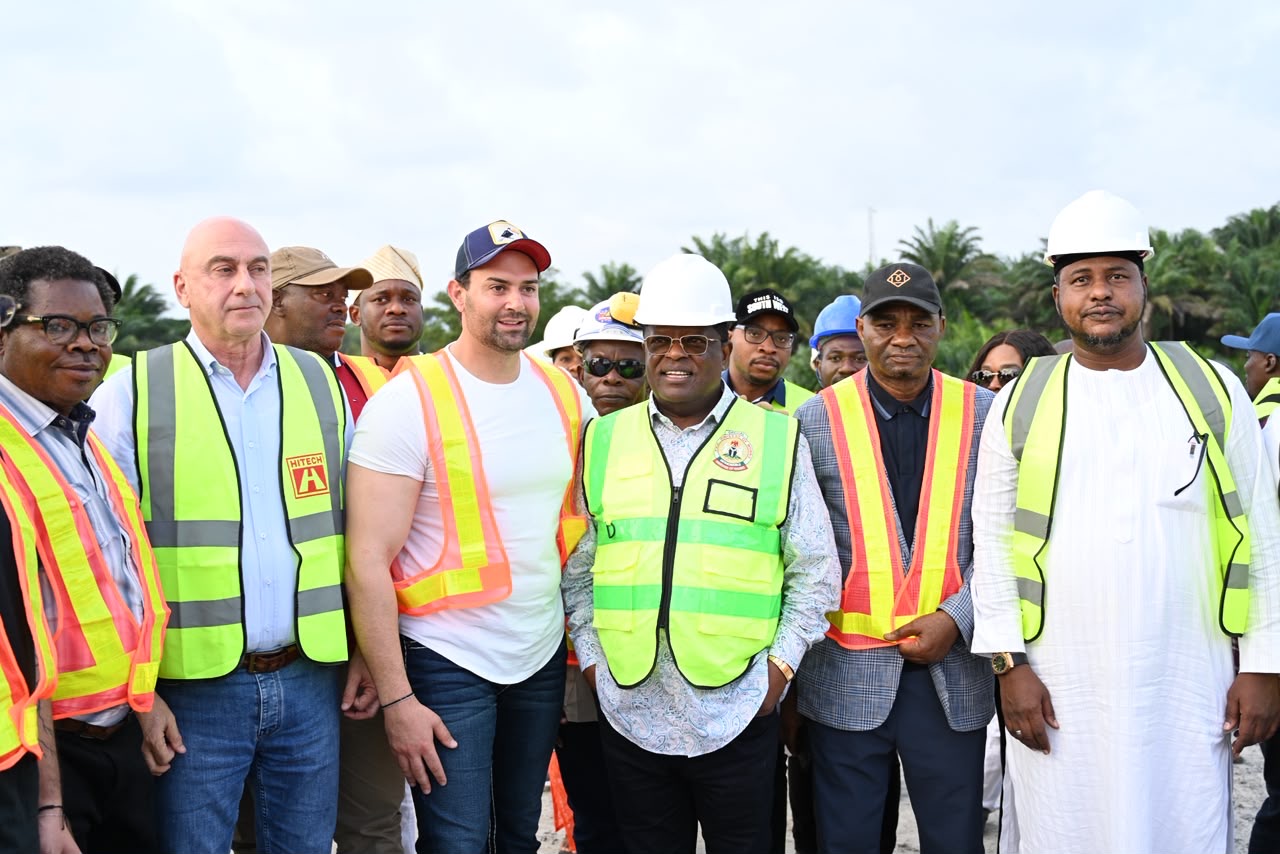
Umahi made this known on Wednesday, August 5, 2026, during an inspection of Section 4B of the highway in Ondo State, where he said construction had advanced beyond Epe and was progressing simultaneously across different sections of the coastal route.
The Minister said the project, a flagship infrastructure initiative of President Bola Ahmed Tinubu, GCFR, President and Commander-in-Chief of the Armed Forces, Federal Republic of Nigeria, was already opening up new opportunities for communities along the corridor.
“So the Lagos-Calabar Coastal Highway is already on sail. And then so we have sailed past Lagos that my brother Donald Duke talked about,” Umahi said.
He disclosed that construction was ongoing in Ogun, Ondo, Akwa Ibom and Cross River states, with work covering 28 kilometres in Ogun, 52 kilometres in Ondo, 27 kilometres in Calabar and about 47 kilometres in the first section of Akwa Ibom.
According to him, work had also commenced on the longest section of the project in Akwa Ibom, covering about 180 kilometres, while some of the ongoing sections had recorded more than 60 per cent completion.
Beyond the physical construction, Umahi said the highway was already contributing to employment generation, with more than 1,000 people employed within the inspected section by HITECH Construction Company.
“Roads are source of employment. We’ve counted over one thousand people within this section employed by HITECH,” he said.
The Minister explained that the employment opportunities extended beyond direct construction workers to local businesses and service providers benefiting from increased economic activities along the corridor.
He also linked the project to improved security, noting that construction activities had brought security personnel and local security groups into closer engagement along the route.
“It is also solving the problem of insecurity. Because anywhere we are working, we have a lot of security people working along the corridor. We have the local people that are also helping, and they have their vigilante, they have their local security, and so it is helping,” he said.
Umahi said the opening of the coastal corridor would further support commerce, agriculture and education by improving access to previously less-connected communities.
He maintained that constructive criticism of the project was welcome, but urged critics to provide practical alternatives that could help improve its implementation.
“So if you want to criticize us, I’ve said it, criticize us constructively and offer alternatives,” he said.
The Minister also reaffirmed President Tinubu’s commitment to completing the coastal highway, expressing confidence that the project would be delivered.
He appealed to residents of the Niger Delta to support the project, describing the highway as an important infrastructure corridor capable of reshaping the economic prospects of the region.
Umahi further addressed concerns over the alignment of the highway, particularly allegations that sections were altered to benefit private estates.
He explained that the decision to modify the original alignment was based on engineering and economic considerations, rather than private interests.
According to him, investigations along the initial coastal route revealed soil deposits reaching depths of about 50 metres, creating significant technical and financial challenges.
He added that the original alignment would have required bridges across three major ocean channels, each measuring approximately 3.5 kilometres, which would have substantially increased the cost of construction.
Umahi said the revised route was therefore adopted in line with President Tinubu’s directive to minimise major crossings over large bodies of water and ensure that the project remained technically and financially viable.
“This is because the president wants Ministry of Works as much as possible to see how we minimize large ocean, body waters and then rivers. So we have to navigate it in compliance to the directive of the president that this must be realized,” he explained.
The Minister also described the coastal highway as a financially prudent infrastructure investment, citing the interest of international financiers in the project.
He said Deutsche Bank had commended the construction and design of the first section, while noting that the procurement cost had initially been undervalued.
According to Umahi, the project subsequently attracted bids exceeding the available funding by about $100 million, which he described as an indication of strong investor confidence.
He commended HITECH Construction Company for its professionalism, quality of work and relationship with host communities, describing the contractor as a key partner in the delivery of the project.
Umahi expressed confidence that the infrastructure projects being undertaken by the Tinubu administration would provide lasting benefits for Nigerians, stressing that the roads were being constructed to significantly reduce future maintenance requirements.
“And under President Bola Tinubu, this country shall be rebuilt. Every of this road that he’s constructing, for the next hundred years, maintenance free, we will not reconstruct it,” he said.