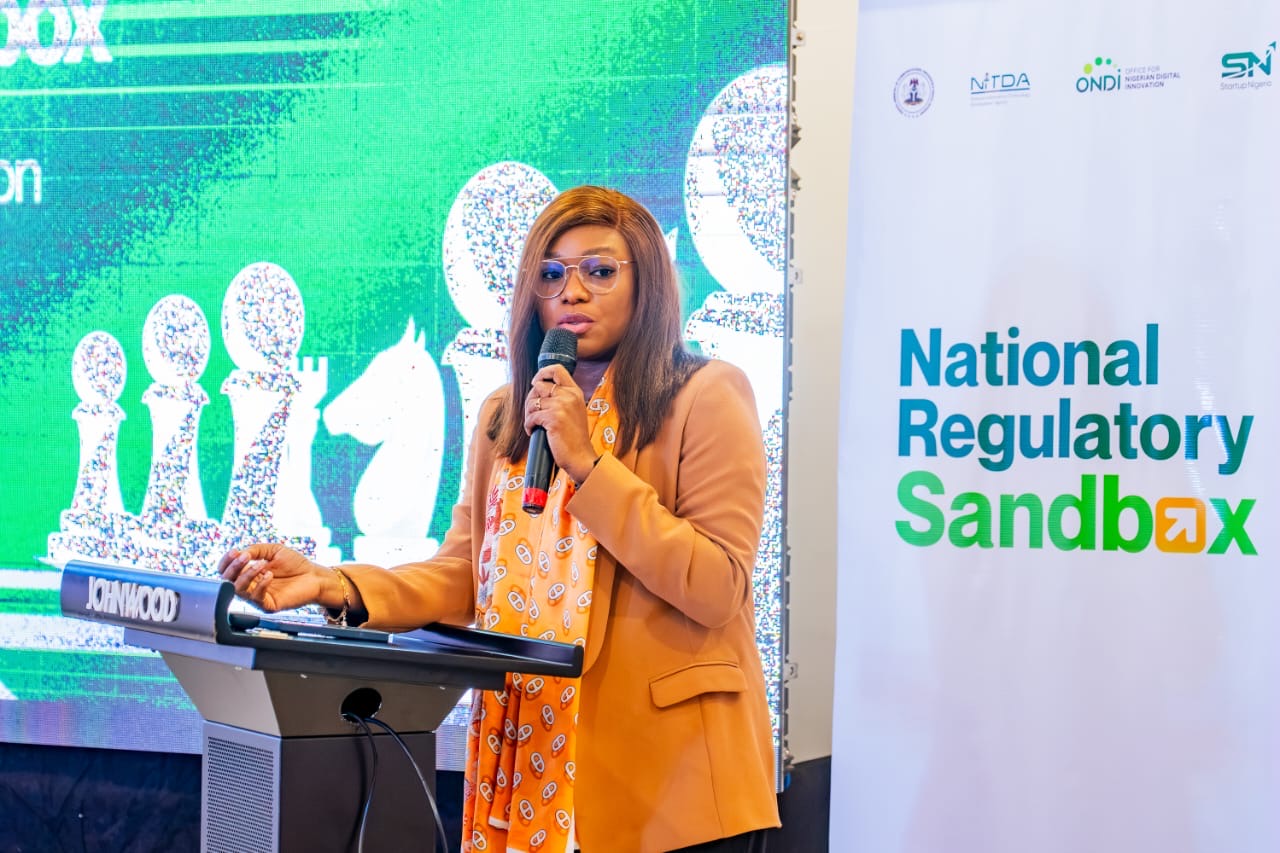
The Director-General of the National Information Technology Development Agency (NITDA), Kashifu Inuwa, CCIE, has called for stronger collaboration among government regulatory agencies to accelerate the establishment of Nigeria’s National Regulatory Sandbox.
Inuwa made the call through the National Coordinator, Office for Nigerian Digital Innovation (ONDI), Ms. Victoria Fabunmi, at the National Regulatory Sandbox Governance and Implementation Planning Workshop in Abuja.
He said effective inter-agency cooperation was critical to building an innovation-friendly regulatory ecosystem that would promote technological advancement while safeguarding regulatory integrity and public trust.
According to him, the workshop marked a transition from the design phase of the National Regulatory Sandbox to implementation, with participating regulators expected to collectively review, refine and validate the proposed governance structure ahead of its rollout.
He disclosed that ONDI had spent several months laying the foundation for the initiative through stakeholder consultations, ecosystem mapping, regulatory assessments and the development of a draft governance and implementation framework.
“The work completed so far provides a solid foundation, but the National Regulatory Sandbox can only achieve its objectives through collective ownership by all relevant regulatory institutions,” Inuwa said.
The NITDA Director-General explained that the Technical Working Group was established as a collaborative platform to bring together the expertise, experience and statutory mandates of participating agencies in developing a regulatory model suited to Nigeria’s rapidly evolving innovation landscape.
He said the workshop was also intended to critically examine the proposed governance framework, test its assumptions and incorporate practical recommendations from stakeholders to ensure that the final model was inclusive, effective and adaptable.
Inuwa noted that although government institutions have distinct regulatory responsibilities, their differences could serve as strengths in developing a coordinated and flexible framework capable of responding effectively to emerging technologies.
He added that the engagement would help establish clear implementation pathways, strengthen institutional partnerships and identify priority actions needed to operationalise the National Regulatory Sandbox.
The NITDA boss expressed optimism that the deliberations would foster a shared national vision for the initiative and create an enabling environment where innovators could safely develop, test and scale emerging technologies under appropriate regulatory supervision.
He also urged participants to contribute meaningfully to the process, saying their inputs would be critical to developing a practical and innovation-driven regulatory framework capable of supporting sustainable economic growth and enhancing Nigeria’s global competitiveness.
Speaking on the progress of the National Regulatory Sandbox, Ms Ojonoka Yusufu, Implementing Partner, Druve, said the initiative would provide a coordinated framework for innovators and regulators to jointly test emerging technologies while ensuring compliance with applicable laws and regulations.
Yusufu said the workshop was convened to develop a common understanding among regulators and other stakeholders, build consensus around the Sandbox’s operating model, identify potential implementation gaps and agree on the next steps ahead of its rollout.
“We do not have anything set in stone yet. The idea is to work together to build a common understanding and ensure that all participating regulators and stakeholders are aligned on the objectives and implementation of the National Regulatory Sandbox,” she said.
She stressed the need for the initiative, noting that Nigeria’s ICT sector remains a major contributor to the country’s Gross Domestic Product (GDP), while its startup ecosystem continues to attract significant global investment.
Yusufu said Nigerian startups were creating jobs, attracting foreign investment and strengthening the country’s position as a leading innovation destination in Africa.
She noted that the expansion of startups beyond traditional areas such as financial technology into healthcare, mobility, agriculture and other sectors had made closer coordination among regulators increasingly important.
According to her, the National Regulatory Sandbox is backed by the Nigeria Startup Act, which provides the legal foundation for promoting responsible innovation and improving Nigeria’s regulatory environment.
She described the Sandbox as a collaborative, multi-agency innovation governance mechanism designed to complement, rather than replace, existing regulatory institutions.