Nigeria has reaffirmed its commitment to strengthening economic relations with Japan, with the Federal Government calling for increased Japanese investment in strategic sectors as ongoing economic reforms continue to improve the country’s business environment.
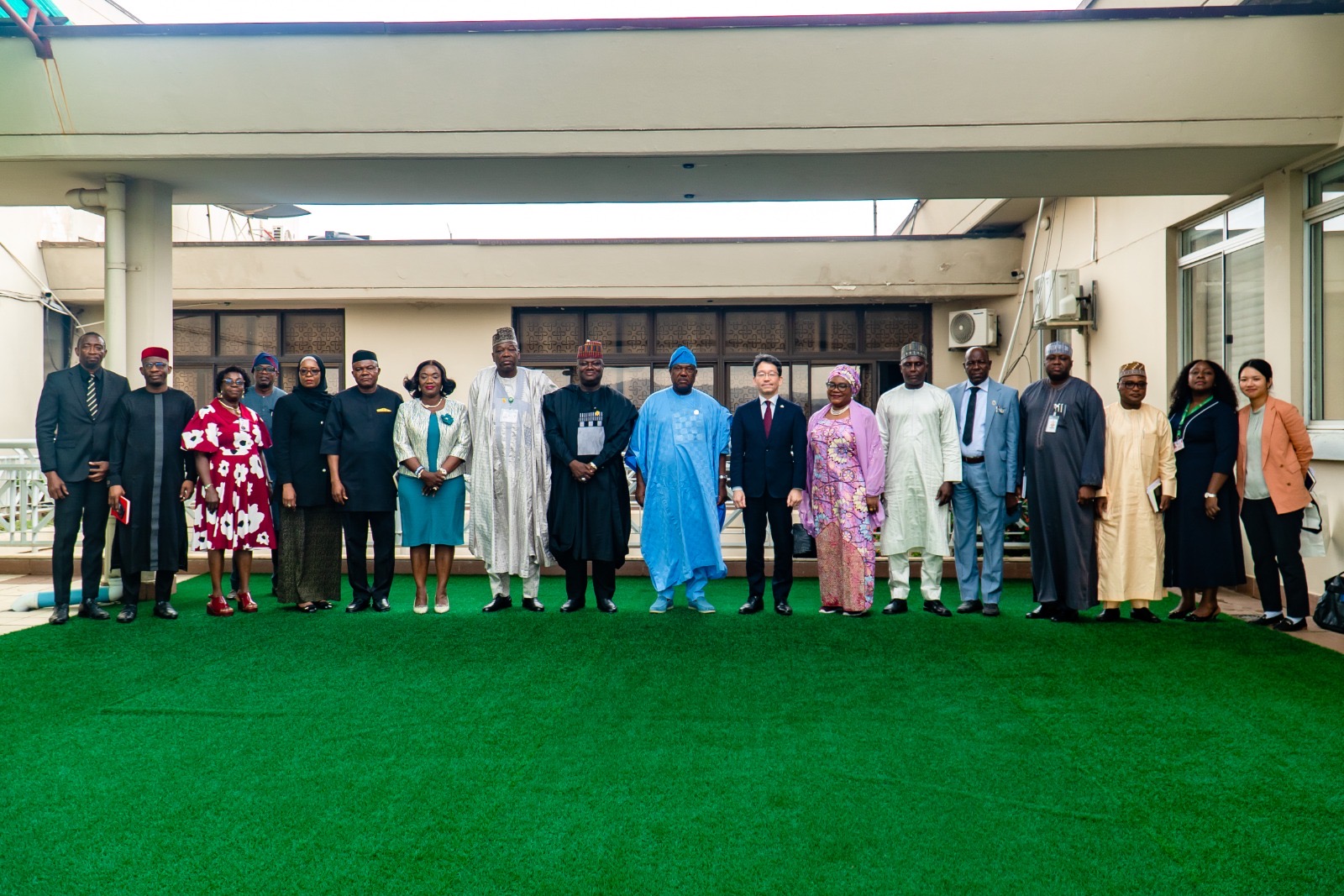
According to an official statement signed by the Head of Information and Public Relations, Chris Ugwuegbulam, the Secretary to the Government of the Federation (SGF), Senator George Akume made the appeal while receiving the Japanese Ambassador to Nigeria, His Excellency Suzuki Hideo, during a courtesy visit in Abuja on Monday.
Akume said the administration of President Bola Ahmed Tinubu has introduced far-reaching reforms aimed at improving the ease of doing business, ensuring macroeconomic stability, strengthening foreign exchange management, attracting foreign direct investment and promoting private sector-led growth under the Renewed Hope Agenda.
He noted that 57 Japanese companies currently operate in Nigeria and expressed confidence that the number would rise as investors take advantage of the country’s increasingly favourable investment climate.
The SGF urged Japanese businesses to expand investments in sectors such as solid minerals, renewable energy, clean technology, energy efficiency and climate resilience, assuring prospective investors that reforms had created a transparent and predictable legal framework to support long-term investments.
He also commended the Japanese Government for its continued support to Nigeria through technical cooperation, infrastructure development, healthcare, agriculture, education, disaster management, humanitarian assistance and capacity-building programmes. He acknowledged the contributions of the Japan International Cooperation Agency (JICA) to critical infrastructure projects across the country.
Akume further called for the expansion of Japanese scholarship schemes, technical training and knowledge transfer initiatives to strengthen the skills of Nigerian professionals and support the country’s growing youth population. He also sought deeper cooperation in maritime security, counter-terrorism capacity building, cybersecurity, border management and disaster risk reduction.
In his remarks, Ambassador Suzuki Hideo praised the Tinubu administration’s economic and fiscal reforms, describing them as key drivers of improved investor confidence and a more stable macroeconomic environment.
He attributed the growing confidence to improvements in Nigeria’s foreign exchange reserves, the stabilisation of the naira and favourable sovereign credit ratings, adding that the developments had been consistently communicated to the Japanese Government as evidence of Nigeria’s improving investment landscape.
The Ambassador disclosed that the recent visit of the Chairman of the Policy Research Council of Japan’s Liberal Democratic Party, Mr. Takayuki Kobayashi, had further strengthened interest among Japanese policymakers and private sector operators in expanding trade and investment with Nigeria.
He stressed that Japan’s engagement with Nigeria is based on a long-term strategic partnership founded on mutual trust, shared prosperity and sustainable economic development, reaffirming his country’s commitment to deepening bilateral cooperation.
The meeting was attended by Permanent Secretaries from the Office of the Secretary to the Government of the Federation, directors from the Office of the SGF and the Ministry of Foreign Affairs, as well as officials of the Japanese Embassy.