

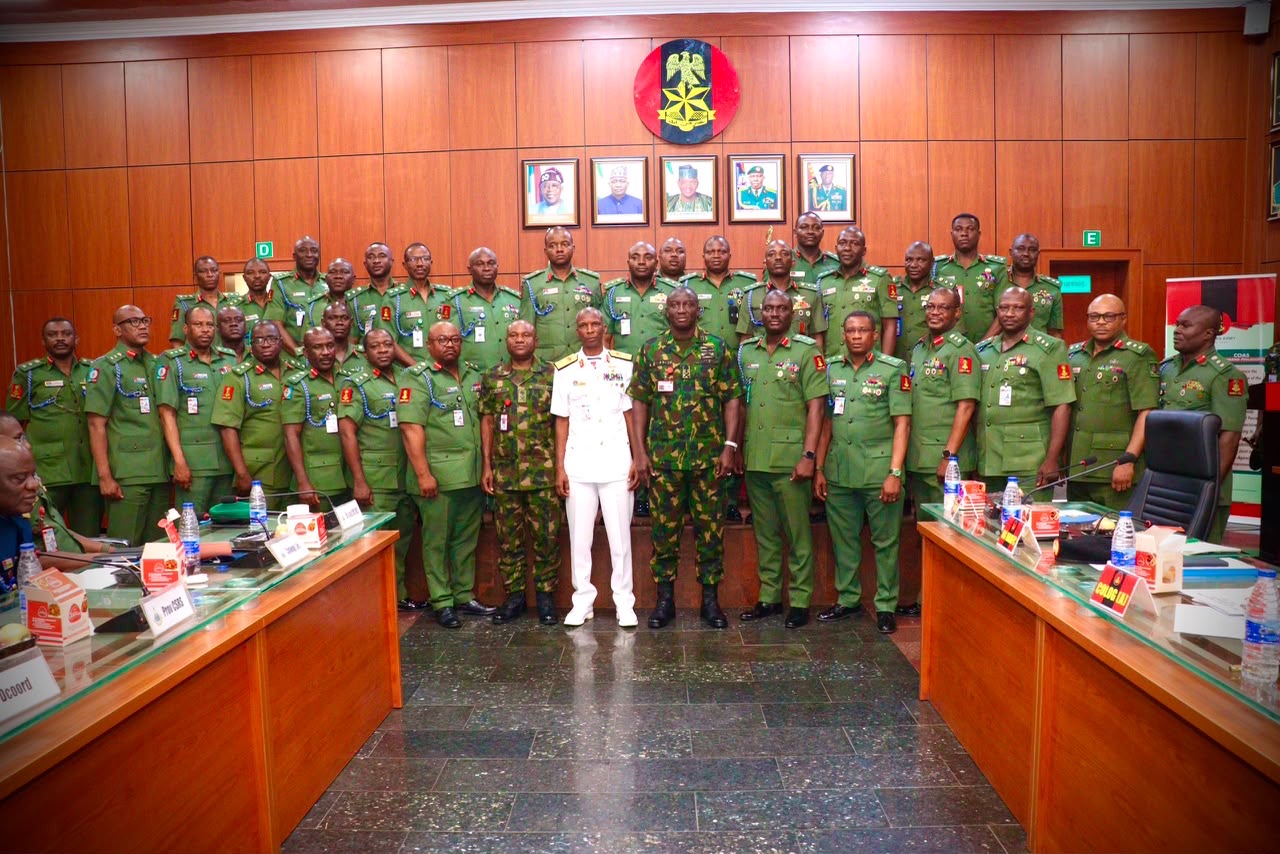
The Nigerian Army’s drive to build a more professional, combat-ready and resilient force has received a strategic boost following the presentation of a comprehensive research report by the National Defence College (NDC), proposing far-reaching reforms to strengthen the leadership capacity of the Army’s Non-Commissioned Officers (NCOs) over the next decade.
According to an official statement signed by the Acting Director Army Public Relations, Colonel Appolonia Anele, the strategic research paper was presented to the Chief of Army Staff (COAS), Lieutenant General Waidi Shaibu, at the Army Headquarters, Abuja, on Wednesday.
The study, titled “Strengthening Non-Commissioned Officers Leadership for Operational Efficiency: Strategic Options for the Nigerian Army by 2035,” was presented by the Commandant of the National Defence College, Rear Admiral Abdullahi Ahmed.
The report outlines strategic policy recommendations aimed at enhancing leadership, professionalism and institutional resilience within the Nigerian Army by developing a more capable, empowered and future-ready Non-Commissioned Officer corps.
Receiving the report, Lieutenant General Shaibu commended the Commandant and participants of National Defence College Course 34 for producing what he described as a timely and operationally relevant study that would contribute meaningfully to the Army’s ongoing transformation agenda.
He said effective leadership at the Non-Commissioned Officer level remains indispensable to building a disciplined and highly professional force capable of responding to Nigeria’s evolving security challenges.
The Chief of Army Staff described NCOs as the backbone of the Nigerian Army, noting that they serve as the critical link between commanders and troops by translating operational directives into effective action on the battlefield.
He stressed that strengthening their leadership capacity would significantly improve tactical effectiveness, operational readiness and overall mission success.
Lieutenant General Shaibu disclosed that the recommendations contained in the report would be carefully reviewed by relevant departments at Army Headquarters for possible integration into existing policies, leadership development initiatives and institutional reforms.
He added that investment in the professional development, welfare and career progression of soldiers remains central to his command philosophy of transforming the Nigerian Army into a more professional, adaptable, combat-ready and resilient force capable of effectively discharging its constitutional responsibilities within a joint and multi-agency environment.
The COAS also noted that the study aligns with his “Soldier First” initiative, which prioritises personnel welfare, professional growth and empowerment as essential drivers of operational effectiveness, institutional excellence and national security.
Earlier, the Commandant of the National Defence College, Rear Admiral Abdullahi Ahmed, explained that the research was undertaken by Nigerian Army participants of National Defence College Course 34 as part of their academic programme.
He said the study critically assessed existing gaps in the Army’s Non-Commissioned Officer leadership development framework and proposed strategic reforms covering training, mentorship, career progression and welfare to prepare future military leaders for increasingly complex operational environments.
Rear Admiral Ahmed expressed confidence that implementing the recommendations would strengthen the leadership effectiveness and professionalism of the Nigerian Army’s NCO corps while enhancing the Service’s capacity to safeguard Nigeria’s sovereignty and territorial integrity amid emerging security challenges.