As criminal networks increasingly rely on sophisticated financial systems to fund terrorism, banditry, crude oil theft and other transnational crimes, Nigerian security agencies are placing greater emphasis on following illicit money trails rather than focusing solely on arrests.
This strategic shift took centre stage on Tuesday as the Nigeria Police Force (NPF) and the Nigerian Financial Intelligence Unit (NFIU) renewed their partnership to strengthen the country’s response to money laundering, terrorism financing and organised crime ahead of Nigeria’s 2027 Financial Action Task Force (FATF) mutual evaluation.
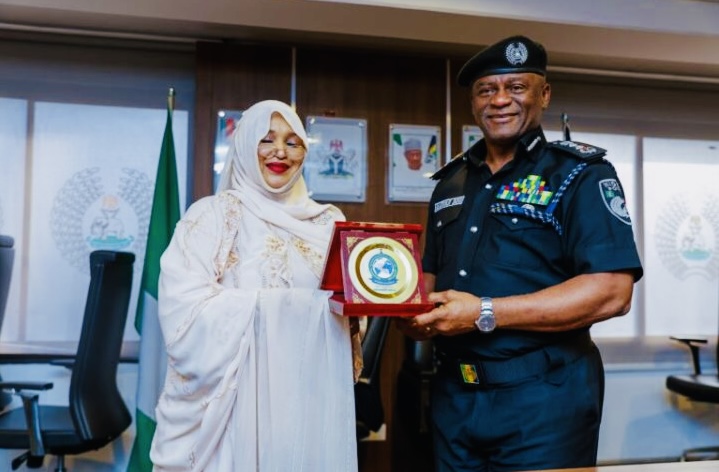
The renewed collaboration was announced during a high-level meeting between the Inspector-General of Police, Olatunji Disu, and the Director and Chief Executive Officer of the NFIU, Hafsat Abubakar-Bakari, at the Force Headquarters in Abuja.
Speaking at the meeting, the Inspector-General said financial intelligence has become indispensable in modern law enforcement, stressing that criminal organisations now move illicit funds across borders within moments, making intelligence-led investigations more effective than conventional policing alone.
“If we are to dismantle organised criminal networks, we must go beyond arresting suspects and target the financial structures that sustain their operations,” Disu said.
He noted that disrupting the proceeds of crime would significantly weaken criminal groups engaged in terrorism, banditry, crude oil theft and other forms of organised crime.
To reinforce the Force’s capacity in financial crime investigations, the IGP disclosed that the Nigeria Police Force has established a dedicated Proceeds of Crime Section headed by a Deputy Commissioner of Police with specialised expertise in financial investigations.
He also called for stronger institutional collaboration with the NFIU through intelligence sharing, joint operations, specialised training and continuous capacity development for officers investigating money laundering and terrorism financing.
“The fight against financial crime cannot be won in isolation. It requires robust collaboration, timely intelligence sharing and sustained investment in the skills of investigators,” he added.
Earlier, NFIU Director and Chief Executive Officer, Hafsat Abubakar-Bakari, commended the Nigeria Police Force for its role in Nigeria’s removal from the FATF Grey List in 2025, describing the achievement as evidence of the country’s growing commitment to international anti-money laundering standards.
She specifically applauded officers of the Police Anti-Money Laundering and Counter-Terrorism Financing Unit for implementing reforms that strengthened Nigeria’s compliance with global financial crime regulations.
Abubakar-Bakari said the 2027 FATF mutual evaluation would go beyond assessing laws and regulations to examine how effectively institutions investigate financial crimes, recover illicit assets, prosecute offenders and collaborate with one another.
“Criminals often leave financial footprints long before physical evidence emerges. Following the money remains one of the most effective ways to expose criminal networks and those who fund them,” she said.
She urged police formations across the country to strengthen expertise in anti-money laundering investigations by improving asset tracing, data collection and adopting risk-based investigative approaches.
The NFIU boss also reaffirmed the agency’s commitment to supporting the Police through intelligence sharing, operational assistance, strategic analysis, capacity building and access to information exchanged through the Egmont Group, a global network of more than 180 Financial Intelligence Units.
Responding, Inspector-General Disu thanked the NFIU for recognising the sacrifices of police officers, particularly personnel who have paid the ultimate price in the line of duty, describing the recognition as a significant morale booster for the Force.
The renewed partnership comes as Nigeria intensifies efforts to consolidate recent gains in combating financial crimes and strengthen institutional cooperation ahead of the country’s next FATF assessment in 2027.