


By Nkechi Eze
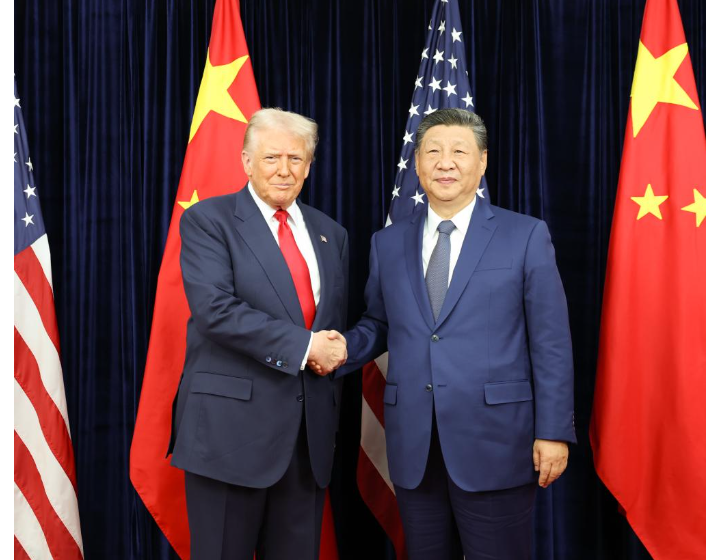
The recent visit of United States President, Donald Trump, to China has signalled what observers describe as a major diplomatic reset between the world’s two largest economies, with both nations pledging to pursue a constructive relationship anchored on strategic stability, cooperation, and mutual respect.
The high-level engagement in Beijing marked the first official visit to China by a U.S. president in nine years and culminated in nearly nine hours of discussions between President Trump and Chinese President Xi Jinping on bilateral relations, global security, trade, technology, and regional stability.
The summit comes after years of strained ties between both countries, characterised by trade disputes, technology restrictions, geopolitical rivalry, tensions over Taiwan, and competition surrounding artificial intelligence development and strategic influence.
Speaking during a media briefing on the China-U.S. summit and the understandings reached by both leaders, Chinese Foreign Minister Wang Yi described the meeting as historic and strategically significant for global peace and development.
According to Wang Yi, both leaders engaged in open, thorough, and constructive discussions aimed at redefining the future of China-U.S. relations and identifying a framework that allows both nations to coexist peacefully while advancing mutual prosperity.
“A confrontational relationship will be disastrous for both countries and the world, while China-U.S. cooperation will get many great things done to the benefit of both and all,” Wang Yi stated.
He explained that President Xi and President Trump agreed on a new vision of building what he described as “a constructive China-U.S. relationship of strategic stability,” a framework expected to guide bilateral relations over the coming years.
According to the Chinese Foreign Minister, the new approach seeks to ensure positive stability through deeper cooperation, healthy competition that avoids zero-sum rivalry, consistent policy direction, and lasting peace founded on mutual respect and adherence to existing diplomatic agreements.
Wang Yi noted that both leaders recognised that the future of China-U.S. relations carries enormous implications not only for the more than 1.7 billion people of both countries, but also for the broader international community.
He stated that the discussions covered a broad spectrum of issues, including economic cooperation, military-to-military communication, agriculture, tourism, public health, law enforcement, education, and people-to-people exchanges.
The summit also produced agreements to strengthen institutional dialogue through continued presidential engagement, diplomatic consultations, and expanded cooperation mechanisms between various government departments.
As part of the renewed diplomatic momentum, President Xi accepted an invitation to pay a state visit to the United States later this year.
On economic relations, Wang Yi said both sides acknowledged that China-U.S. trade relations remain mutually beneficial and that consultation remains the most effective path for resolving disagreements.
He disclosed that the two countries agreed to establish a board of trade and a board of investment while continuing negotiations on reciprocal tariff reductions, agricultural market access, and broader trade expansion.
The Chinese Foreign Minister also highlighted growing optimism among American business leaders regarding the Chinese market, noting that many U.S. executives accompanied President Trump on the visit and expressed commitment to expanding investments and partnerships in China.
People-to-people exchanges equally featured prominently during the summit, with President Xi announcing plans to invite 50,000 young Americans to China over the next five years for educational and cultural exchange programmes.
President Trump, according to Wang Yi, also reaffirmed support for Chinese students studying in the United States, describing youth engagement as vital to the long-term stability of bilateral relations.
On the sensitive Taiwan issue, Wang Yi reiterated China’s long-standing position that Taiwan remains an internal affair and warned that support for Taiwanese independence could threaten overall China-U.S. relations and regional stability.
He, however, noted that both countries agreed on the importance of maintaining peace and stability across the Taiwan Strait and preventing escalation.
The summit further addressed major international security concerns, including tensions in the Middle East and the ongoing conflict in Ukraine.
According to Wang Yi, President Xi advocated dialogue and diplomacy as the only sustainable solution to global conflicts, while both China and the United States agreed to maintain communication and play constructive roles in efforts aimed at political settlements.
Analysts believe the Beijing summit may represent one of the most consequential diplomatic engagements between Washington and Beijing in recent years, especially at a time of shifting global alliances, economic uncertainty, and rising geopolitical competition.
The renewed commitment by both powers to strategic dialogue and cooperation is expected to ease international concerns over a possible deepening confrontation between the two countries and may open a new phase of cautious but pragmatic engagement in global affairs.