


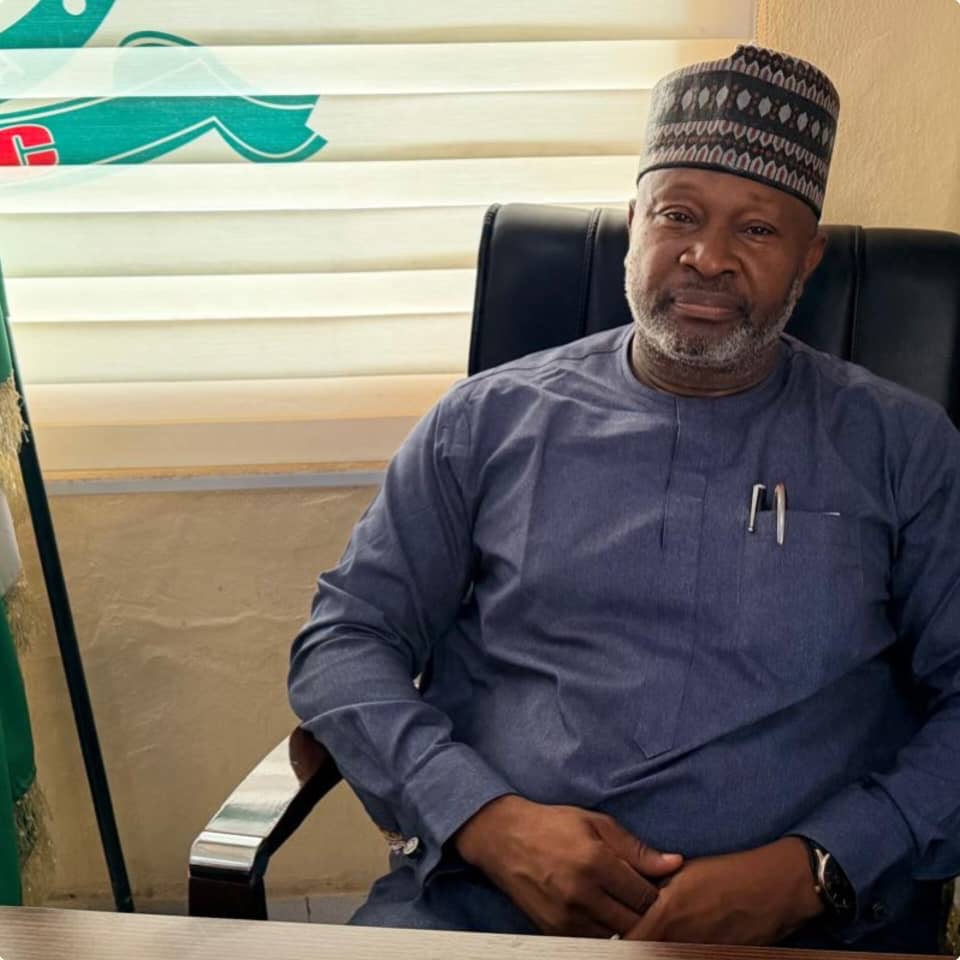
By Nkechi Eze
As debates over electoral reforms, voter confidence, and democratic accountability continue to shape Nigeria’s political landscape ahead of future elections, the National Chairman of the Inter-Party Advisory Council (IPAC), Dr. Yusuf Mamman Dantalle, has raised concerns over policies and institutional practices he believes could weaken democratic participation and disenfranchise citizens.
In this exclusive interview with Newspeg Magazine/Online, with Nkechi Eze, the IPAC Chairman speaks on the challenges facing smaller political parties, youth voter apathy, corruption in the electoral process, the controversy surrounding the NIN requirement for party registration, and the urgent need for structural reforms to strengthen Nigeria’s democracy.
Question: You represent a political vision through your party, the Allied People’s Movement (APM), and also speak as National Chairman of IPAC. How do you balance advocating for smaller, ideologically different parties like APM in a political space dominated by two or three major political machines?
Answer: It is very easy for me to manage. As a movement, our slogan is “Nigeria First.” Whatever I do, I consider how it benefits Nigeria as a whole. I am a student of sociology, and I often use the analogy of the human body, different parts performing different functions for the survival of the whole. That is how I see the political system. Every party has a role to play, but the ultimate question is how it benefits the country. Political parties are simply vehicles for capturing power. In practice, if one party has interest in a state and another has interest elsewhere, we look at how to support each other within the democratic space.
I try not to bring personal interest into my decisions. As long as we uphold truth and fairness, it becomes easier to manage. Difficulties only arise when people try to suppress truth for personal gain. Otherwise, balancing interests is straightforward when Nigeria remains the central focus.
Question: There is growing concern about youth disenchantment and voter apathy, especially ahead of general elections. What do you think is responsible for this, and what needs to change?
Answer: The system, frankly speaking, is deeply affected by corruption. In many cases, political office is now seen as a means of making money rather than serving the people. This perception has damaged trust in the democratic process.
We also need to look at the structure of our electoral system. The legal framework and electoral laws have, in some ways, disenfranchised many citizens. Institutions like INEC have taken over functions that should involve more local participation, which has weakened grassroots electoral ownership. Local government elections, for example, have lost their true independence.
When you design a system where outcomes feel predetermined, you create space for vote buying. People buy votes because they believe those votes matter in determining outcomes. Where elections are genuinely transparent, vote buying reduces significantly.
We must also reflect on the justice system, because when electoral disputes are resolved through technicalities rather than substantive justice, public confidence declines further. Democracy is a process, not an event. If the foundation is flawed, the outcome will always be questioned.
Question: So how do you convince young people, many of whom no longer believe their votes will count, to still participate in elections?
Answer: I cannot lie to them. I would never lie to myself or others. The truth is that trust has been eroded. We have institutionalised corruption in many areas of the political process, and that is dangerous.
Even party primaries, which are supposed to be foundational democratic processes, are often flawed. So when young people see this, it becomes difficult to preach electoral confidence.
However, I still believe change is possible. We must keep pushing for credible leadership and resist electoral malpractice within legal means. I also call on the judiciary to remain firm and patriotic. Not all actors are compromised; there are still good people in the system. We must support those who are committed to sanitising the process.
Ultimately, citizens must understand that selling or buying votes damages democracy. People should reject it completely.
Question: There has been controversy around the NIN requirement for party registration and membership validation. How practical is this, and what impact does it have on political parties?
Answer: In my view, it is a diversionary measure, largely because of its timing. Asking political parties to complete fresh membership registration within a short window is impractical.
Parties were given limited time to produce updated registers, and in some cases, submissions were incomplete simply because compliance within the timeframe was not realistic. The implication is that it risks disenfranchising party members and weakening participation.
If citizens are excluded through administrative bottlenecks, then democracy itself is weakened. Elections are meant to be inclusive. When eligibility is restricted by unrealistic requirements, it undermines the entire process.
Question: Some critics argue that INEC’s electoral timetable and reforms are creating operational pressure and uncertainty ahead of future elections. Do you agree?
Answer: There are indeed concerns. Even if INEC may not openly admit it, the system is under strain. There are unresolved issues that will affect implementation.
We must be careful not to design a process that sets the electoral body up for failure. Reforms should be inclusive and realistic. Electoral administration requires proper planning, adequate resources, and wide consultation. Without this, the system becomes unstable.
Question: What is your assessment of the current leadership of the electoral commission?
Answer: The leadership is made up of a very calm and well-intentioned individual. He appears committed to doing the right thing, and I believe he genuinely wants to succeed.
However, leadership alone is not enough. The system must enable him to succeed. If the legal and institutional framework remains restrictive, even the best leadership will struggle.
That is why I consistently argue that appointment processes for electoral officials should be fully independent of the executive. Funding for political parties also needs to be more structured and insulated from political influence.
As it stands, it is difficult for institutions to function optimally when they depend on systems that may not be fully neutral. The structure must be reformed if we truly want credible elections.