

By Nkechi Eze
The Chairman of the Independent Corrupt Practices and Other Related Offences Commission, Dr. Musa Adamu Aliyu, SAN, has called for urgent efforts to bridge the gap between policy formulation and practical implementation in order to strengthen anti-corruption mechanisms across government institutions.
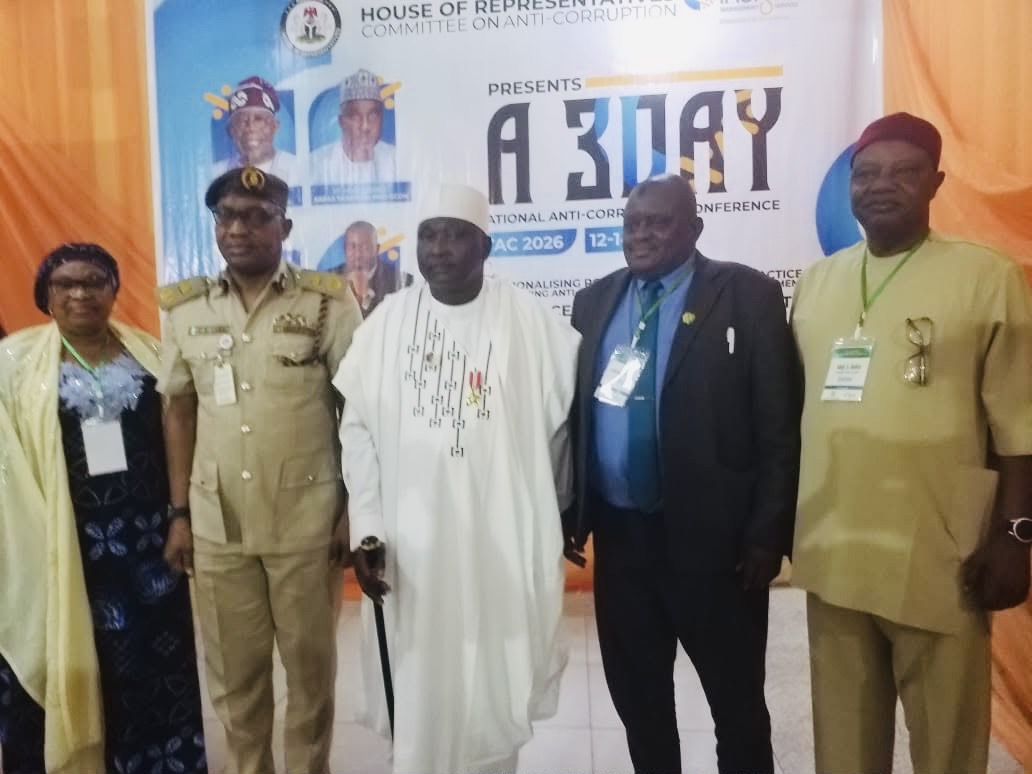
According to an official signed statement by Head, Media and Public Communications, ICPC, J. Okor Odey, the ICPC Chairman made the call during a three-day National Anti-Corruption Conference held in Kano and organised by the House of Representatives Committee on Anti-Corruption.
Speaking through the Resident Anti-Corruption Commissioner for the ICPC Kano State Office, Barrister Ahmad Muhammad Wada, Dr. Aliyu stressed that the fight against corruption must move beyond rhetoric and institutional formalities to practical systems capable of delivering measurable results.
The Conference, themed “Operationalising Policy Statements into Practice: Strengthening Anti-Corruption Mechanisms in Government,” brought together stakeholders from federal ministries, departments and agencies to examine strategies for improving transparency, accountability and institutional effectiveness.
Dr. Aliyu identified institutional integrity, technological integration and accountability culture as critical pillars for strengthening anti-corruption frameworks in the country.
He noted that internal audit and control mechanisms must not exist merely on paper but should be genuinely empowered to function independently and effectively. He also advocated greater deployment of digital systems to reduce human discretion and limit opportunities for corruption, while urging public institutions to adopt proactive transparency as a standard culture of governance.
“Let our discussions move beyond the theoretical. Share practical templates, identify the bottlenecks that stall policy execution, and forge a united front that translates our collective resolve into tangible results for the Nigerian people,” he stated.
The ICPC Chairman further observed that the conference was taking place at a crucial period in Nigeria’s anti-corruption campaign, requiring stronger collaboration among government institutions and stakeholders.
Also speaking at the event, Speaker of the House of Representatives, Rt. Hon. Tajudeen Abbas, PhD, described the conference theme as a direct reflection of the realities confronting democratic governance in the country.
Represented by Chairman of the House Committee on Downstream, Alhassan Ado Doguwa, the Speaker said the legislature remained the first line of defence in the fight against corruption.
“Our job is not merely to make laws, but to make them work. We are the bridge between the aspirations of the people and the administration of the state,” he said.
The Speaker also charged the executive arm of government to ensure procurement systems are fully digitalised, transparent and insulated from undue human interference, while urging the judiciary to fast-track corruption-related cases to guarantee timely justice.
Throughout the three-day conference, participants engaged in presentations and discussions centred on strengthening institutional oversight, leveraging digital technology for transparency, and implementing sector-specific anti-corruption strategies.
The sessions concluded with extensive deliberations and question-and-answer engagements, underscoring a collective commitment by stakeholders to translate anti-corruption policies into practical and sustainable outcomes for national development.