

By Nkechi Eze
The Theatre Command of the Joint Task Force (North East), Operation HADIN KAI (OPHK), has reaffirmed its commitment to strengthening operational effectiveness and deepening collaboration with the Adamawa State Government following a three-day operational assessment visit to the state.
According to an official signed statement by the Media Information Officer, Headquarters Joint Task Force (North East) Operation HADIN KAI, Lieutenant Colonel Sani Uba, the assurance was given during the visit by the Theatre Commander, Major General Abdulsalam Abubakar, conducted from April 30 to May 2, 2026, in response to evolving security dynamics in the region.
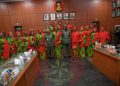
During a courtesy engagement at the Adamawa State Government House, the Executive Governor, Ahmadu Umaru Fintiri, represented by the Deputy Governor, Professor Kaletapwa George Farauta, commended the military for its resilience and sustained efforts in maintaining security despite recent challenges. She reaffirmed the state government’s commitment to sustaining Adamawa as a safe and secure environment through strategic investments in human capital development, technology, and critical security infrastructure.
Farauta highlighted the indispensable contributions of community-based security actors, including vigilantes, hunters, and forest guards, noting that their grassroots knowledge and direct community ties remain vital in countering insecurity. She further pledged enhanced support through improved mobility, surveillance capabilities, and digital tools to boost intelligence gathering and rapid response.
In his remarks, Major General Abdulsalam Abubakar stated that the visit was aimed at conducting a comprehensive operational review to recalibrate strategies in line with emerging threats. He acknowledged the consistent support of the Adamawa State Government and underscored the importance of sustained civil-military cooperation.
The Theatre Commander recalled the establishment of Sector 4 under Operation HADIN KAI in August 2025, created to address security gaps between Southern Borno and Northern Adamawa. He explained that the sector spans 10 local government areas covering about 16,000 square kilometres of challenging terrain, necessitating a multi-layered operational approach that integrates troop deployment, advanced technology, and community engagement.
He disclosed that ongoing interventions by Defence and Army Headquarters include the deployment of special forces, provision of critical combat enablers, and the training of local security groups to function as first responders in hard-to-reach areas. He further revealed that additional military formations have been approved by the Chief of Army Staff, Lieutenant General Waidi Shaibu, to reinforce operational presence in the state.
Major General Abubakar emphasized that contemporary security threats require more than conventional troop deployment, stressing the need for enhanced surveillance systems and robust intelligence architecture to enable swift and precise responses.
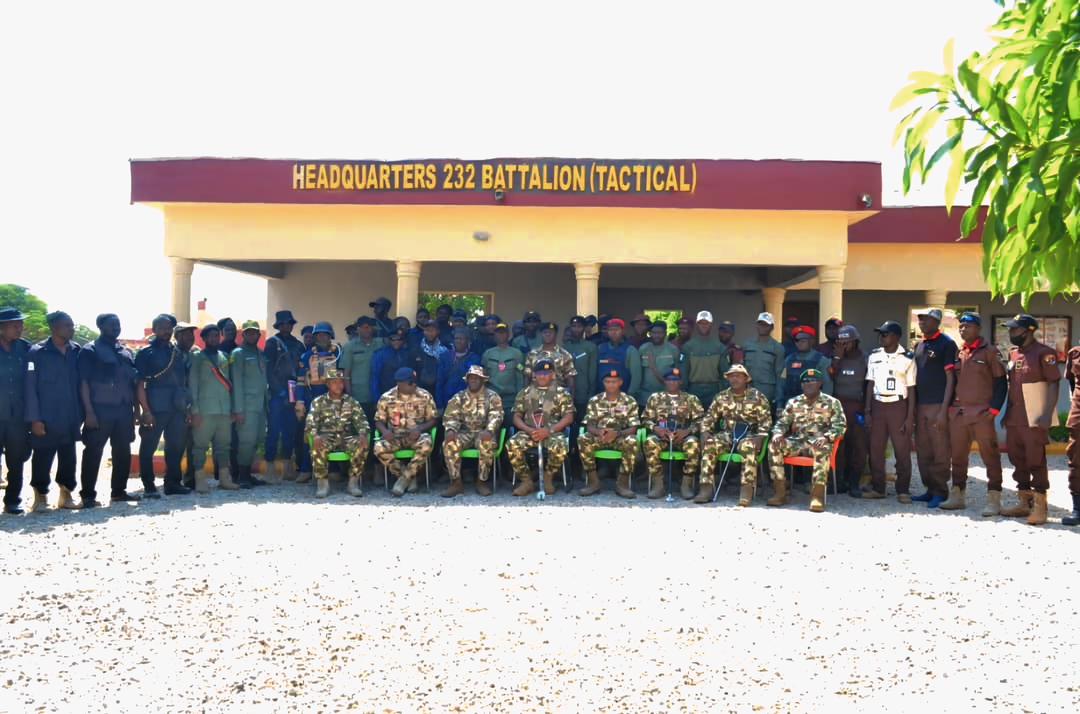
While addressing troops, hunters, and vigilante groups in Mubi and Tella Balla in Gombi Local Government Area, he called for heightened vigilance, warning that intensified offensives in other sectors could force hostile elements into new operational zones. He charged security stakeholders to prioritize the protection of vulnerable communities, strengthen intelligence networks, and identify collaborators aiding insurgent activities.
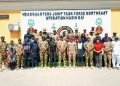
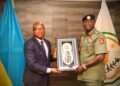
The visit, which forms part of ongoing efforts to reassess and reinforce security strategies across the North East, featured key military activities including inspection of the Quarter Guard, operational briefings, interactive sessions, troop engagements, exchange of souvenirs, signing of the visitors’ register, and group photographs.
The Theatre Commander was accompanied by the Commander Sector 4 OPHK, Brigadier General Amaechi Agwu, alongside other field commanders and principal staff officers of the Theatre Command.