


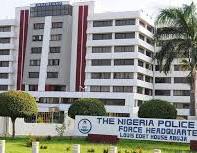
…As internal pushback intensifies, public support is crucial to sustain efforts aimed at restoring discipline, balancing manpower distribution, and strengthening core policing across the country
By Nkechi Eze
There is a moment in every genuine reform effort when those who benefit most from disorder begin to scream loudest about “due process.” Nigeria witnessed one such moment this week. A group of concerned police officers, as they describe themselves, has emerged to cry foul over what they call the “illegal” mass transfer of 695 personnel from Zone 2 Police Command Headquarters in Lagos. Their petition, dramatic in language and strategic in timing, invokes Public Service Rules, administrative breaches, welfare entitlements, and even the frightening spectre of 2027 election security all in a bid to halt Inspector-General of Police Olatunji Rilwan Disu from completing what is arguably the most overdue housecleaning in the history of Nigeria’s police administration.
Let us be clear from the outset: this write-up is not a call to disregard the welfare of police officers. Every Nigerian who wears the uniform deserves to be treated with dignity, paid their entitlements, and transferred within the bounds of the law. But let us also be clear about what is really happening here. The Zone 2 controversy is not primarily about disturbance allowances and baggage fees. It is about a long-entrenched system of patronage, power, and privilege that has made Zone 2 Police Command in Lagos one of the most bloated, most comfortable, and least productive postings in the entire Nigeria Police Force and a place where officers go to stay forever, not to serve.
IGP Disu must be supported, the Nigerian public must insist that he continue.
What Is Zone 2, and Why Does It Matter?
Zone 2 Police Command, headquartered at Onikan on Lagos Island, is one of twelve zonal commands in Nigeria’s police structure. It covers two of Nigeria’s most economically significant states Lagos and Ogun. Lagos alone is home to an estimated 15 to 20 million people, hosts the country’s busiest seaport and airport, drives a disproportionate share of Nigeria’s GDP, and serves as the commercial nerve centre of West Africa. Ogun State, its immediate neighbour, hosts hundreds of industries and shares an international land border with the Republic of Benin.
In theory, Zone 2 is a critical command that demands well-trained, disciplined, and operationally active police personnel. In practice, over the years, Zone 2 has morphed into something else entirely: a destination. A place where connected officers secure postings not to police Lagos and Ogun, but to leverage the commercial ecosystem of Lagos for personal enrichment. A place where 855 Special Police Officers (SPOs) by some accounts sit at the Zone 2 headquarters while police stations across the country cry out for manpower.
Read that figure again. 855 SPOs. Concentrated at one zonal headquarters. In a country where police stations in rural Benue, Zamfara, and Borno can barely muster a handful of officers to respond to bandit attacks, kidnappings, and community crises. In a country where the national police-to-citizen ratio remains one of the worst in Africa, hovering around 1 officer per 700 citizens against a United Nations benchmark of 1 to 450. In a country where ordinary Nigerians living in Surulere, Mushin, Ajegunle, and Badagry are told there are “not enough officers” to respond to their emergencies, there are 855 Special Police Officers loitering at a zonal headquarters.
This is not a welfare problem. This is a systemic rot, and it has festered for years.
The History That Nobody Wants to Talk About
The Zone 2 problem did not begin yesterday. For years, successive Inspectors-General of Police have known about the bloated, patronage-driven nature of Zone 2. For years, the Lagos commercial environment has made Zone 2 postings some of the most coveted assignments in the police force. For years, officers with connections, political, financial, and otherwise have worked to secure Zone 2 postings, then worked even harder to remain there indefinitely, defying normal rotation policies that would move them elsewhere.
Multiple previous IGPs have reportedly attempted to prune Zone 2’s rolls and redeploy excess personnel to where they are actually needed. Each time, they were met with resistance, some overt, some quiet, some bureaucratic. Officers who had become lords of Lagos’s commercial terrain, extracting rents from businesses, markets, and transport operations, were not about to allow themselves to be reposted to Borno or Yobe. They had built lives, networks, and revenue streams in Lagos. Zone 2 was not just a posting for them; it was a franchise.
This explains the fierce resistance to IGP Disu’s directive. The petition crying “illegal transfer” is not really about allowances. It is about disrupting an ecosystem of entitlement that has run for decades. It is the sound of privilege discovering that it cannot veto legitimate authority.
The April 18, 2026 Directive and the “Illegal” Allegation
The controversy centres on a Force Headquarters directive dated April 18, 2026, referenced CH:5360/FS/FHQ/ABJ/VOL.42/156, which ordered the transfer of 695 officers from Zone 2 Command under the newly posted AIG Olohundare Moshood Jimoh. A group of concerned officers subsequently produced a document titled “Violation of Public Service Rules, Administrative Sabotage, and Threat to 2027 Election Security,” in which they alleged that the transfers violated Nigeria’s Public Service Rules, specifically provisions relating to disturbance allowances, hotel and transit accommodation, and transport and baggage allowances under PSR 020501–020506 and 130105.
These are legitimate welfare concerns in isolation. Police officers, like any civil servant, are entitled to welfare provisions during transfer. If entitlements were not paid, that is a procedural gap that must be addressed. But here is where we must exercise critical thinking: the existence of unpaid allowances if true is an argument for paying those allowances, not for reversing the transfers. The welfare complaint, legitimate as it may be on its face, is being weaponised to achieve the ultimate goal of keeping 695 officers in Lagos indefinitely.
Consider the remarkable framing of their petition title: “Threat to 2027 Election Security.” The concerned officers have conjured a national security spectre , the 2027 general elections to argue that removing 695 officers from a headquarters building in Onikan endangers Lagos and Ogun states. This is a breathtaking claim. Are we to believe that the security of Lagos and Ogun states rests not on the 14,000-odd Lagos State Police Command officers, not on the mobile police units, not on the Army, Navy, Air Force, DSS, NSCDC, and LASEMA, but specifically on 695 officers stationed at Zone 2 headquarters? The argument is self-evidently absurd. It is designed to trigger political anxiety, not to make a genuine security case. The IGP and his team should not be distracted by it.
AIG Jimoh and the Zone 2 Assignment
Whether Jimoh’s appointment to Zone 2 was itself a reward for loyalty or part of a strategic plan to reform the command, the task before him and before IGP Disu is the same: Zone 2 must be made to function as a policing command, not a retirement home for connected officers. The transfer of 695 excess personnel is a necessary first step in that direction. If Jimoh is truly committed to reform, he will execute the IGP’s directive fully and transparently, ensuring that welfare entitlements are met while the redeployment proceeds.
IGP Disu’s Broader Reform Agenda: Context Is Everything
To understand the Zone 2 controversy, one must understand it in the context of IGP Olatunji Disu’s comprehensive reform agenda since assuming office. The Zone 2 situation is not an isolated act of administrative caprice. It is one front in a much larger battle to restructure, professionalise, and discipline the Nigeria Police Force.
Consider the breadth of what Disu has already moved against
Dismantling the Special Investigation Unit (SIU): In a move that sent shockwaves through the force, IGP Disu disbanded the Special Investigation Unit and ordered the transfer of all 88 personnel attached to it, specifically those who had served under Commissioner of Police Akin Fakorede, the controversial former head of the IGP Monitoring Unit. Fakorede, a former SARS commander with a documented record of alleged brutality, extrajudicial conduct, and election-related misconduct, had been appointed to lead the Monitoring Unit by former IGP Kayode Egbetokun in December 2024. Civil society organisations had loudly warned that his appointment damaged public trust. Disu acted, Fakorede was removed from the IGP Monitoring Unit, placed on mandatory leave, and reassigned to Research. The SIU he had built was demolished, his loyalists were scattered. This was not bureaucratic reshuffling, this was surgical excision of a problematic centre of power within the force.
Restructuring the Police Monitoring Unit: Following the SIU’s dissolution, IGP Disu oversaw a thorough restructuring of the Police Monitoring Unit, appointing DCP Aliyu Abubakar as the new head with a clear mandate for accountability and professionalism. The restructured unit is now designed, according to official police statements, to enable “proactive monitoring, intelligence-led inspections, and real-time oversight of police personnel and operations nationwide.” The framework harmonises critical investigative and monitoring functions in line with the force’s broader reform agenda.
Redeploying 56 Senior Officers from the Police Monitoring Unit: On April 11, 2026, just one week before the Zone 2 directive, IGP Disu approved the redeployment of 56 senior officers from the Police Monitoring Unit to various commands across the country. These were Chief Superintendents, Superintendents, Deputy Superintendents, and Assistant Superintendents who had been concentrated at the Abuja headquarters unit. Their dispersal to the FCT, Lagos, Rivers, Kogi, Nasarawa, Niger, and Benue represents the same logic at work in Zone 2: officers belong in the field, serving communities, not aggregated at headquarters structures where they serve no operational purpose.
Reducing Proliferating Tactical Units: IGP Disu also directed a strategic reduction of tactical teams at various command levels, citing their “excessive multiplication” as a direct cause of “manpower shortages at police divisions and posts” and “incidents that have negatively impacted the Force’s integrity.” He directed that tactical teams at zonal and state command levels be capped at five, and at area command and divisional levels at three. The IGP’s reasoning was explicit: the proliferation of tactical units had stripped police stations of personnel and created roving units with little oversight and dangerous incentives.
Acting Against Lobbying: Sources indicate that the IGP has explicitly warned against lobbying, a practice deeply embedded in Nigerian police culture where officers use political godfathers and financial inducements to secure or retain desirable postings. The warning against lobbying, issued in the context of the redeployment exercises, signals an intent to base postings on operational need and merit, not connection and cash.
Each of these actions tells the same story: a new IGP who came in with eyes open, who identified the structural pathologies that have crippled Nigerian policing for decades, and who is methodically dismantling them. Zone 2 is simply the largest and most visible of those pathologies.
What “Core Policing” Really Means and Why Zone 2 Officers Must Return to It
There is a phrase at the heart of this debate that deserves serious attention: “core policing” When IGP Disu, his management team and core supporters speak of returning officers to core policing, what exactly do they mean, and why does it matter?
Core policing refers to the fundamental functions for which the police force exists: patrol, crime prevention, emergency response, criminal investigation, community liaison, and the protection of lives and property. These functions happen at police divisions and stations, they happen on roads and in neighbourhoods, they require boots on the ground officers present, visible, accessible, and accountable to the communities they serve.
What happens at Zone 2 headquarters is emphatically not core policing. A zonal headquarters is an administrative and coordinating structure. It does not require 855 SPOs to function. By any rational assessment of police administration, a zonal headquarters running smoothly would need a fraction of that number. The remaining hundreds are there for other reasons, reasons that range from personal comfort to active rent-extraction from Lagos’s commercial ecosystem.
Ask any small business owner in Lagos’s markets, in Balogun, Idumota, or Alaba about their relationship with police officers who are not stationed at their nearest police post but who make regular, informal collections. Ask transport operators in Lagos about the policemen who appear not from their nearest division but from powerful headquarters formations. Ask private citizens who have been harassed, shaken down, or extorted by officers who, when asked to identify their unit, name formations far removed from the community in which they are causing havoc. A significant portion of the extortion and harassment that Lagosians suffer daily comes not from divisional officers but from these headquarters-attached personnel who move through the city with authority and impunity, answerable to no community structure.
Returning these 695 officers and the 855 SPOs to police stations where there are genuine manpower shortages is not punishment. It is the restoration of purpose, it is telling a police officer: you are not here to be comfortable, you are here to serve.
The “2027 Election Security” Smokescreen
The inclusion of 2027 election security concerns in the petition against the Zone 2 transfers deserves its own examination, because it reveals the strategic cynicism at work. By invoking elections, the concerned officers are attempting to mobilise political anxiety, hoping that politicians with Lagos interests and there are many will pressure the IGP to reverse the transfers.
This is a manipulation of the national security discourse, and it must be called out.
Lagos State’s security architecture does not depend on 695 officers at Zone 2 headquarters. Lagos State Police Command, one of the largest and best-resourced state commands in the country, has its own Commissioner of Police, its own operational structure, its own tactical units, and its own manpower. The Rapid Response Squad, an initiative of the Lagos State Government, operates independently. The Army, Navy, and other security agencies maintain a significant presence in Lagos. INEC conducts its election security planning through the Security Sector Working Group, which coordinates across multiple agencies.
To suggest that removing bloated personnel from a zonal headquarters will compromise election security is to insult the intelligence of Nigerians. What it will actually do, if anything, is strengthen election security because those officers, properly posted to divisions across the country, will be where they are actually needed during the elections: in communities, manning polling units, not warming chairs at headquarters.
The Welfare Argument: Valid in Parts, Weaponised in Whole
Let us be fair, some of the welfare concerns raised by the objecting officers have merit on their face. The Public Service Rules do provide for disturbance allowances and transit support during transfers. If 695 officers were ordered to move without receiving these entitlements, that is an administrative failure that should be corrected not by reversing the transfers, but by ensuring prompt payment of whatever is owed.
Nigerian police officers are notoriously underpaid and often poorly treated by the very institution they serve. Their welfare is a legitimate concern that any serious reform programme must address. IGP Disu’s reform agenda, if it is to have lasting impact, must include a welfare component not as a concession to those resisting reform, but as a matter of institutional justice.
However, there is a critical distinction between “pay our allowances” and “reverse our transfers.” The petition does not merely ask for welfare compliance. It asks for a halt to the entire exercise, a formal review, and the restoration of “administrative sanity” to Zone 2 language that essentially means: put everything back the way it was.
That cannot be allowed to happen. Pay the allowances, yes. Reverse the transfers, absolutely not.
A Pattern of Resistance: Why Previous IGPs Failed
It is instructive to examine why this problem persisted for so long before Disu arrived. Multiple IGPs before him, men who presumably knew about the Zone 2 bloating, who presumably received intelligence about officers becoming “lords” in their postings, who presumably understood the manpower distribution crisis either chose not to act or were prevented from acting effectively.
The reasons are structural and political. Lagos is not just any posting. It is Nigeria’s commercial capital, home to the wealthiest businessmen, the most powerful politicians, and the most active civil society. Officers attached to Zone 2 and Lagos-area formations over time build relationships with these power centres. Some become security escorts or informal fixers for businessmen and politicians. Some develop commercial interests of their own. When a new IGP attempts to move them, these relationships activate, phone calls are made, favours are invoked, petitions are written, and the language of legality is suddenly discovered.
This is precisely why the framing of the current resistance as a legal or welfare matter is so important to understand. The legal argument is a cover for political pressure, the welfare argument is a vehicle for institutional inertia. Together, they have succeeded in protecting Zone 2’s padded establishment for years.
IGP Disu should recognise this pattern for what it is and refuse to be its latest victim.
What Happens If Disu Backs Down
Let us consider the consequences of capitulation. If IGP Disu halts or reverses the Zone 2 transfers in response to the “illegal” petition:
He validates the veto: Every future IGP who attempts to reform a powerful, entrenched unit will know that a well-crafted petition invoking PSR provisions and election security concerns is sufficient to stop them. The reform agenda of the police force will be permanently vulnerable to precisely this kind of organised resistance.
He emboldens the networks: The officers who successfully resisted transfer will become heroes within the patronage networks that sustain Zone 2’s bloated establishment. Their networks will be strengthened, their impunity deepened, and their capacity to resist future reform enhanced.
He destroys his own credibility: IGP Disu came in with a clear mandate to reform the force. He has already demonstrated remarkable courage dismantling the SIU, removing Fakorede, restructuring the Monitoring Unit, redeploying headquarters-heavy personnel nationwide. Backing down on Zone 2 will be read, correctly, as the triumph of entrenched interest over institutional authority. His other reform gains will be undone symbolically, even if they survive practically.
He deepens the manpower crisis: The 695 officers transferred from Zone 2 are headed to commands across the country where they are genuinely needed. Reversing their transfer means those commands remain undermanned while Zone 2 remains overstuffed. The operational irrationality of the status quo continues.
He gives ammunition to 2027 political actors: By revealing that Zone 2 can be protected through political pressure dressed as legal argument, Disu opens the door to the further politicisation of police postings with actors already manoeuvring ahead of the 2027 elections using police formations as instruments of political positioning.
The cost of backing down is incalculable. The cost of proceeding, paying allowances, managing the transition well, addressing legitimate welfare gaps is manageable.
The Broader Call: Nigerians Must Insist on This Reform
This debate is not merely an internal police matter, it is a question of whether Nigeria’s institutions can self-correct, whether professional reform can overcome entrenched patronage, and whether the ordinary Nigerian who needs a policeman at the nearest division, not a headquarters officer in a luxury car will finally get the service they deserve and pay for with their taxes.
Every Nigerian who has been told “we don’t have enough men” at a police station while hundreds of officers sat in Lagos headquarters, every business owner who has been harassed by officers not from any identifiable station, every family that lost a loved one to crime while the nearest police post was undermanned, every community that has paid levies to police formations that serve no community function. These Nigerians have a direct stake in whether IGP Disu succeeds or fails.
Civil society organisations must speak up clearly: the Zone 2 transfers are legitimate. The reform agenda is necessary. Welfare entitlements must be paid, but the exercise must continue.
Nigerian media must do its job: investigate what 855 SPOs were actually doing at Zone 2 headquarters, investigate the financial flows, investigate the commercial relationships that made Zone 2 so desirable for so long and tell the story of the communities that were under-policed while Lagos headquarters was over-staffed.
Politicians who have relationships with Zone 2-based officers must stay out of this. The attempt to invoke 2027 election security as a cover for protecting patronage postings is the kind of political manipulation that has destroyed Nigerian institutions for decades. Any legislator or political figure who uses their platform to pressure the IGP into reversing these transfers is not defending police welfare, they are defending their own network.
Conclusion: Support the Broom, Not the Dust
Nigeria has watched too many reform efforts die in the hands of the very institutions they were meant to clean. The pattern is familiar: a reformer arrives with energy and vision, makes initial moves, encounters organised resistance from those with the most to lose, faces pressure from multiple directions, and eventually moderates, compromises, or abandons the effort altogether. The institution returns to its default state, a little worse for the disruption, and the next reformer inherits an even more entrenched problem.
IGP Olatunji Rilwan Disu has the opportunity to break this cycle. He has moved with unusual speed and consistency since assuming office, he has dismantled the SIU, restructured the Monitoring Unit, capped tactical teams, warned against lobbying, redeployed headquarters-heavy officers across the country, and now taken on the most entrenched patronage posting in the entire southwest Zone 2, Lagos.
The resistance he faces on Zone 2 is not a legal challenge, it is a loyalty test, it is the test that determines whether this IGP will be another administrator who nibbled at the edges of reform before being absorbed by the system, or whether he will be the rare institutional leader who actually changes something.
The answer should not be left to the IGP alone. The Nigerian public, civil society, professional bodies, and the media must make clear that they see what is happening, that they understand the importance of this moment, and that they will not allow the language of welfare and legality to be used as a crowbar to pry open a reform process and dismantle it from within.
Those 855 Special Police Officers at Zone 2 headquarters need to go back to policing. Nigeria’s understaffed police stations need those men and women, the communities of this country need their police forces in the streets, not in headquarters.
IGP Disu is doing the right thing. Nigeria must have his back.