By Nkechi Eze
Against the backdrop of more than a decade of violent insurgency that has devastated communities across Nigeria’s North-East and displaced millions, the Federal Government’s deradicalisation and rehabilitation initiative known as Operation Safe Corridor has emerged as a critical pillar in the country’s non-kinetic strategy to address extremism, rebuild fractured communities, and promote lasting peace.
At the heart of this initiative is the recognition that the complex dynamics of insurgency in the region cannot be resolved by military force alone. While sustained offensives by the Nigerian Armed Forces have degraded terrorist networks and reclaimed occupied territories, security experts increasingly emphasise that long-term stability requires addressing the human dimension of conflict, particularly individuals who were coerced, abducted, or manipulated into joining insurgent groups.
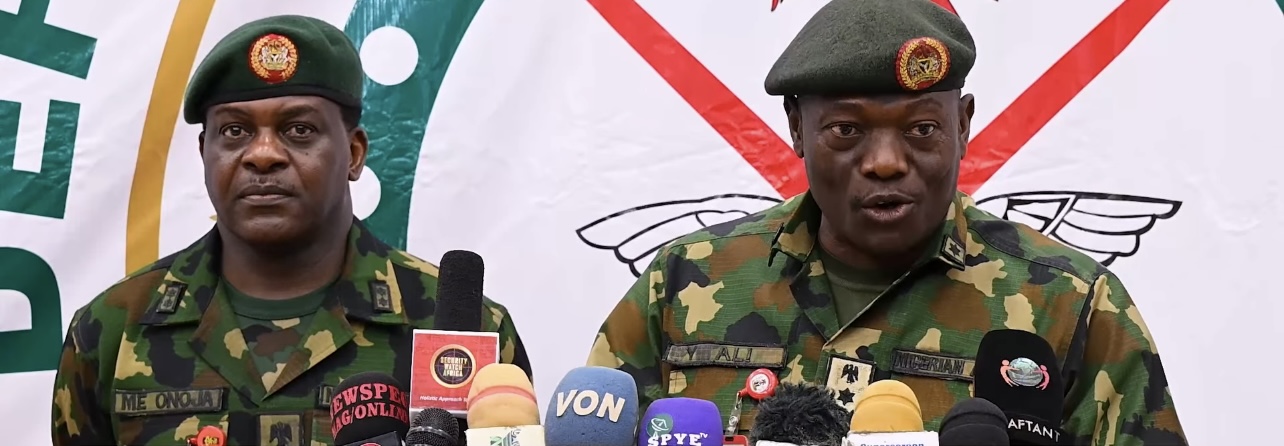
It is within this framework that the Coordinator of Operation Safe Corridor, Brigadier General Yusuf Ali, has reaffirmed the importance of the programme as a structured, humane and strategic response to managing low-risk individuals who voluntarily surrendered after being forced into insurgent ranks.
Speaking during a media briefing at the DefenceHeadquarters, the coordinator explained that the core mandate of Operation Safe Corridor is to provide credible pathways for willing and repentant insurgents and other low-risk armed actors to disengage from violence and transition back into peaceful civilian life.
According to him, the initiative was established around 2015–2016, at the height of Nigeria’s insurgency, when intensified military operations began dismantling insurgent strongholds across the North-East.
As troops of the Nigerian military advanced into previously occupied areas such as Gwoza, Madagali, and Bama, thousands of civilians who had been forcibly conscripted or held captive by terrorist elements found opportunities to escape.
General Ali noted that many of those who surrendered during these operations were not hardened fighters but victims of coercion, abduction, or intimidation by insurgent groups.
“As these territories were liberated, many abducted or coerced individuals seized the opportunity to escape and surrender. This created the urgent need for a structured system to properly manage, rehabilitate, and reintegrate them into society,” he explained.
He clarified that Operation Safe Corridor specifically targets individuals classified as low-risk. Importantly, he stressed that the programme itself does not determine who qualifies for participation.
Rather, such classification follows a rigorous and multi-layered screening process coordinated by the Federal Ministry of Justice and supported by various government institutions as well as international partners.
Those cleared for the programme are generally regarded as victims who were compelled into insurgent activities rather than voluntary combatants.
Instead of immediately returning them to their communities after surrender, authorities channel them through Operation Safe Corridor to address the deep psychological scars and social disruptions caused by prolonged exposure to violence.
Many participants arrive with trauma from captivity, exposure to extremist ideology, and in some cases substance dependency acquired during their time with insurgent groups.
“This process ensures they are mentally and socially prepared for reintegration,” General Ali said.
He explained that the programme operates through a carefully designed framework known as DDRR, Disengagement, Deradicalisation, Rehabilitation and Reintegration.
The disengagement phase focuses on separating individuals from extremist structures and helping them renounce violence. Deradicalisation then addresses ideological indoctrination by countering extremist narratives and promoting constructive civic values.
Rehabilitation involves psychosocial therapy, counselling, and life-skills training aimed at restoring emotional stability and rebuilding personal identity outside extremist environments.
Finally, reintegration prepares participants to return to their communities as productive members of society with vocational skills and livelihood opportunities.
According to General Ali, the programme draws strength from a robust multi-agency collaboration involving key government institutions.
For instance, the Nigerian Correctional Serviceplays a significant role in facilitating deradicalisation processes, while the National Directorate of Employment provides vocational training in various trades such as tailoring, barbing, carpentry and other employable skills designed to promote self-reliance.
Similarly, the National Drug Law Enforcement Agency supports the programme by addressing cases involving substance abuse and drug dependency among participants.
This inter-agency cooperation ensures that the programme tackles not only behavioural transformation but also the socio-economic realities that often drive vulnerability to extremist recruitment.
General Ali emphasised that Operation Safe Corridor forms a vital component of a broader national strategy to stabilise the Lake Chad region, noting that its impact extends beyond Nigeria’s borders.
By promoting deradicalisation and community reintegration, the initiative contributes significantly to peacebuilding across the Lake Chad Basin and the wider Sahel, regions that have faced persistent security challenges from violent extremist groups.
He, however, clarified that the programme does not apply to all insurgents.
Individuals identified as medium- or high-risk particularly core fighters and operational leaders of terrorist organisations are excluded from the programme and instead processed through the criminal justice system.
Such individuals are typically captured during military operations and subsequently prosecuted in accordance with Nigerian law. Upon conviction, they serve custodial sentences in correctional facilities.
General Ali stressed that the purpose of Operation Safe Corridor has often been misunderstood, prompting the need for greater public awareness.
“Operation Safe Corridor is neither a recruitment channel for the Armed Forces nor a reward system for criminality,” he stated firmly.
Rather, he explained, the programme complements ongoing military operations and judicial processes as part of a broader transitional justice framework designed to promote reconciliation, prevent cycles of violence, and strengthen long-term national security.
Security analysts widely regard the initiative as one of the most comprehensive deradicalisation and reintegration programmes in Africa, reflecting Nigeria’s evolving approach to counter-insurgency, one that balances kinetic operations with social recovery and community healing.
As Nigeria continues to confront the enduring effects of insurgency, initiatives like Operation Safe Corridor are increasingly seen as essential tools for transforming former conflict actors into agents of peace, rebuilding trust within affected communities, and consolidating the fragile gains made in the fight against extremism.