

By Nkechi Eze
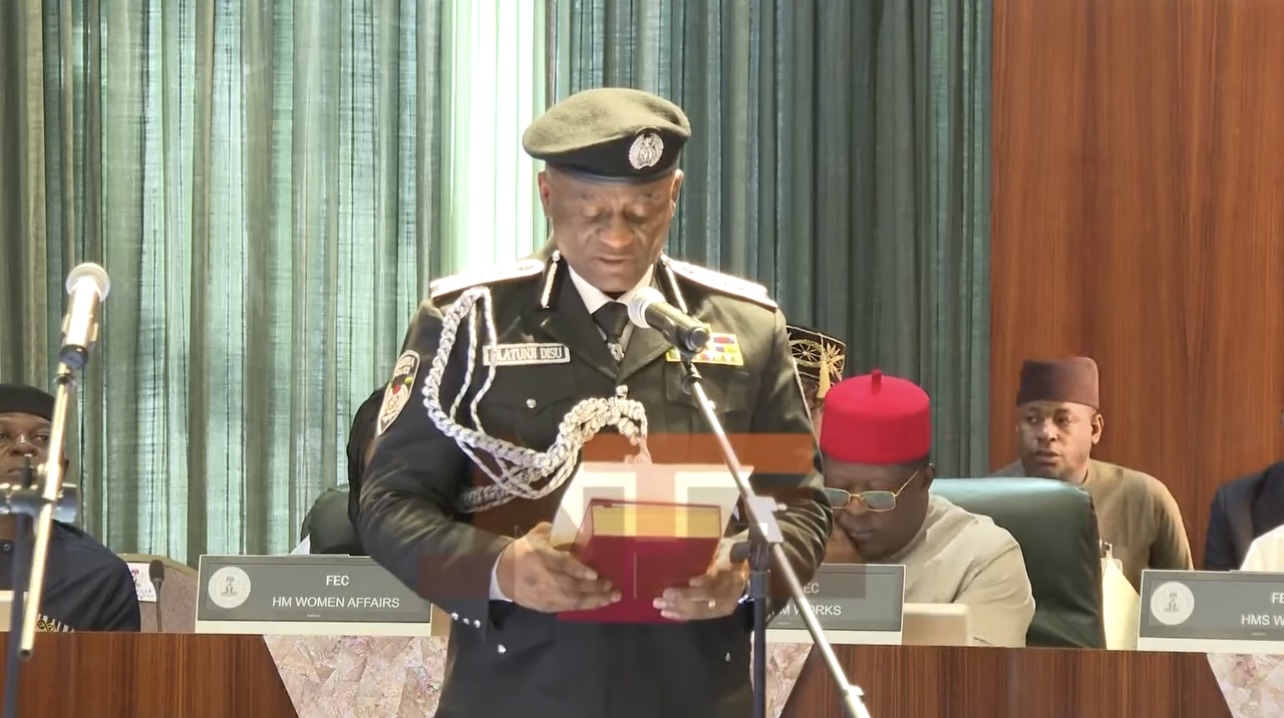
President Bola Ahmed Tinubu on Wednesday formally inaugurated Olatunji Disu as the 23rd Inspector-General of Police at a brief but significant ceremony held at the State House, Abuja, signalling a new leadership chapter for the Nigeria Police Force.
The swearing-in ceremony, which took place shortly before the commencement of the Federal Executive Council (FEC) meeting, also witnessed the administration of the oath of office on six commissioners of the Revenue Mobilisation Allocation and Fiscal Commission and two commissioners of the Federal Civil Service Commission.
The event was attended by top government functionaries, including Vice-President Kashim Shettima; the Secretary to the Government of the Federation, George Akume; the Chief of Staff to the President, Femi Gbajabiamila; and the Head of the Civil Service of the Federation, Esther Walson-Jack, alongside ministers, senior officials and family members of the appointees.
Speaking with State House correspondents after taking the oath, IGP Disu outlined a reform-driven agenda anchored on improved welfare for officers, restoration of public safety and proactive engagement in discussions surrounding the establishment of state police.
He disclosed that a committee had been constituted to examine the concept of state policing from the perspective of the Nigeria Police Force, stressing that the institution must actively contribute to shaping any future framework. According to him, the police cannot afford to remain passive observers in conversations that directly affect their constitutional mandate.
“State police has come to stay and the police should be able to contribute their own part in making it succeed,” he stated, dismissing suggestions that decentralised policing would weaken the Force. “The police are not afraid, our jobs are not being taken; it is just an issue of partnership.”
On the issue of welfare, the new IGP acknowledged longstanding concerns regarding the working conditions of officers and men, noting that effective policing requires a motivated workforce. He emphasised that improved welfare, better accommodation and enhanced operational support would remain central to his leadership priorities.
Reflecting on the hazards of policing, Disu described the profession as demanding and high-risk, recalling that during his tenure in the Federal Capital Territory, 140 officers lost their lives in the line of duty within a single year. He stressed that such sacrifices underscore the urgent need for stronger institutional support and comprehensive reforms.
“Our jobs are very difficult; men sleep out and a lot of people don’t have time to go back to their families,” he said, expressing confidence that the Tinubu administration would provide the necessary backing to reposition the Force.
The ceremony set the tone for what observers see as a critical phase for law enforcement reform in Nigeria, particularly as conversations around security restructuring and community-based policing gain momentum nationwide. With the Federal Executive Council meeting commencing immediately after the inauguration, the appointment of the 23rd Inspector-General signals the administration’s renewed focus on strengthening internal security architecture and enhancing public trust in policing.