

By Nkechi Eze
The Acting Inspector-General of Police, Olatunji Disu, has pledged to reposition the Nigeria Police Force through sweeping reforms anchored on professionalism, accountability, and stronger community partnership, declaring that the days of impunity within the Force are over.
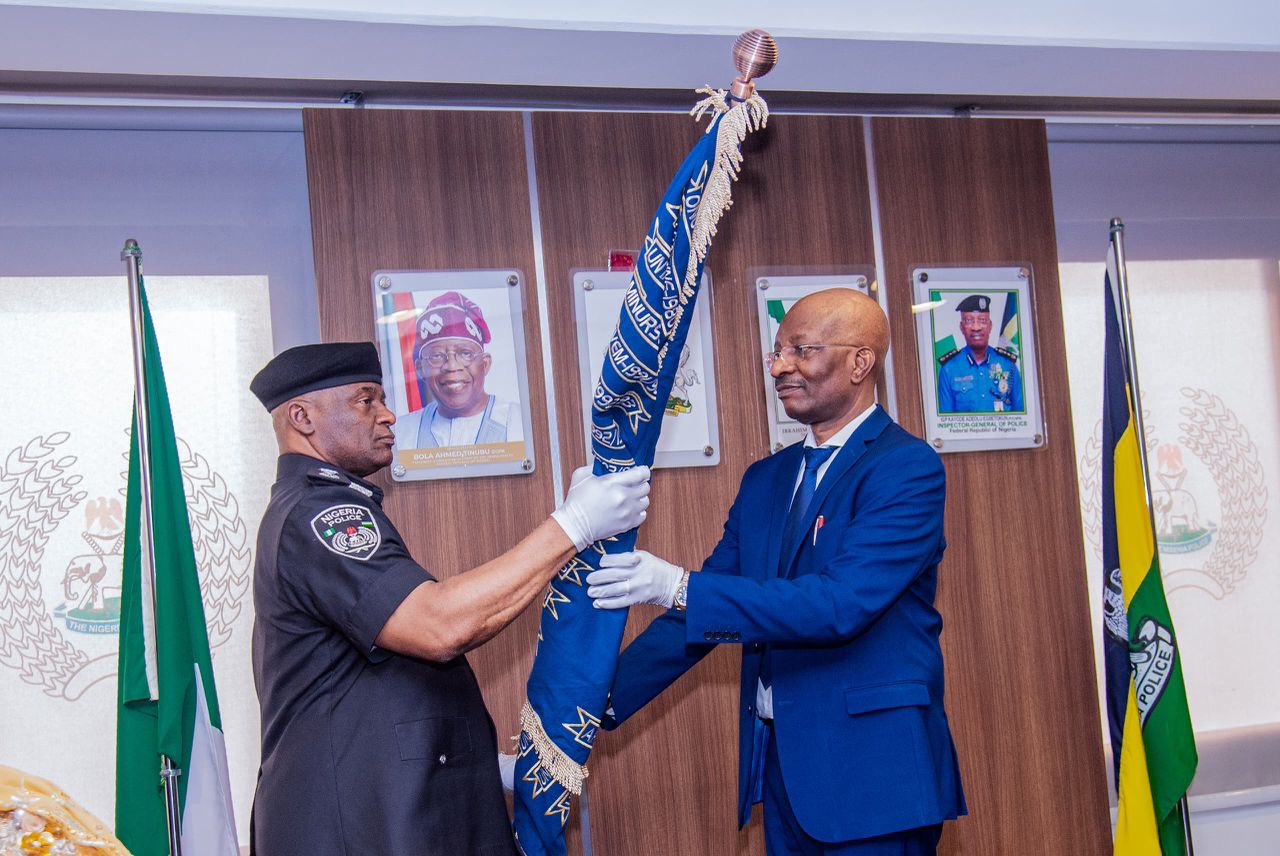
Speaking at his handover ceremony, Disu expressed profound gratitude to President Bola Ahmed Tinubu for entrusting him with what he described as a sacred national responsibility, assuring that he would neither squander the confidence reposed in him nor take the appointment lightly.
“I want to thank you for the great confidence reposed in me by appointing me as the 23rd indigenous Inspector-General of Police. This is a confidence I will neither squander nor take lightly. I am committed to nurturing and upholding it until it fully aligns with the expectations of His Excellency and the aspirations of Nigerians, ensuring the protection of lives and property of every law-abiding citizen and all residents across the country,” he said.
The new police chief said despite the flood of congratulatory messages he had received since his appointment, he considered the moment not a time for celebration but a call to duty.
“It is not yet time because a heavy burden has been placed on my shoulders and those of my colleagues. It is not yet time because I know the expectations are very high. It is not yet time because I know we should not only meet the expectations, but strive to surpass them,” he stated.
Disu acknowledged the contributions and sacrifices of past Inspectors-General of Police, noting that his administration would build on the institutional foundations laid by his predecessors.
Addressing officers and personnel, he described himself first as a police officer before being Inspector-General, pledging to lead with empathy, integrity, and understanding of the realities faced by officers on the frontlines.
“I know what it means to stand a post in the rain. I am aware of the risks involved in responding to any distress call. I know what it feels like to serve a public that sometimes applauds you and sometimes distrusts you. Those experiences are not behind me; they will live in every decision I make in this office,” he said.
He acknowledged existing institutional challenges, including public trust deficit, outdated systems, resource gaps, and misconduct in some quarters, stressing that confronting those realities was essential to rebuilding a people-oriented police force.
The new IGP outlined a three-point reform agenda focusing on professionalism and modernisation, accountability and integrity, and community partnership and public trust.
Under professionalism and modernisation, Disu said intelligence-led policing, forensic investigation, digital technology, and evidence-based practices would define police operations, while investments would be made in training and equipping officers.
“We will move this Service decisively into the modern era. Intelligence-led policing, forensic investigation, digital tools, and evidence-based practice will define how we work. Not intimidation, not shortcuts, not the abuse of authority,” he declared.
On accountability, he warned that misconduct would no longer be tolerated.
“I will say this plainly, so there is no confusion: the days of impunity are over. The badge is a symbol of public trust. Anyone who treats it otherwise will face the full consequences of our disciplinary processes. This applies at every rank, without exception,” he warned.
He also emphasised the importance of community policing, describing it as the foundation of effective policing.
“No police service in the world has ever achieved lasting public safety by operating against its communities rather than within them. We will go to the people. Not to lecture, but to listen. Community policing is not a programme. It is a philosophy, and it will become the heartbeat of how this Service operates,” Disu said.
He assured officers of his commitment to improving their welfare and working conditions, while urging Nigerians to support the police through cooperation, vigilance, and constructive engagement.
“To the citizens of this nation, I ask for your partnership. Report crime. Engage with your local officers. Hold us accountable when we fall short, and encourage us when we get it right,” he added.
Meanwhile, the outgoing Inspector-General of Police, Kayode Egbetokun, said he was relinquishing office with gratitude and confidence in his successor’s ability to advance ongoing reforms.
Egbetokun described his tenure as the highest professional honour of his career, noting that when he assumed office, the Force faced evolving threats, technological crimes, and increasing public expectations that required decisive institutional reforms.
According to him, his administration strengthened intelligence-led policing, expanded digital crime-tracking and forensic capabilities, enhanced inter-agency coordination, reinforced accountability mechanisms, and modernised tactical operations nationwide.
He said targeted operations disrupted kidnapping syndicates, curtailed violent crimes, and improved security response, while officer welfare was improved through accelerated promotions, enhanced insurance schemes, housing initiatives, and expanded training programmes.
“Public trust cannot be commanded by authority; it must be earned through integrity, transparency, and measurable results,” he said.
Expressing confidence in Disu, he urged him to consolidate reforms, deepen intelligence integration, expand technological modernisation, and sustain community policing.
“As I hand over to my successor, I do so with confidence in his competence, experience, and strategic capacity. The foundation has been reinforced; the systems recalibrated; the reform trajectory clearly defined,” Egbetokun said.
He also called on Nigerians to continue supporting the police, stressing that national security depends on collective responsibility.
“The promise of security is not sustained by the Police alone; it is strengthened by a nation that stands together,” he added.
Egbetokun said he was stepping down confident that the Nigeria Police Force now stands stronger and better positioned to meet the nation’s security challenges.