

By Nkechi Eze
At a time when Nigeria continues to confront evolving threats from terrorism, violent extremism and organised criminal networks, the National Counter Terrorism Centre (NCTC), Office of the National Security Adviser, has reiterated the critical role of responsible media engagement in safeguarding national security. The call comes against the backdrop of rapid news cycles, digital virality and heightened public demand for instant information, which, security officials say, require greater discernment in reporting sensitive matters.
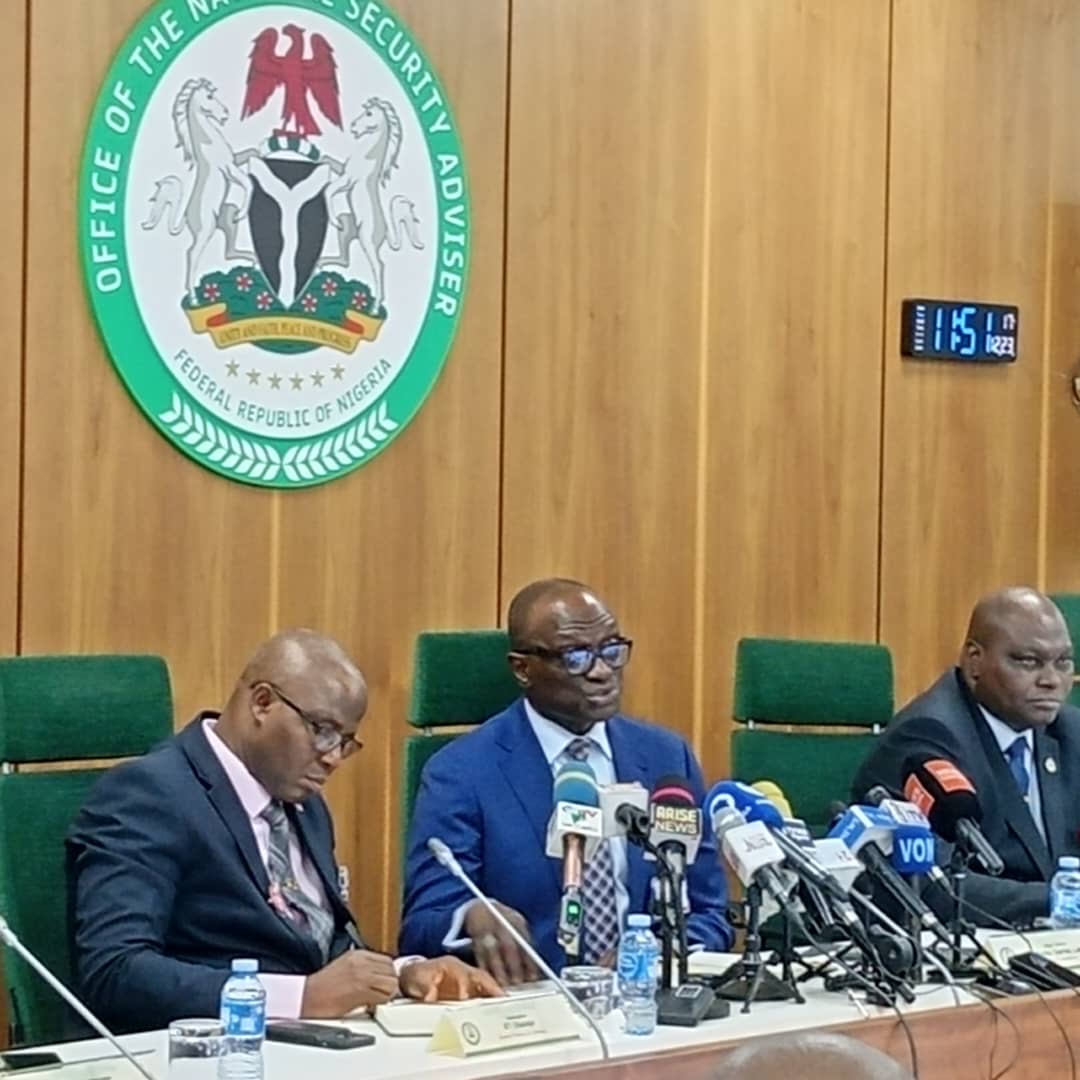
Speaking at an end-of-the-year media parley with Defence Correspondents in Abuja on Tuesday, the National Coordinator of the NCTC, Major General Garba Laka, cautioned media organisations against the publication of sensitive operational details that could undermine the Federal Government’s ongoing counterterrorism efforts.
General Laka acknowledged the indispensable role of the media in Nigeria’s security architecture, noting that sustained, professional reporting has helped shape public understanding of complex security realities, amplified national counterterrorism narratives and strengthened public confidence in the resolve of government to confront threats to national stability.
He, however, warned that the dynamics of modern information dissemination have made the balance between public interest and national security increasingly delicate. “In an era of instant news cycles, digital virality, and intense competition for breaking stories, the line between public interest and national security imperatives can sometimes become blurred,” he said.
According to him, operational details, intelligence-led activities and ongoing investigations are inherently sensitive and must be handled with care. “Premature or detailed disclosure of such information, however well-intentioned, can compromise operations, endanger lives, undermine ongoing efforts, and inadvertently aid adversaries who actively exploit open-source information,” the NCTC Coordinator stressed.
General Laka was emphatic that the Centre’s appeal to the media was not a call for silence or a restriction on accountability, but a plea for responsibility and professional judgement. “Our appeal, therefore, is not for silence, but for responsibility. Not for restraint in holding institutions accountable, but for discernment in separating what should be reported immediately from what should be handled with caution or deferred in the overriding interest of national security,” he stated.
He further underscored that national security and press freedom are not opposing forces, but complementary pillars of a stable democracy. While a well-informed public remains essential, he said, the protection of sensitive operational processes is equally vital to safeguarding citizens and security personnel on the frontlines.
Reaffirming the Centre’s commitment to partnership, General Laka said the NCTC would continue to engage the media through regular briefings, background sessions and structured information sharing to ensure reporting remains accurate, well-contextualised and does not inadvertently jeopardise security objectives.
Looking ahead, he noted that the changing tactics of terrorists and bandits demand stronger coordination, deeper intelligence fusion and strategic communication that denies criminal elements the publicity they seek, while reassuring citizens of the state’s capacity and resolve.
“As we look ahead to the coming year, our collective task remains clear: terrorism, violent extremism, and organised criminals continue to evolve in form and tactics. Countering them requires efficient strategic communication, public awareness, and national cohesion,” he said, adding that the media remains a vital ally in this effort.
General Laka concluded by thanking the media for its professionalism and collaboration throughout the year, expressing confidence that continued cooperation, understanding and responsible partnership would further strengthen Nigeria’s collective resolve to remain safe, secure and united.