By Nkechi Eze
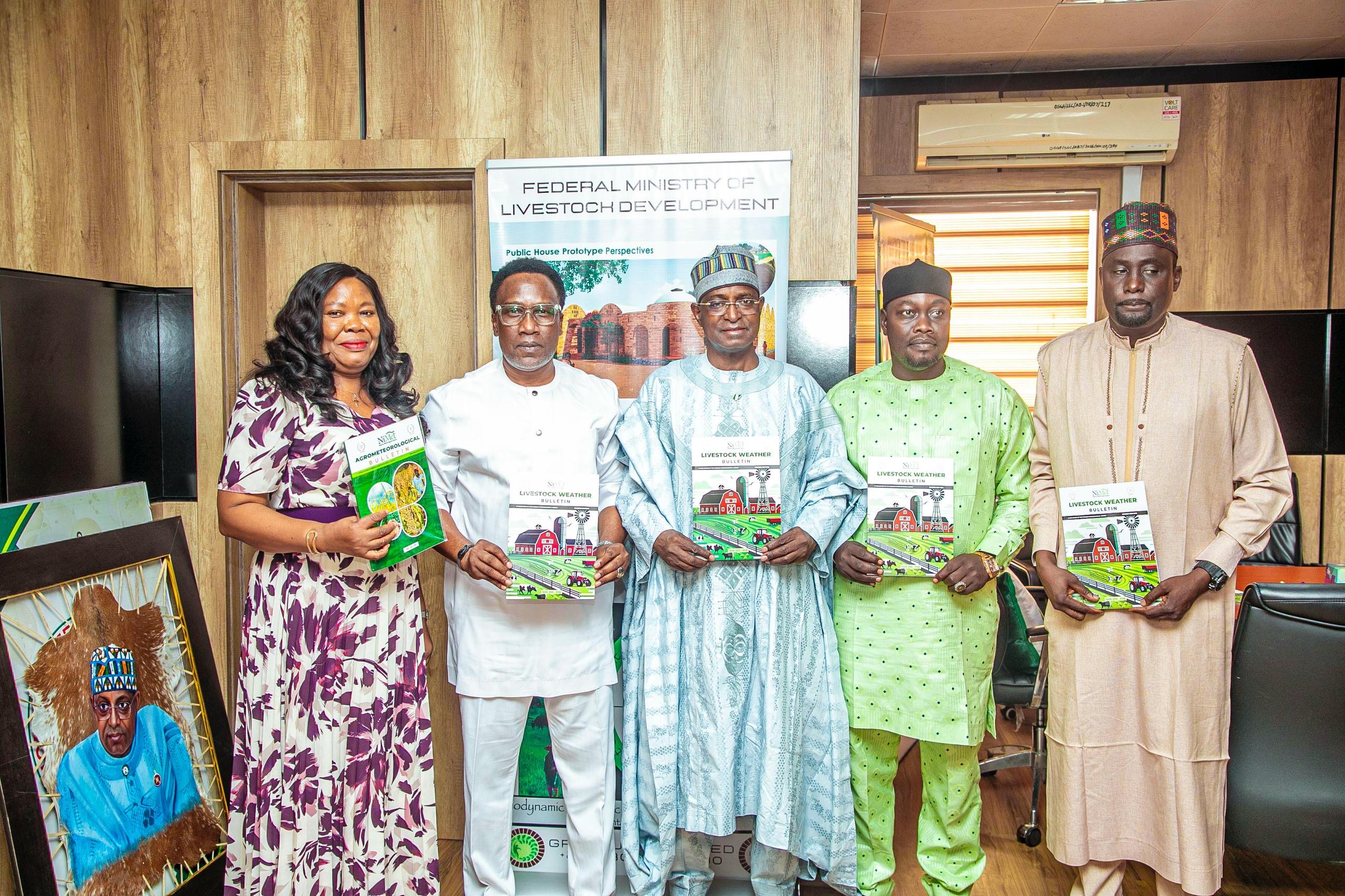
The Nigerian Meteorological Agency (NiMet) has taken a significant step toward supporting climate-smart livestock production with the presentation of its maiden Livestock Weather Bulletin to the Honourable Minister of Livestock Development, Alhaji Idi Mukhtar Maiha.
The bulletin was presented on Tuesday, 16 December 2025, when the Director-General and Chief Executive Officer of NiMet, Prof. Charles Anosike, led a delegation of the Agency on a courtesy visit to the Minister in Abuja. The engagement underscored NiMet’s growing focus on sector-specific climate services tailored to national development priorities.
Presenting the publication, Prof. Anosike explained that the visit was aimed at formally unveiling the maiden Livestock Weather Bulletin to the Ministry, describing it as a strategic tool designed to deliver timely and accurate weather information specifically tailored to the needs of livestock farmers across the country. According to him, the bulletin is intended to support informed decision-making, improve productivity, enhance planning, and reduce exposure to climate and weather-related risks within the livestock value chain.
He emphasised that meteorological information plays a critical role in livestock production, noting that weather conditions directly influence animal health, including heat stress and disease patterns, as well as feed and water availability through pasture growth and drought cycles. He added that weather forecasts also affect breeding cycles and day-to-day farm operations such as housing, waste management, and animal movement, stressing that reliable climate information enables farmers to take proactive steps that minimise losses and improve overall production outcomes.
Prof. Anosike reaffirmed NiMet’s statutory mandate as Nigeria’s national authority on weather and climate services and expressed the Agency’s readiness to work closely with the Ministry of Livestock Development. He stated that NiMet is prepared to provide technical support, training, and capacity building for extension officers and livestock farmers to deepen the effective use of meteorological information and promote resilient, climate-smart livestock systems nationwide.
Responding, the Honourable Minister of Livestock Development, Alhaji Idi Mukhtar Maiha, welcomed the initiative and underscored the practical value of weather information in livestock management. He disclosed that he personally relies on weather forecasts in managing his private farming investments, describing accurate forecasting as an indispensable tool for planning and risk management in agriculture.
The Minister further revealed that the Ministry has identified 417 grazing reserves across the country and has recently secured approval for their rehabilitation. He noted that effective collaboration with NiMet would be critical to ensuring that the rehabilitation programme is climate-smart, sustainable, and resilient to weather variability. In line with the Ministry’s modernisation agenda, he also disclosed plans to establish a situation room in the Ministry’s new office complex, where live weather data will be displayed on a digital dashboard, adding that NiMet’s support would be vital to the success of the initiative.
Alhaji Maiha commended NiMet for aligning its services with government policies aimed at transforming the livestock sector and expressed optimism that closer cooperation between both institutions would strengthen planning, reduce climate risks, and enhance productivity across the sector.
The meeting concluded with an agreement by both parties to establish a technical working group by January 2026 to identify and prioritise areas of collaboration. It was also agreed that a Memorandum of Understanding would be drafted and signed by the first quarter of 2026 to formalise cooperation on weather data sharing, training, and joint capacity-building programmes, with plans to organise workshops and technical engagements in early 2026.
The presentation of the maiden Livestock Weather Bulletin marks a new chapter in NiMet’s effort to deliver targeted climate services that support national food security, sustainable livestock development, and climate resilience.