

By Nkechi Eze
The Nigerian Meteorological Agency (NiMet) and the General Directorate of Meteorology (DGM) of the Kingdom of Morocco have strengthened bilateral cooperation through a new partnership aimed at improving weather predictions, advancing climate research and enhancing resilience to climate-related challenges across Africa.
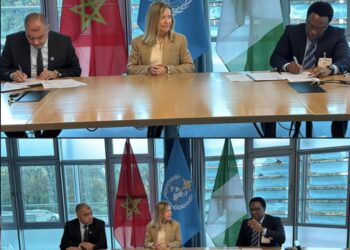
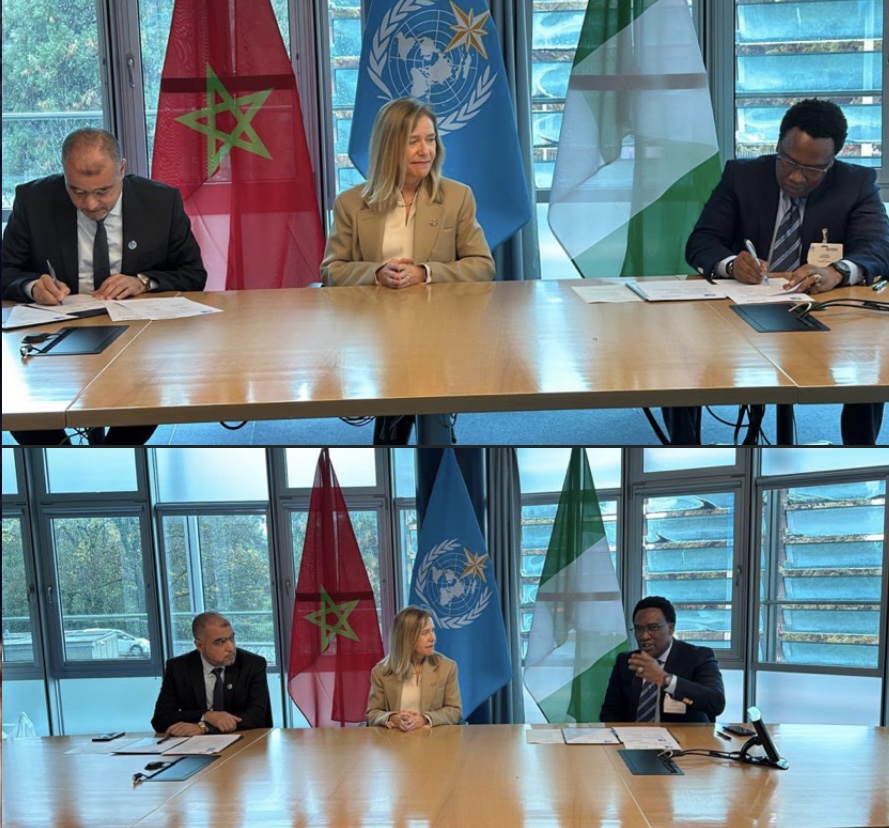
The partnership was formalised through the signing of a Memorandum of Understanding (MoU) by the Director-General/Chief Executive Officer of NiMet, Professor Charles Anosike, and his Moroccan counterpart, Mohammed Dkhissi, on the sidelines of the ongoing session of the Commission for Observation, Infrastructure and Information Systems (INFCOM) at the World Meteorological Organisation (WMO) Secretariat in Geneva, Switzerland.
Speaking at the ceremony, Anosike stressed the importance of demonstrating Africa’s capacity and expertise in meteorology and climate science, noting that closer collaboration between the two institutions would strengthen technical capabilities and improve the delivery of weather and climate services across the continent.
He explained that the partnership would also facilitate technical assistance to other meteorological services in the region, ensuring that countries with limited capabilities benefit from shared expertise and technological advancements.
According to him, the collaboration reflects the vision of the WMO to promote international cooperation, adding that African countries could achieve greater results by pooling their resources, knowledge and technical capacities.
On his part, Dkhissi described the agreement as a mutually beneficial partnership that would promote the exchange of experiences, expertise, knowledge and technological innovations between both countries.
He emphasised that the MoU was not intended to remain a document on the shelf but would be implemented immediately to deliver practical benefits to both institutions.
The Secretary-General of the WMO, Professor Celeste Saulo, who witnessed the signing ceremony, congratulated both Permanent Representatives and described the agreement as a demonstration of the cooperation that lies at the heart of the organisation’s mission.
Saulo also expressed the WMO’s readiness to learn from the bilateral partnership and its outcomes.
Under the agreement, both institutions will collaborate in key areas, including weather forecasting, seasonal climate prediction, early warning systems, meteorological and climate research, and the development of climate services for socio-economic sectors.
The partnership will also cover meteorological observation and measurement systems, metrology and calibration, information and telecommunication infrastructure, database management, institutional capacity-building, peer-to-peer technical support, and knowledge and technology transfer.
Other areas include the joint development of meteorological tools, digital innovation and the application of Artificial Intelligence (AI) to weather and climate services, as well as Quality Management Systems (QMS) and other mutually agreed projects.