

By Nkechi Eze
The African Union (AU) has endorsed Nigeria’s National Counter Terrorism Centre (NCTC), under the Office of the National Security Adviser (ONSA), as a Regional Centre of Excellence in Counter-Terrorism, positioning the Centre to strengthen intelligence sharing, operational coordination and capacity building among African countries.
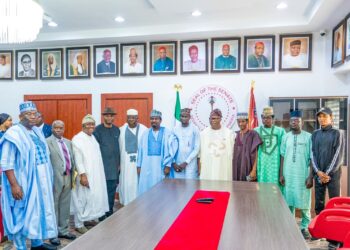
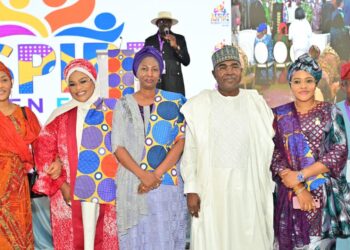
According to an official statement signed by Abu I. Michael, Head of Strategic Communication, NCTC-ONSA, the accreditation was announced on October 27, 2026, by the Acting Director of the African Union Counter Terrorism Centre (AUCTC), Dr Idriss Mounir Lallali, on behalf of the African Union Commission’s Commissioner for Political Affairs, Peace and Security, at the conclusion of the African Lessons Learned Forum in Abuja.
The accreditation fulfils President Bola Ahmed Tinubu’s vision of positioning Nigeria as a regional hub for counter-terrorism cooperation, following his declaration of the NCTC as a Regional Centre of Excellence for West Africa and the Sahel at the High-Level African Counter-Terrorism Meeting held in Abuja in April 2024.
The declaration, subsequently reflected in the Abuja Declaration, sought to strengthen Nigeria’s contribution to collective African security through improved intelligence sharing, operational coordination, specialised training and institutional capacity development.
The statement explained that the accreditation followed a rigorous assessment of the Centre’s institutional capacity, governance structures, training programmes, analytical capabilities, coordination mechanisms, and adherence to human rights and the rule of law.
It noted that the process began with the signing of a Memorandum of Understanding between the African Union and the NCTC in September 2025, followed by a technical assessment mission conducted by the AUCTC in Abuja in December 2025.
The assessment produced an Accreditation Roadmap outlining the institutional standards required for recognition. Subsequently, the NCTC strengthened its governance structures, developed training curricula and operational procedures, enhanced its analytical and coordination functions, and reinforced its commitment to human rights and the rule of law.
Announcing the accreditation, Lallali said, “It is therefore my pleasure to announce that the African Union is accrediting the NCTC as an African Union Regional Centre of Excellence in Counter Terrorism.”
He disclosed that the decision would be formally communicated to the Federal Government through a Note Verbale issued by the Department of Political Affairs, Peace and Security through the AUCTC.
According to him, the accreditation would initially run for three years, subject to renewal, with the formal communication specifying the Centre’s regional responsibilities and the African Union’s commitments.
With the accreditation, the NCTC is expected to support African Union member states, particularly those in West Africa and the Sahel, through specialised training, joint threat analysis, research, technical assistance, exchanges of lessons learned and enhanced counter-terrorism cooperation.
Speaking at the event, the National Security Adviser, Mallam Nuhu Ribadu, represented by the NCTC National Coordinator, Major General Adamu Garba Laka, described the development as both recognition of Nigeria’s progress and a responsibility to contribute more substantially to Africa’s collective security.
Ribadu expressed appreciation to President Tinubu for his leadership, political will and sustained investment in the country’s national security architecture, noting that the accreditation advances the Renewed Hope Agenda.
“Today marks a proud and consequential moment for Nigeria and Africa as the National Counter Terrorism Centre is formally accredited as an African Union Regional Centre of Excellence in Counter Terrorism,” he said.
He added that the achievement fulfilled the President’s vision of positioning the Centre to serve Nigeria, West Africa, the Sahel and the wider continent.
The NSA also commended the African Union Commission and the AUCTC for their technical support and the rigorous accreditation process, particularly acknowledging Lallali’s commitment throughout the mapping, assessment and accreditation stages.
He recognised the leadership of Major General Laka and the contributions of the NCTC’s officers and staff, Nigeria’s security and justice institutions, Ministries, Departments and Agencies, civil society organisations, communities and international partners.
Ribadu assured that the Federal Government and ONSA would continue to support the Centre in fulfilling its expanded regional mandate through appropriate staffing, sustainable resources, institutional partnerships and the maintenance of accreditation standards.