

By Nkechi Eze
The Chief of Defence Staff (CDS), General Olufemi Oluyede, has warned that artificial intelligence-generated videos, manipulated images and cloned voices are increasingly being deployed to spread misinformation, discredit troops and undermine Nigeria’s national security efforts.
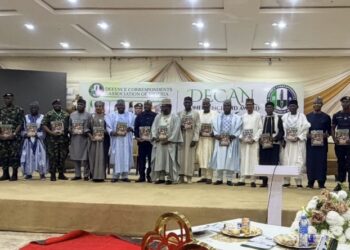
Oluyede, represented by the Director of Defence Information, Major General Samaila Uba, gave the warning at the 2026 Conference of the Defence Correspondents Association of Nigeria (DECAN), urging defence journalists to strengthen verification and responsible reporting to counter the growing threat of digital deception.
The conference was themed “Beyond Kinetic Warfare: Harnessing Technology and Intelligence-Led Operations for Nigeria’s National Security.”
The CDS said the changing nature of modern warfare required the Armed Forces of Nigeria (AFN) to combine conventional military capabilities with superior intelligence, technological innovation, cyber resilience and effective management of the information environment.
“Today, battles are no longer won by firepower alone. They are won by superior information, real-time intelligence, technological dominance, cyber resilience, and the ability to control the narrative space,” he said.
Oluyede explained that contemporary conflicts increasingly depended on access to timely intelligence, advanced surveillance capabilities and the ability to counter hostile narratives alongside conventional military operations.
He disclosed that the Armed Forces was expanding its non-kinetic capabilities through investments in space-based surveillance, geospatial intelligence, artificial intelligence-enabled decision support systems and joint intelligence fusion to improve operational effectiveness and protect national interests.
According to him, these efforts informed recent developments at the Defence Space Administration, including the expansion of modular earth observation outposts into operational theatres, the establishment of the Defence Space School for human capital development and the integration of artificial intelligence and advanced surveillance systems into military operations.
“We are building an Armed Forces that is not only combat-ready but also intelligence-driven and technology-enabled,” Oluyede stated.
However, the CDS expressed concern over the growing circulation of AI-generated fake videos, manipulated images, cloned voices and fabricated operational claims, warning that such content could mislead the public, provoke fear and weaken confidence in the military.
“These deepfakes are not mere misinformation; they are weapons of psychological warfare aimed at eroding public trust in the Armed Forces and rupturing the vital bond between the military and the citizenry,” he said.
He warned that fabricated content could have consequences beyond the digital space, potentially endangering military personnel, triggering panic in communities and undermining operational gains.
“In today’s information age, security operations are fought not only on the battlefield but also in the information domain,” Oluyede said.
He added that a single AI-generated video could undo months of operational progress, endanger troops and create fear among civilians, describing the threat as a shared national security concern.
Against this backdrop, the CDS identified DECAN as a critical partner in combating disinformation, urging its members to verify sensitive operational information with Defence Headquarters before publication.
“Speed must never be at the expense of accuracy,” he said, emphasising that fact-checking should remain central to professional defence journalism, particularly when reports could affect military operations or public safety.
Oluyede also called on journalists to use their platforms to educate Nigerians on identifying synthetic media and promptly debunking fake videos falsely attributed to the Armed Forces.
He urged defence correspondents to embrace intelligence-led journalism and move away from sensational reporting, noting that informed coverage could strengthen joint operations, improve civil-military relations and counter extremist propaganda.
The CDS reaffirmed the Armed Forces’ commitment to its constitutional responsibility of defending Nigeria’s sovereignty and democracy but stressed that the military could not achieve its objectives in isolation.
“The trust, cooperation and synergy between the military and the citizenry, mediated through a responsible press, remain indispensable,” he said.
He commended DECAN for sustaining professionalism and constructive engagement in defence reporting, assuring the association of Defence Headquarters’ continued support and an open-door policy for timely and accurate information sharing.
A highlight of the conference was the presentation of a Distinguished Leadership Award to the Chief of Defence Staff in recognition of his leadership.
Oluyede expressed hope that the conference would generate practical recommendations for addressing emerging security threats and strengthening cooperation between the military and the media.