By Nkechi Eze
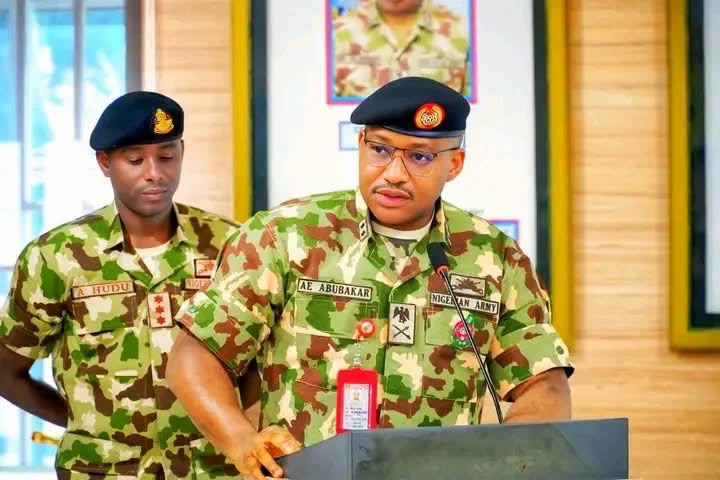
The 17-month tenure of Major General Abdulsalam Abubakar as Theatre Commander, Joint Task Force North-East, Operation HADIN KAI, ended with a significant operational scorecard, including the neutralisation of 1,106 terrorists, arrest of 758 logistics collaborators, recovery of more than 475 assorted weapons and seizure of over ₦300 million allegedly linked to terrorist financing.
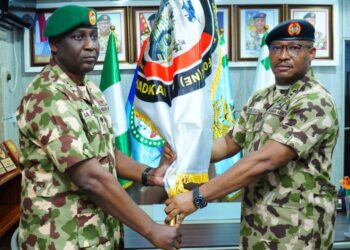
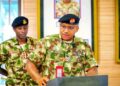
Abubakar disclosed the figures on Tuesday, September 15, 2026, during the handing and taking-over ceremony at Maimalari Cantonment, Maiduguri, where he handed over the command of Operation HADIN KAI to Major General Ibikunle Ajose.
According to the outgoing Theatre Commander, troops recovered 24,409 rounds of ammunition of various calibres and discovered and detonated 295 improvised explosive devices during his tenure, further disrupting the operational capabilities of Boko Haram and ISWAP terrorists in the North-East.
“Likewise, 758 terrorists’ logistics collaborators were arrested, even as troops recovered over 475 assorted weapons and 24,409 rounds of ammunition of various calibres in the theatre,” Abubakar said.
He said the military also intercepted more than ₦300 million allegedly connected to terrorist financiers, representing a significant blow to the financial and logistical networks sustaining insurgent activities in the theatre.
The outgoing commander said the campaign also resulted in the elimination of several senior commanders of the JAS and ISWAP factions, including Abu Bilal Al-Muniki, also known as Abu Mainok; Malam Jidda, Amir of Ngorgore/Malumti villages; Abu Modu; Modu Dogo; Munzir of Dogon Chukun; Abu Aisha, Qaid of Tumbun Mota; and Abul Kaka.
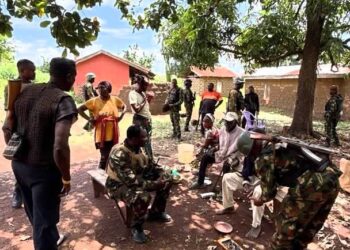
Beyond the kinetic operations, Abubakar disclosed that 969 JAS/ISWAP fighters and their families surrendered during the period, reflecting the combined impact of sustained military pressure and opportunities for terrorists willing to abandon the insurgency.
The operations also produced significant humanitarian outcomes, with troops rescuing 638 civilians from terrorist enclaves, including 46 students abducted during an attempted attack on the Federal Government Girls College, Monguno.
More than 7,000 displaced families, he added, returned to their ancestral communities, as security improvements enabled the gradual reoccupation of previously abandoned communities across parts of Borno State.
Abubakar said the restoration of normal life remained the ultimate objective of the counter-insurgency campaign, beyond battlefield victories and weapons recovered.
“The ultimate measure of success in the counter-insurgency campaign is the restoration of normal life,” he said.
He noted that the return of displaced persons, reopening of schools and markets, access to farmlands and resumption of economic activities provided important indicators of improving security conditions in parts of the North-East.
During the period, the NYSC Orientation Scheme returned to Maiduguri after more than 13 years, while WAEC and NECO examinations resumed in communities including Banki and Gwoza.
Trade routes and local markets also reopened in some areas, according to the outgoing commander, allowing residents to gradually resume economic activities disrupted by years of insurgency.
Operational capacity was further strengthened with the activation of Sector 4 to bridge the operational gap between Southern Borno and Northern Adamawa.
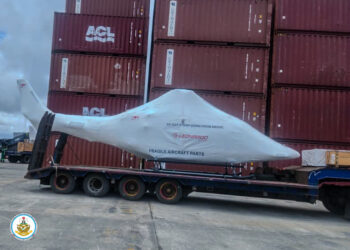
The theatre also benefited from additional technological and aviation capabilities, including the induction of Nigerian Army Aviation helicopters and the Nigerian Army Remotely Piloted Aircraft System Regiment.
The Military Command and Control Centre was equally linked to frontline surveillance cameras to improve situational awareness and support intelligence-driven operations.
Abubakar said the fight against terrorism required sustained intelligence sharing, civil-military cooperation and disruption of terrorist logistics networks, alongside kinetic operations.
His tenure therefore combined offensive operations with intelligence gathering, surveillance, disruption of terrorist financing and logistics, civil-military engagement and measures aimed at facilitating the return of displaced communities.
As he handed over to Major General Ibikunle Ajose, Abubakar acknowledged the support of President Bola Ahmed Tinubu, the Chief of Defence Staff, General Christopher Musa Oluyede, the Chief of Army Staff, Lieutenant General Waidi Shaibu, the Borno State Government and other stakeholders in sustaining operations in the theatre.
The new Theatre Commander inherits a security theatre in which more than 1,000 terrorists were neutralised, hundreds of collaborators arrested, hundreds of weapons and thousands of rounds of ammunition recovered, terrorist financing disrupted, civilians rescued and thousands of displaced families returned to their communities during Abubakar’s command.
While the gains represent significant progress, the continued adaptability of terrorist remnants means that the achievements will require sustained military pressure and intelligence-led operations to consolidate.
For Abubakar, the scorecard of his 17-month command is ultimately measured not only in terrorists neutralised and weapons recovered, but in communities gradually returning to normal life.
The figures remain stark: 1,106 terrorists neutralised; 758 logistics collaborators arrested; over 475 weapons recovered; 24,409 rounds of ammunition seized; 295 IEDs detonated; over ₦300 million linked to terrorist financing intercepted; 638 civilians rescued; 969 terrorists and their families surrendered; and more than 7,000 displaced families returned home.