

President Bola Ahmed Tinubu has unveiled The Nigerian Grand Book, charging Nigerians to take responsibility for shaping the next chapter of the country’s history with courage, unity, innovation and patriotism.
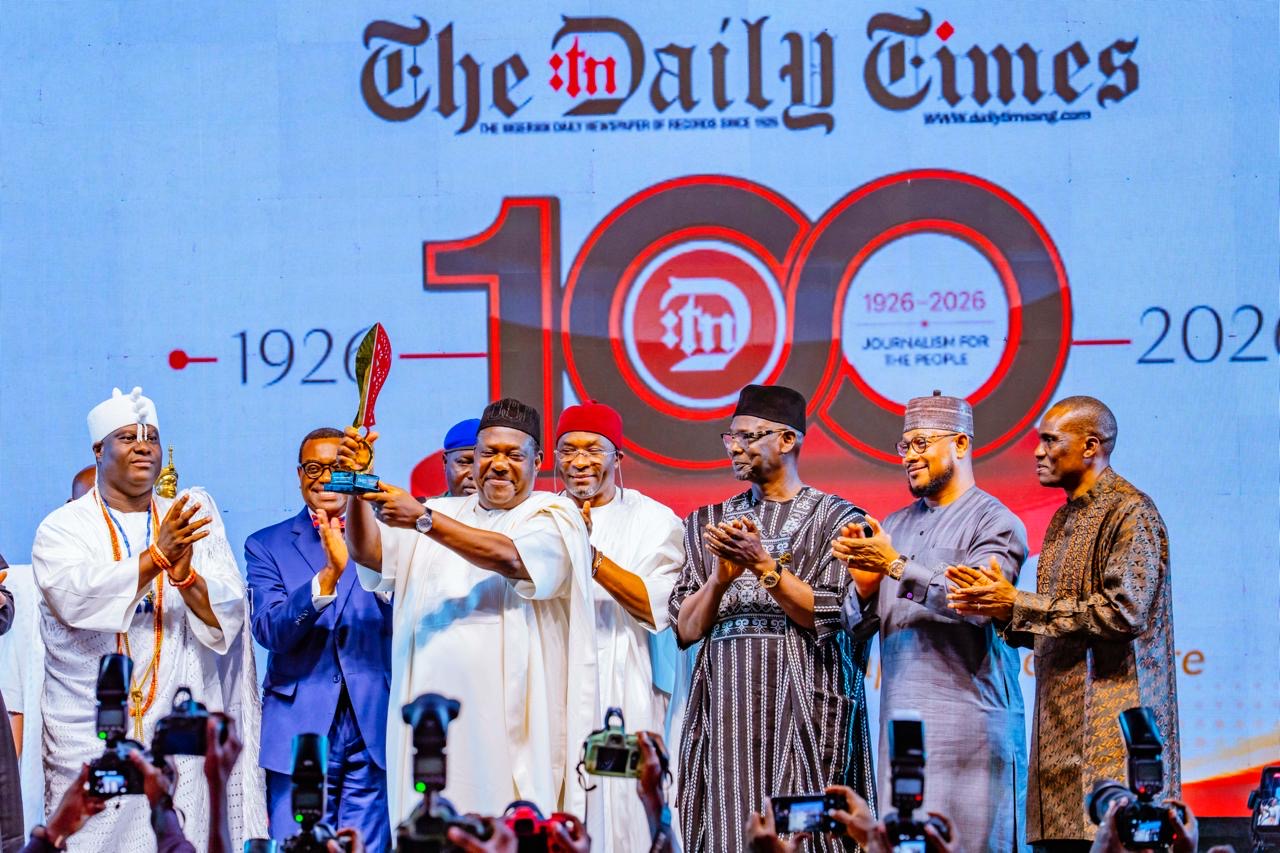
According to an official statement signed by Yomi Odunuga, Special Adviser, Media and Publicity to the Secretary to the Government of the Federation, the President gave the charge on Thursday in Abuja at the DTN@100 Centenary Celebration of the Daily Times of Nigeria.
Tinubu, who was represented at the event by the Secretary to the Government of the Federation, Senator George Akume, CON, described The Nigerian Grand Book as an important record of the country’s national journey and a valuable instrument for understanding the past and shaping the future.
“As we unveil this remarkable compendium today, let us remember that the first hundred years of Nigeria’s story have been written; the next chapter is in our hands,” the President said.
He urged Nigerians to write the next chapter of the nation’s history with courage, unity, innovation and patriotism, expressing the hope that Nigeria of the future would be more prosperous, secure, competitive and united.
The President said a proper understanding of Nigeria’s history was critical to national development, noting that lessons from the past could help the country avoid repeating its mistakes and provide guidance for addressing contemporary challenges.
“A nation that forgets its history risks repeating its mistakes. But a nation that understands its history can draw wisdom from its successes, learn from its setbacks and confidently design its future,” he said.
Tinubu linked the significance of the publication to the Renewed Hope Agenda of his administration, saying the government’s reforms were aimed at changing the trajectory of the nation rather than merely altering policies.
He said the administration was focused on building a stronger fiscal foundation, creating a more productive economy, strengthening institutions, improving infrastructure, expanding opportunities for young Nigerians and positioning the country to compete more effectively in the global economy.
According to him, history must be deployed as an instrument for national renewal and future development.
“History should not be a museum of yesterday. History should be an instrument for engineering tomorrow,” Tinubu said.
He added that The Nigerian Grand Book would enable Nigerians to tell their story from their own perspective, celebrate citizens who had contributed to national progress and preserve the institutional memory of the country.
The President also reaffirmed the Federal Government’s commitment to national identity, social cohesion and the preservation of Nigeria’s collective memory, describing the country’s diversity as one of its greatest assets.
He said Nigeria’s history had demonstrated what citizens could achieve when their differences were transformed into strength rather than division.
Tinubu further commended the DTN@100 Times Heroes Awards, stressing that nation-building was driven by the contributions of individuals across different sectors.
He recognised entrepreneurs, farmers, scientists, public servants, artists, innovators and citizens serving their communities as important contributors to Nigeria’s development, saying their achievements deserved to be remembered.
The President also commended the Daily Times of Nigeria for its century-long contribution to documenting the country’s political, social and democratic evolution.
He described the newspaper’s 100 years of existence as “a testament to endurance, relevance and institutional resilience,” noting that its pages had captured major personalities, events and aspirations that shaped Nigeria’s national journey.
He congratulated the leadership of the Daily Times under Mr. Fidelis Anosike and those involved in producing The Nigerian Grand Book, describing the publication as a historic contribution to the preservation of Nigeria’s national heritage.
Tinubu also acknowledged the media’s broader role in national development, saying the Federal Government recognised the press not only as an instrument of information and accountability but also as a custodian of national memory.
He subsequently formally unveiled The Nigerian Grand Book and urged Nigerians, schools, libraries and institutions to embrace the publication as an important record of the nation’s history.