The Independent National Electoral Commission (INEC) has disclosed plans to deploy approximately 1.4 million ad-hoc personnel across more than 176,000 polling units nationwide as part of efforts to ensure a seamless conduct of the 2027 General Election.
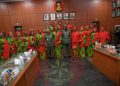
The INEC Chairman, Prof. Joash Amupitan, disclosed this on Tuesday in Abuja while receiving a Pre-Election Assessment Mission (PEAM) delegation of the International Republican Institute (IRI), led by Ambassador Dr. Jendayi Frazier, former U.S. Assistant Secretary of State for African Affairs and former U.S. Ambassador to South Africa.
Amupitan said the Commission was scaling up its administrative and operational capacity to manage the unprecedented logistical requirements of the 2027 elections.
He said INEC had in the past year used off-cycle governorship elections, including the recent polls in Ekiti and Osun States, as well as legislative by-elections, to test its technological systems, field logistics and security coordination frameworks ahead of the general elections.
According to him, the Bimodal Voter Accreditation System (BVAS) and the INEC Result Viewing (IReV) portal have continued to demonstrate operational reliability, with recent off-cycle elections recording result-sheet upload rates of above 98 per cent.
“Technology has permanently closed the door on legacy voting vulnerabilities, ensuring that the ballot box alone determines electoral outcomes,” Amupitan said.
The INEC Chairman said the Commission’s preparations included strengthening early deployment of election materials and expanding collaboration with transport unions to facilitate timely movement of personnel and logistics and ensure polling units open by 8:30 a.m.
He also disclosed that the Commission would deploy the Automated Biometric Identification System (ABIS) as part of its ongoing Continuous Voter Registration and register audit to identify duplicate records and maintain a clean and verified voters’ register.
On inclusivity, Amupitan said INEC was enhancing access to polling units and providing specialised assistive devices for Persons with Disabilities (PWDs), pregnant women, nursing mothers and elderly voters.
He, however, acknowledged that the Commission was preparing for several challenges that could affect the electoral process, including security risks, localised violence, vote-buying, hate speech, disinformation and Foreign Information Manipulation and Interference (FIMI).
“We are equally clear-eyed regarding the systemic challenges confronting our democratic space,” he said, stressing the need for coordinated action to protect voter confidence and electoral integrity.
Amupitan said INEC was working with security agencies under the Inter-Agency Consultative Committee on Election Security (ICCES), alongside the Economic and Financial Crimes Commission (EFCC) and the Independent Corrupt Practices and Other Related Offences Commission (ICPC), to enforce electoral laws, monitor campaign finance violations and prosecute electoral offenders.
He also disclosed that INEC would participate alongside presidential candidates in the signing of the First National Peace Accord on Issue-Based Campaigns organised by the National Peace Committee.
The INEC Chairman described international election observation missions as important partners in strengthening electoral processes, saying their independent assessments could help the Commission identify gaps and improve its preparations.
“INEC views international election observation missions not as critics, but as invaluable institutional partners,” he said.
Amupitan assured the IRI delegation of the Commission’s transparency, open-door policy and full cooperation throughout its engagement in Nigeria and ahead of its planned International Election Observation Mission for the 2027 General Election.
He reiterated INEC’s neutrality, stressing that the Commission had no preference for any political party or candidate.
“Our sole mandate is to serve as an uncompromising, impartial umpire dedicated to delivering a free, fair, credible, transparent, and inclusive election that reflects the sovereign will of the Nigerian people,” Amupitan said.
The IRI Pre-Election Assessment Mission, led by Ambassador Frazier, is in Nigeria from August 11 to 21, 2026, to assess the country’s electoral environment ahead of the 2027 General Election.