

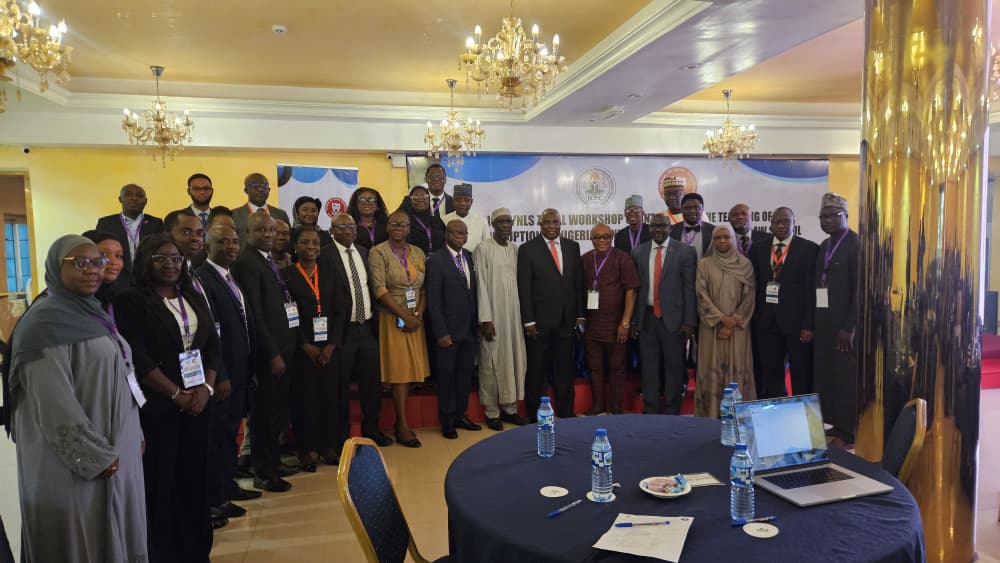
The Independent Corrupt Practices and Other Related Offences Commission (ICPC) has intensified efforts to strengthen integrity and ethical standards within Nigeria’s legal profession by convening law educators and other stakeholders to develop a framework for integrating anti-corruption education into legal training.
According to an official statement signed by the Spokesperson and Head of Media and Public Communications of the ICPC, J. Okor Odey, the workshop, held in Abuja in partnership with the Nigerian Law School, focused on institutionalising anti-corruption studies in legal education as part of efforts to produce ethically grounded lawyers committed to building a corruption-free Nigeria.
Speaking on the theme, “Curriculum Development and Review: Emerging Challenges and the Way Forward,” Professor Garba Saad of Bayero University, Kano, said changing societal needs, emerging issues, perceived skills gaps and the dynamic nature of legal practice have made curriculum review imperative.
He stressed that the revised curriculum should equip legal educators and future practitioners with the knowledge, competencies and practical skills required to address contemporary challenges, including corruption.
Professor Saad said, “The revised curriculum should equip both legal educators and future practitioners with the knowledge, competencies and practical skills required to address contemporary challenges, including corruption.”
He added that the workshop was designed to initiate the integration of anti-corruption education into legal studies and urged participants to contribute their expertise in shaping key components of the proposed curriculum.
“I urge participants to bring their knowledge and experience to bear on key components of the proposed curriculum, including relevant topics, credit load, areas of coverage, practical anti-corruption skills and competencies students should acquire,” he said.
Also speaking, Dr. Nte Bisong, KSM, of the National Universities Commission (NUC), highlighted the flexibility provided under the Core Curriculum and Minimum Academic Standards (CCMAS), explaining that while 70 per cent of the curriculum remains standardised by the NUC, stakeholders have the opportunity to develop the remaining 30 per cent to address emerging needs and national priorities.
Commending the initiative, Dr. Bisong said it would help produce highly ethical and disciplined lawyers capable of contributing meaningfully to national development.
“We must work towards producing highly ethical and disciplined lawyers who will contribute meaningfully to national development,” he said.
He also urged Nigerians to avoid actions capable of undermining the country’s image, particularly through the irresponsible use of social media.
According to the statement, the workshop forms part of a nationwide initiative jointly organised by the ICPC and the Nigerian Law School. It added that a similar engagement had earlier been held in Kano, while outcomes from the consultations will culminate in the development of a draft anti-corruption curriculum for possible adoption into Nigeria’s legal education system.