

The Chairman of the Independent Corrupt Practices and Other Related Offences Commission (ICPC), Dr. Musa Adamu Aliyu, SAN, has called for sustained legislative reforms to strengthen Nigeria’s anti-corruption legal and institutional framework, stressing that the country’s laws must continually evolve to address emerging corruption trends and governance challenges.
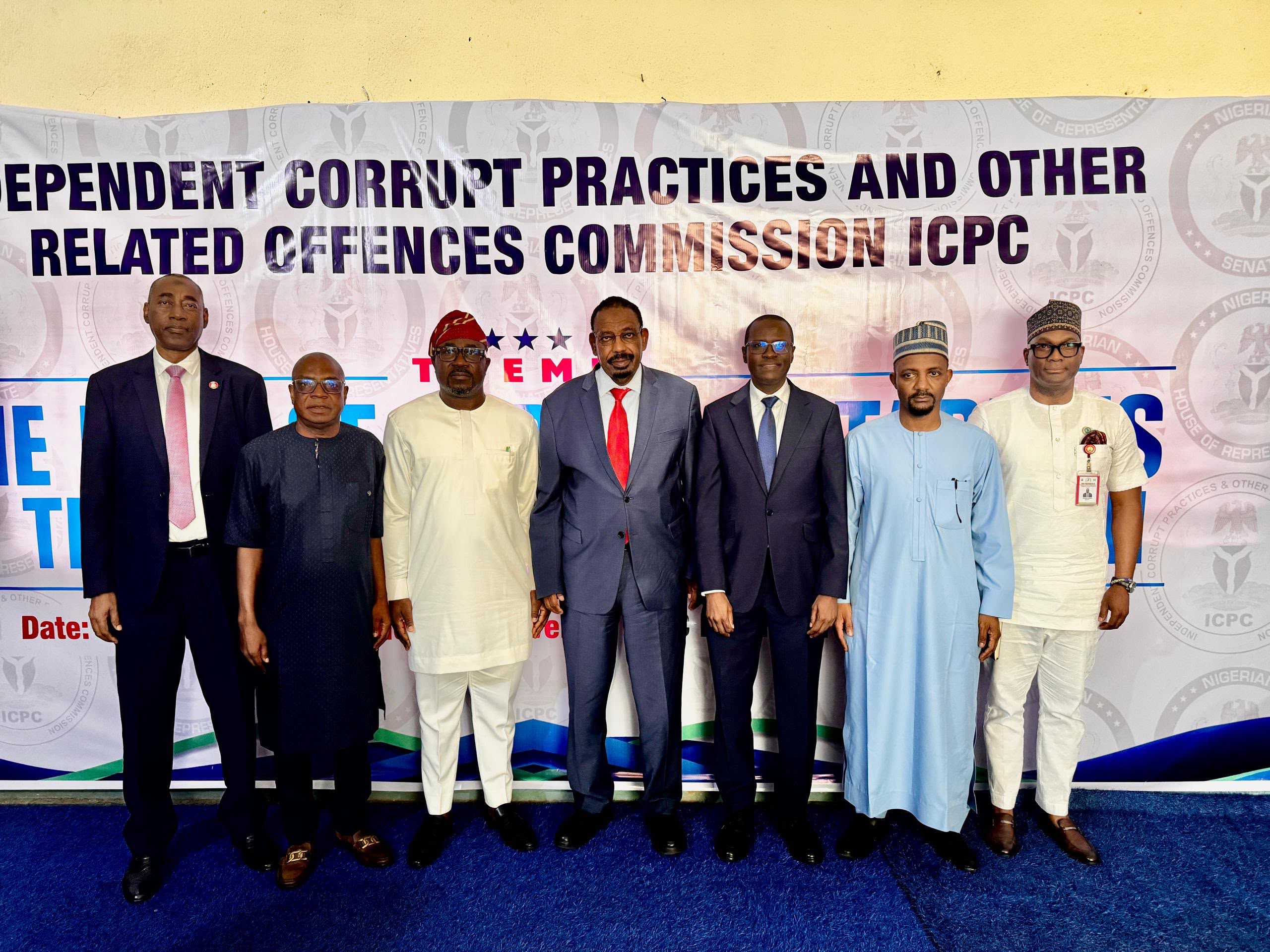
According to an official statement signed by the Spokesperson and Head of Media and Public Communications of the ICPC, J. Okor Odey, Dr. Aliyu made the call while delivering his welcome address at a one-day interactive session on “The Role of Parliamentarians in the Fight Against Corruption,” held at the Commission’s headquarters in Abuja on Thursday.
The ICPC Chairman, who welcomed participants including the Honourable Minister of Works, Senator David Umahi, heads of anti-corruption agencies, members of the National Assembly, development partners and other stakeholders, described Parliament as a critical pillar in Nigeria’s anti-corruption architecture because of its constitutional responsibilities of lawmaking, appropriation and oversight.
He observed that corruption has become increasingly sophisticated through technological innovation, complex financial crimes and evolving governance challenges, making it imperative for Nigeria’s legal framework to adapt.
“Our experience has consistently affirmed one fundamental truth: no anti-corruption agency can succeed in isolation. The fight against corruption is a shared national responsibility, and Parliament occupies a uniquely strategic position in that collective effort,” Dr. Aliyu said.
He stressed that continuous legislative reforms are necessary to close legal loopholes, strengthen whistleblower protection, improve asset recovery mechanisms and enhance the administration of criminal justice.
The ICPC Chairman explained that while the Commission remains committed to investigating and prosecuting corruption cases, it places equal emphasis on prevention through system reviews, public education, policy reforms and strategic partnerships that promote integrity, accountability and good governance.
Speaking on Parliament’s appropriation function, Dr. Aliyu described the national budget as the principal instrument for delivering development to Nigerians and called for greater transparency, accountability and value for money throughout the budget implementation process.
He also clarified that the Commission’s Constituency and Executive Projects Tracking Initiative (CEPTI) was conceived as a collaborative accountability mechanism rather than a tool for targeting legislators.
According to him, stronger collaboration between the National Assembly and the ICPC would ensure contractors and implementing agencies are held accountable for delivering quality constituency and executive projects that directly impact citizens.
Dr. Aliyu further challenged lawmakers to provide ethical leadership within the legislature and in their constituencies, noting that integrity among public office holders significantly influences public trust and confidence in government.
“When legislative authority is effectively aligned with robust preventive, investigative, enforcement and oversight mechanisms, corruption has less room to thrive, public confidence in public institutions is strengthened and national development is accelerated,” he stated.
Delivering the keynote address, the Honourable Minister of Works, Senator David Umahi, described parliamentarians as indispensable partners in the fight against corruption, noting that their constitutional responsibilities for legislation, oversight and representation place them at the centre of promoting transparency, accountability and good governance.
He urged lawmakers to continually review existing laws, close legal loopholes, strengthen anti-corruption institutions and enact legislation that promotes greater transparency and accountability in public service.
Senator Umahi also commended the ICPC for its effective monitoring and supervision of projects under the Ministry of Works.
“The Ministry will continue to collaborate closely with the Commission by recognising contractors who deliver quality projects while ensuring appropriate sanctions for those whose works fall below approved standards,” he said.
The statement noted that the interactive session featured goodwill messages from the Chairman of the House of Representatives Committee on Anti-Corruption and Financial Crimes, Honourable Prince Moshood Akiolu; representatives of the Senate Committee on Anti-Corruption and Financial Crimes, the Economic and Financial Crimes Commission (EFCC), the Nigerian Financial Intelligence Unit (NFIU), the Bureau of Public Procurement (BPP), the Code of Conduct Bureau and other stakeholders.
It added that the event also featured a lead presentation by former Deputy Speaker of the Kenyan Parliament, Honourable Farah Maalim Mohammed, titled “The Role of Parliamentarians in the Fight Against Corruption.” During his presentation, he urged African lawmakers to strengthen legislative oversight, promote transparency in public finance, support independent anti-corruption agencies, encourage citizen participation and uphold the rule of law as essential measures for combating corruption and strengthening democratic governance.