The Federal Government has launched the rollout of one million improved hybrid climate-smart cocoa seedlings as part of a strategic initiative to revitalise Nigeria’s cocoa industry, increase farmers’ incomes, boost export earnings, create employment opportunities for youths, and reposition the country as a leading global cocoa producer.
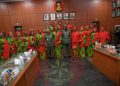
According to an official statement signed by Khadijat O. Ameen, Public Relations Officer to the Executive Secretary of the Agricultural Research Council of Nigeria (ARCN), the Minister of Agriculture and Food Security, Senator Abubakar Kyari, flagged off the programme at the Cocoa Research Institute of Nigeria (CRIN) in Ibadan, Oyo State, on Wednesday, July 1, 2026.
The statement said the initiative is a flagship programme under the National Cocoa Development Plan and President Bola Ahmed Tinubu’s Renewed Hope Agenda, aimed at transforming agriculture into a major driver of economic prosperity.
Speaking at the ceremony, Senator Kyari described the rollout as more than the distribution of planting materials, saying it marks the beginning of a comprehensive national intervention to restore the strength of Nigeria’s cocoa sector.
“Today’s event is not merely the distribution of planting materials. It is the commencement of a strategic national intervention to restore the strength of Nigeria’s cocoa industry, improve the livelihoods of our farmers, increase export earnings, and reposition our country as a leading player in the global cocoa economy,” he said.
The minister identified ageing plantations, declining productivity, inadequate investment, limited access to improved planting materials, climate-related challenges and weak value addition as major factors responsible for the sector’s reduced competitiveness in international markets.
He disclosed that the Federal Government is implementing wide-ranging reforms covering productivity, sustainability, financing, research, extension services, market access and value addition to reverse the trend.
According to him, Nigeria possesses the ecological conditions, experienced farmers, research institutions and an expanding private sector required to emerge as one of the world’s leading cocoa-producing nations.
“Our objective is clear. We must build a modern, resilient, and globally competitive cocoa industry that delivers prosperity for farmers while contributing significantly to national development,” Kyari stated.
He explained that the one million improved cocoa seedlings developed by CRIN are high-yielding, early-maturing, disease-resistant and climate-resilient varieties that will be distributed nationwide to rehabilitate ageing plantations and establish new commercial cocoa farms.
The minister further noted that the programme incorporates traceability systems and farm mapping to ensure compliance with the European Union Deforestation Regulation (EUDR), adding that the National Cocoa Management Committee and the National Task Force on EUDR are working with stakeholders to strengthen compliance and improve access to premium export markets.
Kyari also called for stronger collaboration among federal and state governments, research institutions, financial institutions, development partners, processors, exporters and private investors to ensure the success of the initiative. He commended CRIN, development partners, state governments, private sector organisations and farmer associations for their contributions.
Earlier, the Permanent Secretary, Federal Ministry of Agriculture and Food Security, Dr. Marcus Olaniyi Ogunbiyi, described cocoa as one of Nigeria’s most strategic agricultural commodities and a vital source of livelihood for farming households across cocoa-producing states.
He observed that declining productivity resulting from ageing plantations, climate change, inadequate investment and limited access to improved planting materials had hindered the sector’s growth, adding that the successful production of one million improved cocoa seedlings under the Federal Government’s Public-Private Partnership framework demonstrates the benefits of collaboration among government, research institutions, development partners, the private sector and farming communities.
Also speaking, the Executive Secretary of the Agricultural Research Council of Nigeria, Dr. Adamu Abubakar Dabban, described the programme as a landmark national investment in the future of Nigeria’s cocoa industry and a clear demonstration of the Federal Government’s commitment to agricultural transformation, economic diversification, food security, employment generation and increased foreign exchange earnings.
He attributed the achievement to the visionary leadership of President Bola Ahmed Tinubu and the strategic direction of the Minister of Agriculture and Food Security, noting that the improved cocoa varieties are products of years of scientific research by CRIN.
According to him, the new seedlings offer higher yields, early maturity, greater resistance to pests and diseases, enhanced adaptability to changing climatic conditions and premium bean quality capable of meeting international market standards.
Dr. Dabban stressed that the true value of agricultural research lies in delivering practical solutions to farmers rather than remaining within laboratories and academic publications.
He reaffirmed ARCN’s commitment to strengthening Nigeria’s National Agricultural Research System and ensuring that innovations developed by research institutes are effectively transferred to farmers to improve productivity and national development.
In his remarks, the Olubadan of Ibadan, Oba Rasheed Ladoja, who was represented by the Ajiroba of Ibadan, Professor Soji Adejumo, pledged the continued support of the Ibadan community for the Federal Government’s agricultural policies aimed at improving farmers’ livelihoods and achieving national food sovereignty.
The ceremony featured the symbolic distribution of improved climate-smart cocoa seedlings to farmers from the 14 cocoa-producing states across Nigeria.