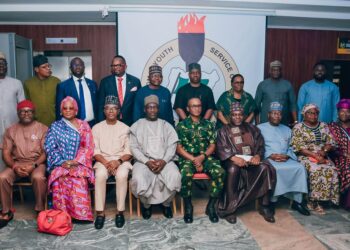



The Independent Corrupt Practices and Other Related Offences Commission (ICPC) has expanded its values education initiative to 40 private secondary schools in the Federal Capital Territory (FCT), with the Commission’s Chairman, Dr. Musa Adamu Aliyu, SAN, urging students to uphold honesty, accountability and patriotism as guiding principles in their daily lives.
According to an official statement signed by the Head of Media and Public Communications, ICPC, J. Okor Odey, Dr. Aliyu gave the charge during the inauguration of Students’ Anti-Corruption Clubs (SACs) at the Commission’s headquarters in Abuja.
The event, attended by representatives of educational institutions, civil society organisations and development partners, marked a major expansion of the Commission’s preventive anti-corruption campaign, which had previously focused mainly on public schools.
Addressing the newly inducted students, the ICPC Chairman described their inauguration as more than a ceremonial exercise, saying it was a call to national service in the fight against corruption and other social vices.
He urged the students to become ambassadors of integrity within their schools and communities by rejecting corruption, dishonesty and impunity while embracing values that would distinguish them as responsible future leaders.
Dr. Aliyu explained that youth engagement remains one of the Commission’s core anti-corruption strategies in line with Section 6 of the ICPC Act, 2000, which empowers the Commission to educate, mobilise and inspire young Nigerians to resist corrupt practices.
He described the extension of the Students’ Anti-Corruption Club initiative to private secondary schools as a significant milestone in the Commission’s preventive anti-corruption framework.
Highlighting the impact of the programme, the ICPC Chairman disclosed that more than 20 million Nigerian youths have benefited from the Commission’s integrity and values reorientation initiatives since their introduction in 2003.
He said the programmes, including the National Values Curriculum, Students’ Anti-Corruption Clubs in primary and secondary schools and Students’ Anti-Corruption Vanguards in tertiary institutions, have helped lay a strong foundation for ethical leadership and responsible citizenship among young Nigerians.
Dr. Aliyu also expressed appreciation to the Commission’s development partners for their continued support in advancing values-based education and anti-corruption advocacy.
He specifically acknowledged the contributions of Gender Mobile Initiative (GMI), Step Up Nigeria, Women Aid Collective (WACOL), the Civil Society Legislative Advocacy Centre (CISLAC) and the National Association of Proprietors of Private Schools (NAPPS), FCT Chapter, for promoting integrity among Nigerian children.
Also speaking, the Director of the Public Education Department, Mr. Demola Bakare, announced a new strategic direction approved by the ICPC Chairman to deepen the Commission’s engagement with schools.
He disclosed that Dr. Aliyu and officials of the Education Department would begin impromptu visits to schools to hold interactive sessions with students on ethical values and national development.
Bakare further revealed that the Commission would integrate its school engagements into Parent-Teacher Association (PTA) meetings to create a platform where parents, teachers and students could jointly participate in values reorientation programmes.
Development partners at the event commended the ICPC for sustaining its preventive approach to combating corruption through education and values orientation.
They encouraged the students to reject examination malpractice, dishonesty and other unethical practices while embracing integrity, accountability and responsible citizenship as the foundation for future leadership.
The partners also reaffirmed their commitment to supporting the Commission’s educational initiatives, describing the Students’ Anti-Corruption Clubs as an important investment in Nigeria’s future.
The ICPC said the inauguration of the 40 new Students’ Anti-Corruption Clubs forms part of its broader strategy to prevent corruption through public education and value reorientation, expressing confidence that the students would champion transparency, accountability and good governance in their schools and communities.