


The Independent National Electoral Commission (INEC) and the National Orientation Agency (NOA) have agreed to strengthen collaboration on nationwide civic and voter education as part of efforts to rebuild public confidence in Nigeria’s electoral process, tackle misinformation, and increase citizens’ participation ahead of the 2027 general elections.
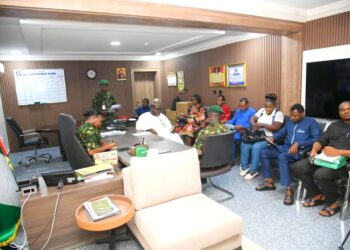
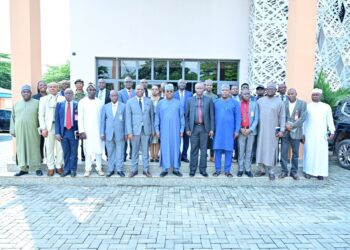
The commitment was made on Wednesday during a strategic engagement at the INEC Headquarters in Abuja between the Chairman of INEC, Professor Joash Amupitan, and the Director-General of NOA, Mallam Issa Onilu.
Speaking during the meeting, Professor Amupitan described the engagement as a significant step towards deepening democratic participation, stressing that both institutions share a common responsibility of promoting democratic values and educating citizens on their civic obligations.
He said the meeting transcended routine official engagements, noting that sustainable democracy depends not only on efficient electoral administration but also on an informed and engaged electorate.
According to him, although INEC continues to invest in technology, logistics and administrative reforms to improve elections, such efforts would achieve limited success if citizens remained disconnected from the democratic process or lacked confidence in the electoral system.
The INEC Chairman observed that voter apathy has become one of the greatest threats to Nigeria’s democracy, attributing the growing reluctance of many Nigerians to participate in elections to a widening trust deficit.
He warned that declining public confidence could undermine the credibility of future elections if deliberate efforts were not made to restore faith in the electoral process through sustained public enlightenment.
Professor Amupitan also expressed concern over the increasing spread of false information capable of discouraging voter participation, recalling how misleading narratives circulated during the last Federal Capital Territory election sought to create the impression that electoral outcomes had already been compromised.
He noted that fabricated claims, including the circulation of an old violence-related video and allegations of the existence of hundreds of thousands of illegally stored Permanent Voter Cards for a political party, were eventually found to be false but had already created unnecessary anxiety among voters.
According to him, such deliberate misinformation is often designed to weaken public confidence and discourage citizens from exercising their voting rights.
He therefore advocated a decentralised grassroots voter education campaign that would communicate electoral information in indigenous languages, educate citizens on the importance of their votes, clarify misconceptions surrounding electoral procedures and explain the legal safeguards protecting the integrity of the electoral process.
Professor Amupitan likened the relationship between both institutions to complementary roles in a football match, explaining that while INEC provides the framework for credible elections, NOA possesses the grassroots communication network and cultural understanding required to shape public attitudes and promote democratic participation across communities.
In his remarks, the Director-General of NOA, Mallam Issa Onilu, welcomed the proposed partnership, describing it as timely and necessary for strengthening Nigeria’s democratic culture.
He maintained that civic education should not be limited to election periods but sustained throughout the electoral cycle to continuously educate citizens on their constitutional responsibilities and democratic rights.
Onilu observed that the 2023 electoral experience revealed significant civic knowledge gaps, particularly among young first-time voters, many of whom were heavily influenced by misinformation circulating on digital platforms.
He noted that inadequate public understanding of electoral processes resulted in unnecessary controversies and avoidable public misconceptions, underscoring the need for continuous civic education rather than periodic awareness campaigns.
The NOA Director-General said the agency’s nationwide presence, comprising 818 offices across the country’s local government areas, states and zonal directorates, places it in a strong position to drive grassroots sensitisation and generate valuable public feedback for government institutions.
He further stressed that patriotism, public trust and citizens’ confidence in democratic institutions cannot be imposed but must be earned through consistent government actions, transparent communication and visible commitment to the welfare of Nigerians.
Both organisations agreed to jointly design and implement a comprehensive grassroots civic education programme that will leverage NOA’s extensive field structure alongside INEC’s electoral expertise and statutory mandate.
The initiative is expected to focus on voter education, combating fake news, correcting misinformation about electoral procedures, encouraging active citizen participation and restoring public confidence in the electoral process ahead of the 2027 general elections.