The Civil Society Legislative Advocacy Centre (CISLAC) has condemned the alleged assault and manhandling of human rights activist and African Action Congress (AAC) presidential candidate, Omoyele Sowore, by security operatives within the premises of the Federal High Court in Abuja, warning that such actions threaten the foundations of democracy and the rule of law.
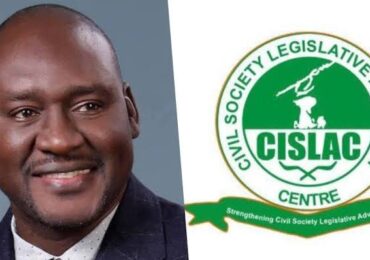
According to a statement by CISLAC Executive Director and Head of Transparency International Nigeria, Comrade Auwal Musa Rafsanjani, reports of Sowore’s treatment following court proceedings that revoked his bail and ordered his remand at Kuje Correctional Facility are deeply troubling and inconsistent with democratic principles.
Rafsanjani said eyewitness accounts indicated that security operatives allegedly used excessive force in handling the activist, dragging and manhandling him in full view of lawyers, supporters and members of the public.
He noted that the incident raises serious concerns about respect for fundamental rights, judicial sanctity and the shrinking civic space in Nigeria, stressing that attacks on citizens within court premises undermine public confidence in democratic institutions.
According to Rafsanjani, the conduct of some security personnel appears to have undermined Sowore’s constitutionally guaranteed rights, particularly his right to dignity and protection from degrading treatment while in custody and during judicial proceedings.
The CISLAC Executive Director also expressed concern over the deployment and conduct of heavily armed security personnel within the courtroom environment, noting that such actions could be interpreted as prejudging guilt or subjecting a defendant to punishment before conviction.
He emphasized that the credibility of the rule of law depends not only on legal procedures but also on public confidence in the fairness and neutrality of judicial processes.
“When courtroom conduct by security agents appears excessive, intimidating or politically motivated, it risks eroding public trust in the justice system, especially in sensitive cases involving activists, journalists and government critics. Courts must remain symbols of justice, fairness and impartiality. No democracy can thrive where courts become arenas for violence, intimidation and excessive use of force,” Rafsanjani stated.
The CISLAC boss said the incident reflects a broader pattern of intimidation against critical voices and dissenting opinions, warning that democratic institutions must not be used to suppress lawful civic engagement.
Rafsanjani also decried the lynching of a woman identified as Ummulkhairi Muhammad in Maraban Jos, Kaduna State, describing the incident as a tragic example of the growing prevalence of jungle justice and institutional failure.
According to reports cited by the organisation, Ummulkhairi Muhammad was accused of child theft and taken into police custody for protection. However, an angry mob allegedly overpowered security personnel, forcefully removed her from custody, killed her and set her body ablaze.
Rafsanjani said the incident demonstrates the inability of state institutions to guarantee the safety of citizens, even when they are under official protection.
He warned that the combination of alleged political repression, mob violence and institutional weaknesses poses a serious threat to Nigeria’s democratic stability, social cohesion and respect for human rights.
CISLAC called for independent, impartial and transparent investigations into both incidents and urged authorities to ensure accountability for all those found culpable, whether among security operatives involved in the treatment of Sowore or individuals responsible for the lynching of Ummulkhairi Muhammad.
The organisation further urged the government to strengthen measures aimed at protecting civic freedoms, safeguarding judicial independence and enhancing the capacity of security agencies to protect lives and uphold the rule of law.
Reaffirming its commitment to human rights, justice and democratic governance, CISLAC expressed solidarity with Sowore, the family of the late Ummulkhairi Muhammad and other victims of repression and mob violence across the country.
Rafsanjani stressed that decisive action by relevant authorities is necessary to restore public confidence and prevent further erosion of Nigeria’s democratic and legal institutions.