

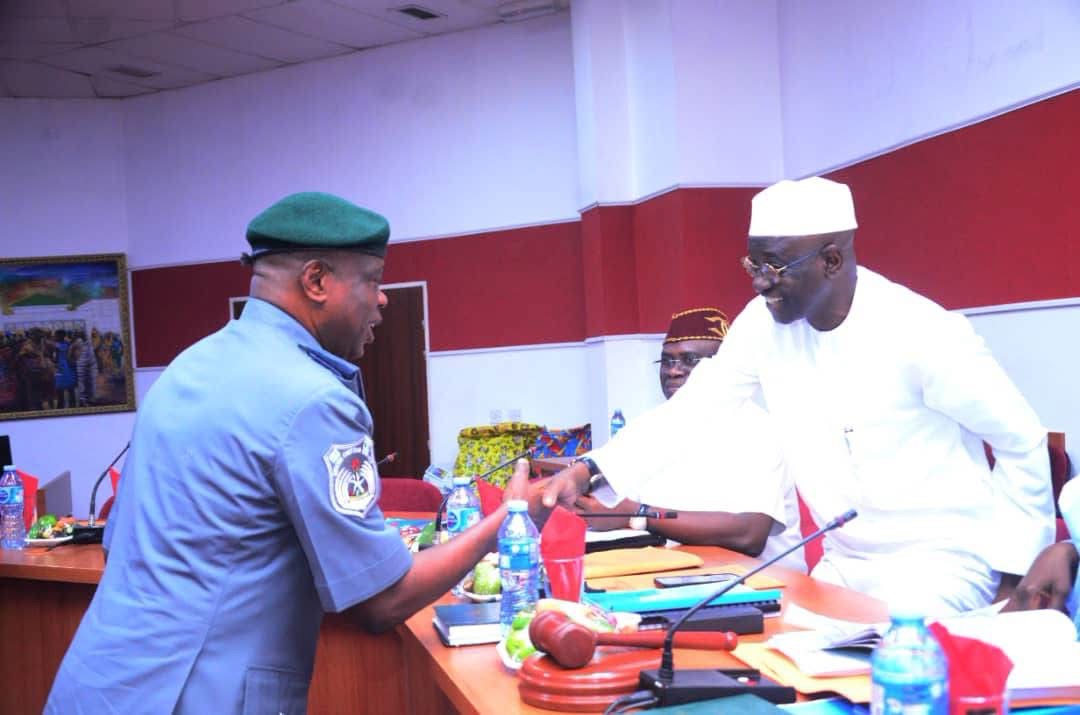
The Senate Public Accounts Committee (SPAC) has exonerated the Nigeria Customs Service (NCS) of allegations that it failed to remit ₦62.2 billion to the Federation Account, bringing to a close concerns raised in the 2019 report of the Office of the Auditor-General of the Federation.
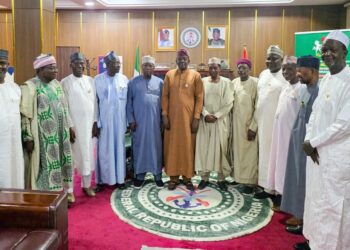
The decision followed an investigative hearing held on Tuesday, June 16, 2026, during which the Comptroller-General of Customs, Bashir Adewale Adeniyi, provided detailed explanations that convinced lawmakers the alleged revenue shortfall resulted from a misclassification of funds rather than any act of under-remittance.
The query, presented by a representative of the Auditor-General’s Office at the instance of the Chairman of the Senate Public Accounts Committee, Senator Ibrahim Dankwambo, alleged that while the Nigeria Customs Service generated ₦691.242 billion in revenue in 2017, only ₦629.23 billion was remitted to the Federation Account, leaving an apparent balance of ₦62.2 billion unaccounted for.
Responding to the allegation, Comptroller-General Adeniyi explained that the figure was erroneously computed because auditors failed to distinguish between categories of levies collected by the Service. He noted that while some levies are statutorily required to be paid into the Federation Account, others are designated for specific purposes and are not meant for remittance into the account.
“The under-remittance of ₦62.2 billion levelled against Customs in the 2019 audit report was wrongly arrived at through misclassification of levies collected. While most of the levies are to be collected and remitted into the Federation Account, others like the ones on local production of wheat, textiles and wines do not go into the Federation Account, the totality of which accounted for the alleged unremitted ₦62.2 billion,” Adeniyi explained.
The Customs boss also provided clarifications on other related audit observations, demonstrating that the Service had complied with all applicable financial regulations and remittance requirements.
His submissions were accepted by members of the committee, who subsequently cleared the Service of any wrongdoing regarding the allegation.
During the proceedings, Senator Babangida Hussaini expressed concern that issues of such a technical nature had progressed to the level of a Senate investigation. Drawing from his experience as a former civil servant, he observed that the discrepancies should have been resolved during the preliminary audit process through proper engagement between auditors and the affected agency.
The committee’s decision is expected to reinforce confidence in the financial management processes of the Nigeria Customs Service and underscore the importance of accurate classification and interpretation of government revenue streams during audit exercises.