

By Nkechi Eze
The Federal Government has reaffirmed its commitment to accelerating the development of critical road infrastructure in Kogi State, with renewed emphasis on durability, funding efficiency, and the integration of security features along major corridors.
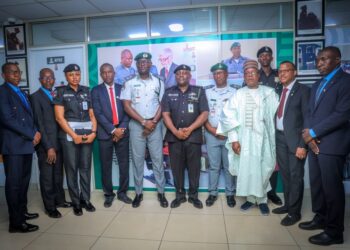
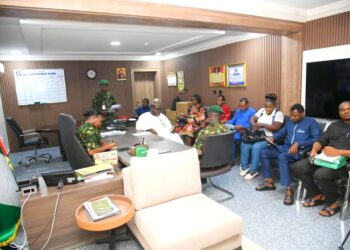
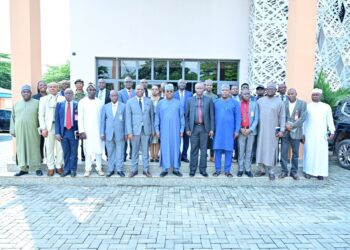
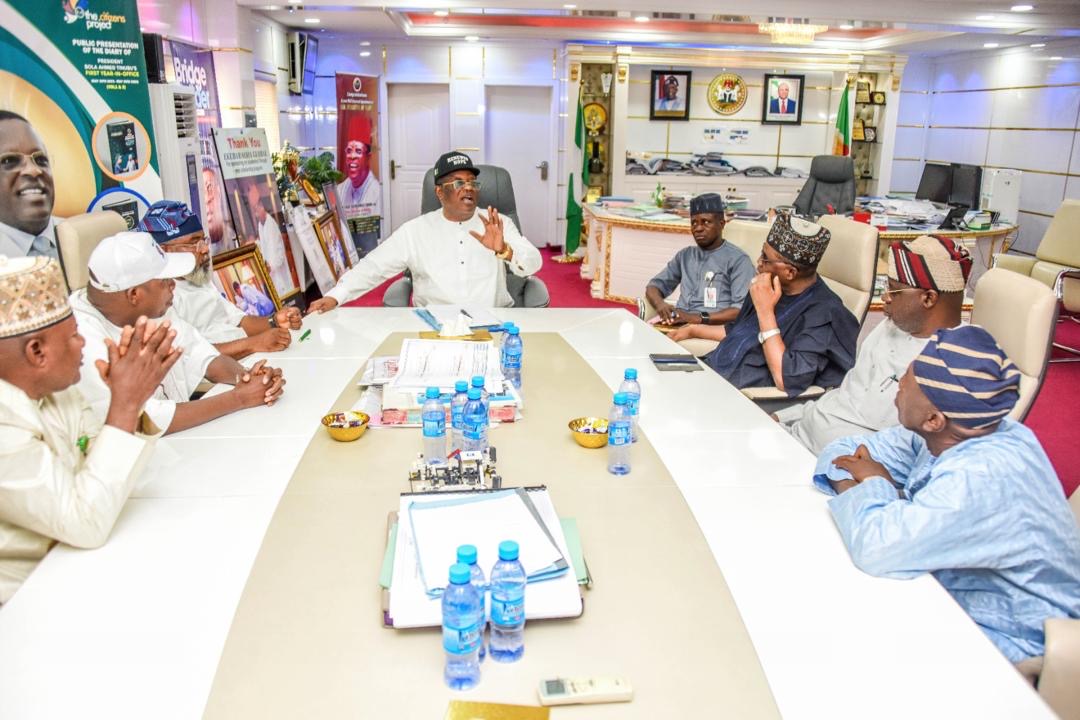
According to an official signed statement by the Director, Information and Public Relations, Mohammed A Ahmed, the assurance was given during a high-level engagement between the Honourable Minister of Works, Senator David Umahi, and the Kogi State Commissioner for Works, Hon. Salam Ozige Deedat.
During the meeting, the Kogi State Commissioner commended ongoing federal interventions on key road networks, particularly the Abuja–Lokoja–Okene corridor and adjoining routes. He acknowledged the contributions of previous administrations but noted that recent efforts under the current administration have shown increased visibility and measurable progress.
He also lauded the Minister for his early visit to Kogi State upon assuming office, describing it as a demonstration of commitment and inclusiveness. While recognising the consistent presence of contractors and federal teams on project sites, he raised concerns over delays on certain sections, including flyover constructions, which have contributed to traffic congestion and require urgent attention.
The Commissioner further highlighted other strategic routes requiring accelerated intervention, including the Okene–Ajaokuta axis and the Takete–Mopa–Isanlu–Egbe corridor linking Kwara State, stressing the importance of these roads given Kogi’s proximity to the Federal Capital Territory.
In his response, Senator Umahi identified funding constraints as a major challenge affecting infrastructure delivery nationwide, despite ongoing efforts by the Federal Government to bridge the infrastructure gap. He noted that the current administration is undertaking extensive road construction and rehabilitation across the country, adding that inherited deficits have intensified pressure on existing infrastructure.
Addressing specific projects, the Minister explained that the Abuja–Lokoja corridor, previously in poor condition, is undergoing comprehensive reconstruction, with multiple contractors handling different segments. He disclosed that key sections have been restructured and reassigned to ensure improved delivery, with several portions now being executed using concrete pavement technology for enhanced durability.
He revealed that a 48-kilometre stretch previously handled by Bulletine Construction is being converted to concrete pavement, while an 86-kilometre section earlier awarded to Gitto has been reorganised for renewed execution. Additional segments, including a 56-kilometre stretch, are also being redesigned using concrete methods, following agreements with contractors to adopt more sustainable construction approaches within existing cost frameworks.
The Minister added that other contractors, including CGC, CCECC, BUA, and CBC, are actively engaged on various sections, with progress recorded across multiple fronts. He emphasised that the shift from asphalt to concrete pavement is a deliberate policy aimed at ensuring longevity, reducing maintenance costs, and addressing the recurring issue of road deterioration caused by water damage and weak structural support.
On security, Senator Umahi highlighted the critical link between infrastructure and national safety, noting that poor road conditions can exacerbate insecurity. He disclosed that the Ministry is exploring the integration of solar-powered lighting and CCTV surveillance systems along major highways such as the Abuja–Lokoja Expressway to improve monitoring, enhance safety, and strengthen rapid response mechanisms.
He further assured that similar security-focused interventions would be extended to other strategic road networks nationwide.
The Minister also provided updates on key national infrastructure projects, including the Trans-Saharan Highway, which forms part of the President’s Legacy Road Infrastructure initiative and traverses Kogi, Benue, and Nasarawa States before terminating in the Federal Capital Territory. Other projects highlighted include the Makurdi–9th Mile corridor and the Kabba–Ado Ekiti road.
Senator Umahi called for stronger collaboration between federal and state governments, urging sub-national authorities to complement federal efforts through basic interventions such as maintenance and stone-base works where necessary. He also advocated the wider adoption of reinforced concrete technology in road construction, noting its proven effectiveness in enhancing structural resilience.
The engagement underscored a shared commitment by both federal and state authorities to fast-track infrastructure delivery, improve connectivity, and support economic growth through sustainable and secure road networks.