By Osondu Ohaeri
The Safe-to-Load (STL) Programme, introduced by the Federal Road Safety Corps (FRSC) in September 2015, marked a decisive turning point in Nigeria’s road safety management, particularly in the transportation of petroleum products. Prior to its introduction, the nation faced an alarming safety crisis. Records showed an average of 352 tanker-related killed or seriously injured (KSI) crashes annually, with 1,1.68 crashes recorded per billion litres of petroleum products transported.
Projections at the time painted an even grimmer picture, estimating up to 384 tanker crashes and over 17,000 fatalities within a single year if urgent action was not taken. Tragic incidents such as the Okobie tanker explosion, which claimed over 100 lives, and multiple infernos in Lagos and Onitsha, underscored the catastrophic consequences of systemic failures in the haulage of dangerous goods.
The necessity for the programme was driven by a convergence of critical risk factors. Nigeria’s overwhelming dependence on road transport for petroleum distribution, accounting for over 98% of product movement and involving between 6,500 and 8,000 tanker trucks daily; placed immense strain on safety systems. This was compounded by poor vehicle conditions, widespread non-compliance with safety standards, weak regulatory enforcement, and a glaring deficiency in driver competence, with less than 5% of drivers possessing the appropriate Class G licence at the time.
The hazardous nature of petroleum cargo, combined with these deficiencies, created a high-risk operational environment that demanded immediate and structured intervention.
In response, the FRSC deployed a comprehensive set of strategic initiatives under the Safe-to-Load framework. Central to this was the institutionalization of pre trip safety inspections at petroleum depots to ensure that only roadworthy tankers were permitted to load products. This was complemented by in-depot safety education, robust stakeholder engagement, and intensified on road enforcement operations. Campaigns such as Operation Scorpion reinforced compliance, while strategic partnerships with key industry stakeholders including NUPENG, MEMAN, DAPMAN, and IPMAN helped to foster a culture of shared responsibility.
Capacity building was aggressively pursued, with dozens of technical training sessions conducted for desk officers, complemented by strategic collaborations with private sector stakeholders to enhance technical expertise and enforcement efficiency. Notably, one of the most significant milestones in this regard was the 2013 international training programme sponsored by Total Nigeria Plc, which saw about 40 FRSC personnel trained in France. The exposure provided participants with advanced knowledge in petroleum haulage safety, loading protocols, and global best practices, significantly strengthening the Corps’ operational capacity and reinforcing the effectiveness of the Safe-to-Load enforcement framework.
The Federal Government provided critical backing through policy support, stakeholder mobilisation, and alignment with international safety standards such as the ADR framework for the transportation of dangerous goods. National workshops, consultative forums, and regulatory engagements created a platform for harmonising safety expectations across the industry, while ongoing reforms in the downstream petroleum sector sought to improve operational accountability and compliance. These combined efforts have yielded measurable results.
Post-implementation data indicates a steady reduction in crash rates, from 14.34 crashes per billion litres transported in 2016 to 11.88 in 2022. This improvement reflects enhanced vehicle integrity, better-informed drivers, and more effective enforcement mechanisms. The programme has successfully addressed critical safety gaps, including defective braking systems, absence of safety components such as API-standard valves and manhole covers, poor driver training, and the lack of structured inspection protocols.
However, the evolving nature of the industry continues to present new challenges. Persistent issues such as fatigue driving, excessive night operations, and the use of substandard or deliberately deactivated speed limiting devices remain areas of concern. The re-emergence of oversized “monster” tankers exceeding recommended capacity limits, the dangerous practice of fuel by-pass, and inadequate hazardous material labelling further complicate safety management. Additionally, poor road conditions along key haulage corridors and operational shifts arising from deregulation in the petroleum sector have introduced new risk dynamics that require adaptive and forward-looking strategies.
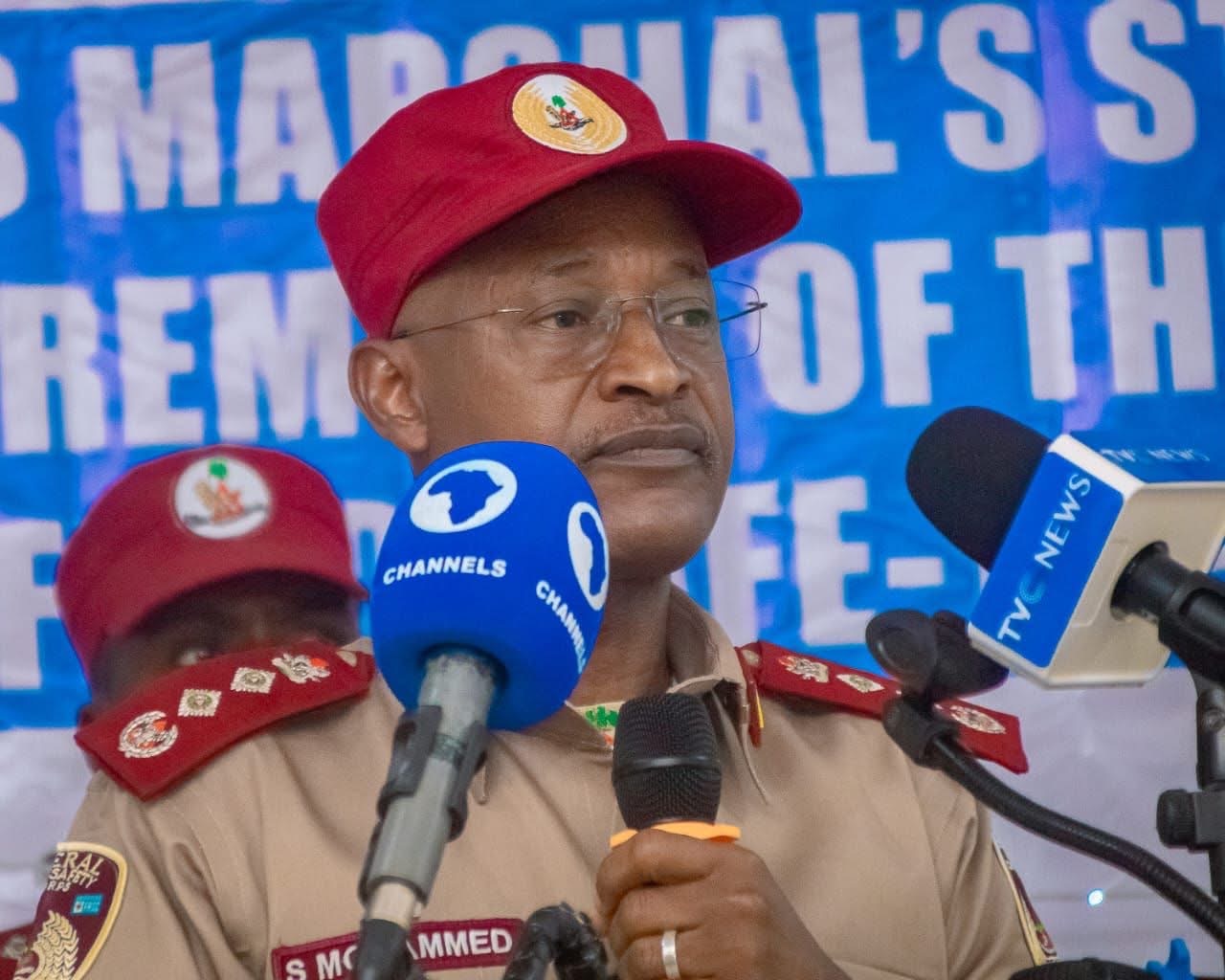
Under the leadership of Corps Marshal Shehu Mohammed, the Safe-to-Load Programme is receiving renewed strategic focus and operational strengthening. His administration is driving the integration of technology into enforcement processes, promoting real-time monitoring systems, and deepening collaboration with regulatory agencies in the petroleum sector. There is a deliberate push to institutionalize annual technical vetting of tanker trucks, enhance data-driven decision-making, and improve compliance monitoring across the value chain.
To achieve near total safety, on-going efforts are centered on deploying information management systems for real time oversight, advocating for the installation of on-board monitoring devices to track driver behaviour, and enforcing mandatory annual training and certification for drivers handling hazardous materials. Increased attention is also being given to infrastructure improvements through collaboration with relevant government agencies, as well as the development of transit truck parks to regulate driver rest and reduce fatigue related incidents.
Enforcement is being further strengthened along critical corridors to address unsafe practices that occur after depot departure.
Giving specific directives last week in Lagos while flagging off the technical training program for desk officers of the FRSC implementing the Safe-To-Load program at petroleum depots and terminals, the Corps Marshal Shehu Mohammed did not mince words when he stated that ‘Any tanker that fails to meet Safe-to-Load requirements shall not be permitted to load under any circumstance”
He also added that all tanker-related crashes will be subjected to thorough investigation, with responsibility extended across the entire chain, including inspecting officers, depot management, drivers, and vehicle owners.
According to him “tampering with speed limiting devices or any critical safety system will attract strict enforcement actions, including prosecution. Operators are required to comply fully with prescribed maintenance schedules for all safety-critical components, particularly API-standard manhole covers and valves”
He concluded by reiterating the Corps’ resolve towards intensified monitoring through both physical inspection and deployment of technology-driven compliance systems at depots and along transit corridors, adding that the era of impunity on the highways is over as compliance with safety regulations must be absolute, and accountability must be enforced at all levels.
The Safe-to-Load Programme has undoubtedly transformed the safety landscape of petroleum product transportation in Nigeria. It has also reduced crash rates, improved operational standards, and fostered a culture of accountability within the haulage industry. Yet, the journey towards eliminating tanker-related crashes entirely continues. Sustained commitment, stronger enforcement, and continuous innovation will be essential in consolidating these gains. With strategic leadership and collective responsibility, Nigeria is steadily advancing toward a future where the movement of petroleum products on its roads is not only efficient but significantly safer for all.
Osondu Ohaeri is the Corps Public Education Officer at the FRSC National Headquarters Abuja and a Fellow of the Nigerian Institute of Public Relations