By Nkechi Eze
The Independent Corrupt Practices and Other Related Offences Commission (ICPC) has strengthened its collaboration with civil society groups in the North-East as part of efforts to deepen grassroots participation in the fight against corruption.
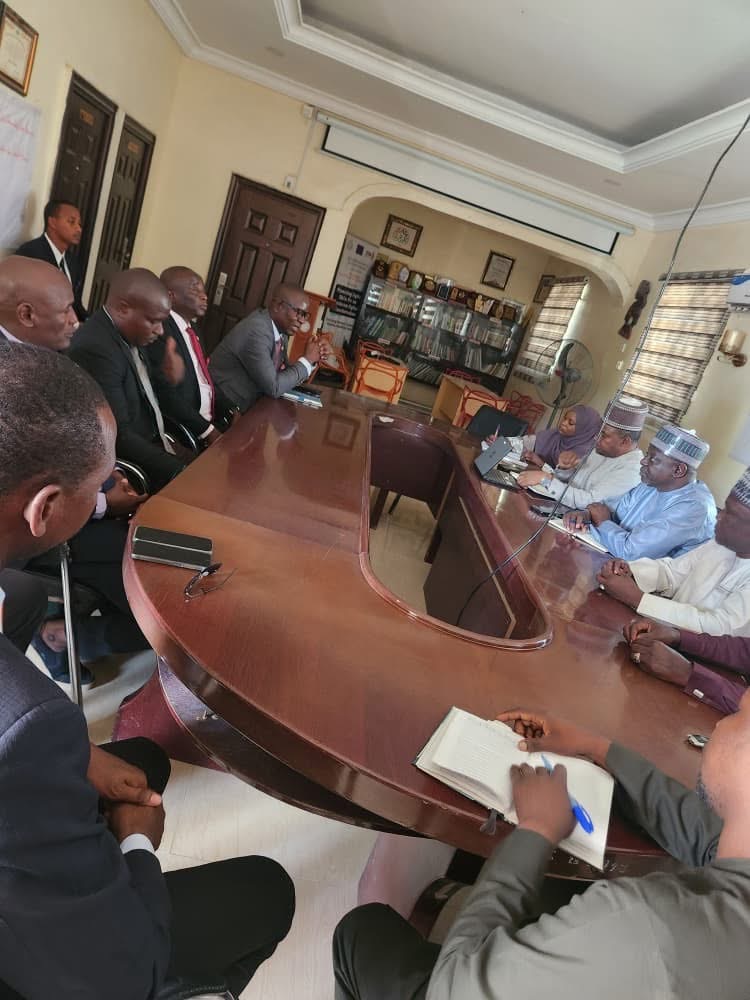
The engagement took place during a strategic meeting between the ICPC and the North-East Civil Society Organisation of Nigeria (NECSOB), covering Borno State and Yobe State, with both sides reaffirming their commitment to promoting transparency, accountability and good governance at the community level.
The meeting, led by the Commission’s Resident Anti-Corruption Commissioner (RACC), was aimed at strengthening collaborative frameworks for public enlightenment, community sensitisation and the monitoring of government-funded projects. Central to the discussions was the work of the Constituency and Executive Project Tracking Division (CEPTD), a key unit of the Commission responsible for ensuring that public funds allocated for projects translate into tangible development for citizens.
Speaking during the visit, the Chairman of NECSOB, Ahmed Shehu, described the engagement as a timely intervention in the collective effort to curb corruption.
He stressed that effective collaboration between state institutions and civil society organisations is essential for ensuring transparency and accountability in public administration.
“We cannot overstate the importance of this partnership. Civil society organisations are the bridge to the communities, and together with the ICPC, we can ensure that every naira allocated for development is accounted for,” Shehu said.
The meeting brought together several civil society leaders and stakeholders, including Comrade Bulama Asiso of NECSOB, Comrade Yusuf Inuwa, Executive Director of the Nigeria Labour Congress, Comrade Mamman Bukar, Director at the NLC, Ambassador Shettima Jaafar Imam of PACHE, Baba-Kura Bukar of FACDA and Ambassador Kaltume Jaafaru of the Police Community Relations Committee (PCRC).
In his remarks, the Resident Anti-Corruption Commissioner emphasised the importance of embedding anti-corruption values within communities, noting that civil society groups play a crucial role in monitoring constituency and executive projects.
According to him, community-based organisations serve as the “eyes and ears” of accountability on the ground, helping to ensure that government-funded projects are properly executed and not abandoned.
Also speaking, the Second-in-Command to the RACC, A.D. David Samuel Damdakalak, highlighted the need for stronger collaboration to support Ministries, Departments and Agencies (MDAs) in meeting their Key Performance Indicators (KPIs). He also shed light on the Commission’s whistle-blowing mechanism, describing it as a vital tool for citizens to safely report corruption and strengthen accountability within public institutions.
Providing a legal perspective, Barrister Ibrahim Garba called for stricter enforcement measures and improved monitoring systems to prevent diversion and mismanagement of public funds. He also raised concerns about sexual harassment in society, urging stakeholders to address the issue as part of broader integrity and governance reforms.
A former Chairman of the Nigeria Union of Teachers also highlighted corrupt practices observed in some project executions under the Constituency and Executive Project Tracking Initiative (CEPTI), particularly in relation to e-procurement processes, calling for strict adherence to due process and transparency.
Adding a gender perspective to the discussion, Ambassador Kaltume Ja’afaru emphasised the critical role of women in strengthening accountability and governance, urging greater inclusion of women in advocacy, sensitisation campaigns and community-based monitoring initiatives.
As part of efforts to promote grassroots awareness, the ICPC delegation presented anti-corruption publications and sensitisation materials to the NECSOB Chairman to support public education campaigns across the region.
The meeting concluded with both parties reaffirming their commitment to sustained collaboration through joint project monitoring, continuous public enlightenment and the strengthening of transparency mechanisms in Borno and Yobe states.