


By Nkechi Eze
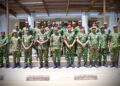
The Nigeria Security and Civil Defence Corps (NSCDC) on Monday formally received its Commandant General, Ahmed Abubakar Audi, mni, OFR, at the National Headquarters in Abuja following the approval of his five-year tenure extension by President Bola Ahmed Tinubu.
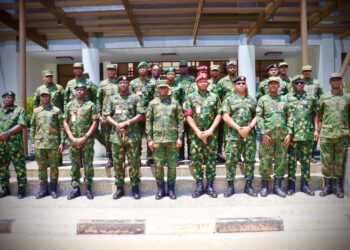
The reception, conducted in line with Corps protocol, featured a ceremonial guard of honour and a formal assembly of senior officers and personnel, reflecting discipline, unity and renewed confidence in the leadership of the Service.
In an official signed statement issued by the National Public Relations Officer of the Corps, ACC Babawale Afolabi, the NSCDC described the tenure extension as a significant milestone widely regarded within the Service as a well-deserved renewal of leadership.
According to the statement, the extension is seen as a testament to the Commandant General’s vision, discipline and transformational stewardship, which have defined his administration and repositioned the Corps within Nigeria’s evolving security architecture.
Under Audi’s leadership, the NSCDC has recorded measurable progress in strategic repositioning, operational strengthening and institutional reforms aimed at enhancing the protection of critical national assets and infrastructure.
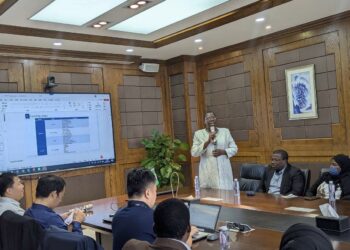
Addressing officers and men at the headquarters, the Commandant General expressed profound appreciation to the President for the confidence reposed in him, describing the extension as a collective mandate for greater responsibility and renewed commitment.
He reaffirmed his resolve to consolidate ongoing reforms, strengthen operational capacity across formations, enhance personnel welfare and deepen the Corps’ core mandate of safeguarding critical national infrastructure.
Observers within the Service say the five-year extension signals continuity in leadership at a time when internal security coordination and asset protection remain central to national stability.
With the renewed mandate, the Corps is expected to sustain its reform trajectory, expand operational effectiveness and further entrench its role as a key component of Nigeria’s security framework.