


By Nkechi Eze
The Independent National Electoral Commission (INEC) announced that all arrangements have been concluded for the polls scheduled for Saturday, February 21, 2026, across the six Area Councils of the Federal Capital Territory.
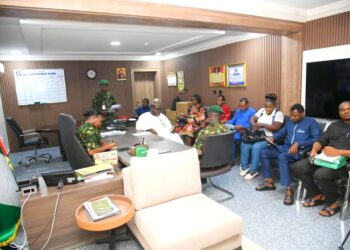
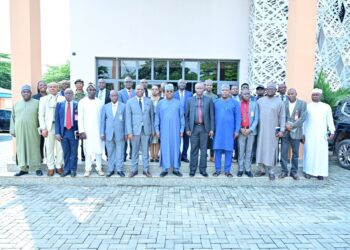
Speaking during a high-level stakeholders’ meeting in Abuja, the INEC Chairman, Joash Ojo Amupitan, SAN, said the elections represent an important benchmark for democratic governance at the grassroots level and called for collective commitment to ensure their success.
He noted that while INEC is constitutionally mandated to organise elections, the credibility of the process depends heavily on the cooperation, lawful conduct and sense of responsibility demonstrated by political parties, candidates, security agencies, civil society organisations, the media and voters.
According to him, a total of 1,680,315 registered voters are eligible to participate in the elections, which will be held in Abaji, Abuja Municipal Area Council, Bwari, Gwagwalada, Kuje and Kwali. Voting will take place in 2,822 polling units, with 570 candidates contesting for 68 positions, including chairmanship, vice-chairmanship and councillorship seats.
The INEC Chairman highlighted the unique nature of the FCT elections, explaining that they are the only local government polls conducted directly by INEC rather than state electoral commissions, making them a national reference point for credible local elections.
He confirmed that the Commission has successfully implemented all activities outlined in its 13-item timetable, with political campaigns scheduled to end at midnight on Thursday, February 19, leaving only Election Day proceedings.
Amupitan also disclosed that the distribution of Permanent Voter Cards, following the suspension of Continuous Voter Registration in October 2025, concluded on February 10, with 106,099 PVCs collected, reflecting strong voter interest in the exercise.
To enhance transparency and public confidence, INEC accredited 89 domestic and international observer groups as well as 700 journalists representing 72 media organisations, urging them to uphold professionalism in their coverage and observation.
On operational readiness, the Commission has trained and deployed 11,873 polling officials, including personnel assigned to split polling units, alongside supervisors, collation officers and technical teams to ensure smooth conduct of the exercise.
INEC also confirmed that its Bimodal Voter Accreditation System has been fully upgraded, tested and backed up with additional reserve devices. A mock accreditation conducted in 289 polling units produced satisfactory results, reinforcing confidence in the system’s ability to accredit voters and transmit results electronically to the INEC Result Viewing Portal.
Logistics arrangements have equally been finalised, with transport unions providing 1,132 vehicles, 620 motorcycles and 14 boats to support personnel and material deployment. Polling is expected to commence promptly at 8:30 a.m. on Election Day.
Reaffirming the Commission’s neutrality, Amupitan stressed that INEC has no preferred candidates or political affiliations, insisting that its sole responsibility is to enable voters to freely choose their leaders.
He issued a stern warning against vote buying and vote selling, describing such practices as serious threats to democracy. He disclosed that both the Economic and Financial Crimes Commission and the Independent Corrupt Practices and Other Related Offences Commission have been directed to deploy personnel to polling units to detect and prosecute electoral offenders.
In his remarks, the FCT Resident Electoral Commissioner, Aminu Kasimu Idris, said preparations for the elections began as far back as January 2025 and included monitoring party primaries, publishing candidate lists, supervising campaigns, conducting voter registration and distributing PVCs.
He added that voter registers had been displayed at polling units to help residents confirm their voting locations and called on all stakeholders to play their roles responsibly.
Idris urged voters to turn out peacefully to exercise their civic rights, appealed to political parties and candidates to obey electoral laws, and encouraged the media to provide fair and accurate reporting. He also charged security agencies to maintain peace and advised INEC officials to carry out their duties with professionalism.