

By Nkechi Eze
The Chief of Defence Staff (CDS), General Olufemi Oluyede AFM, has reaffirmed the unwavering commitment of the Armed Forces of Nigeria (AFN) to a security architecture that prioritises the protection of lives, preservation of human dignity and the strengthening of national cohesion, describing human security and gender considerations as indispensable force multipliers in contemporary military operations.
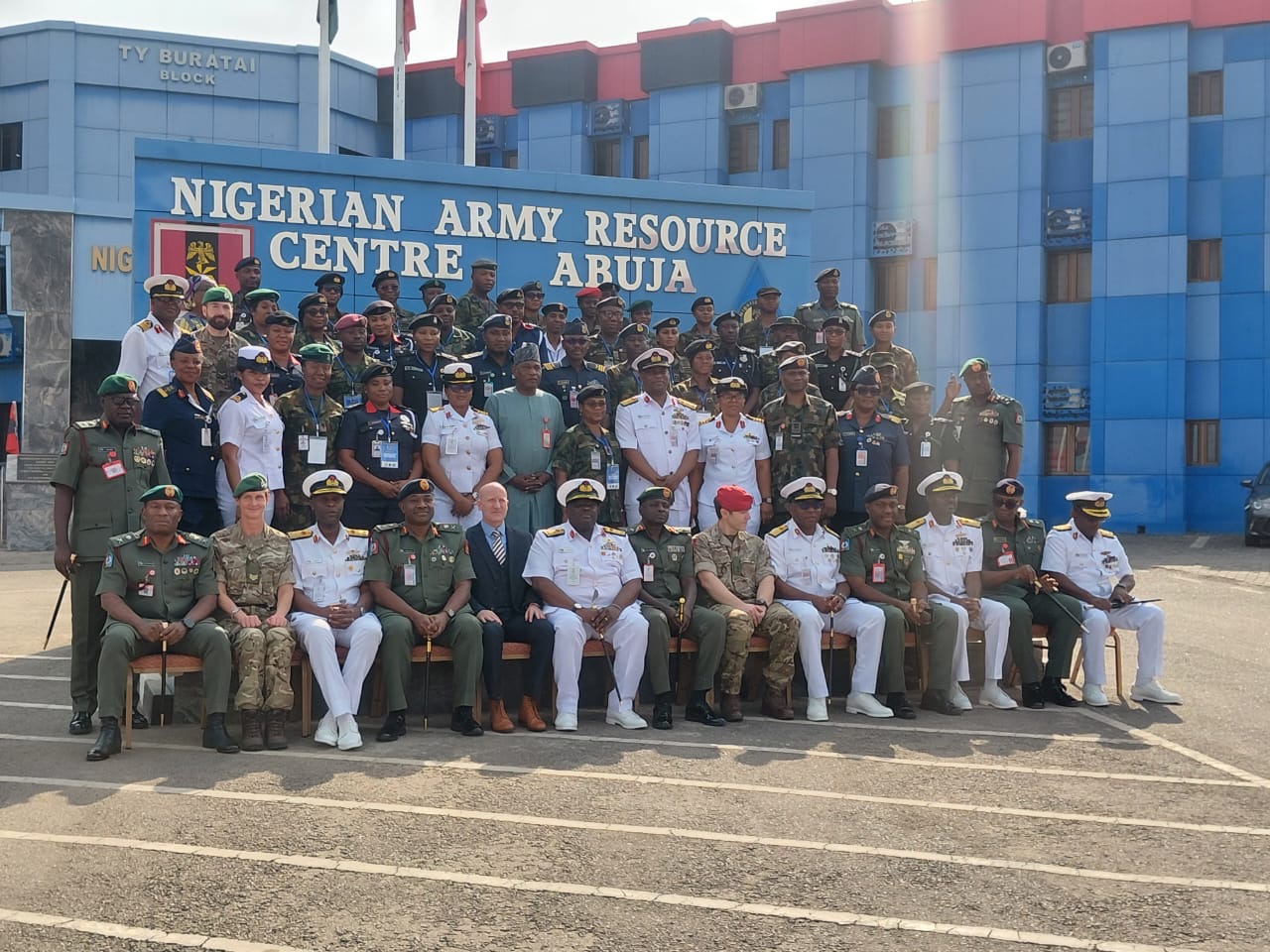
The CDS made this known at the opening ceremony of the Human Security and Gender Advisers Course held at the Nigerian Army Resource Centre, Abuja, where he underscored the centrality of people-centred approaches to national security and civil-military relations.
Represented at the event by the Chief of Defence Standard and Evaluation, Major General Ibrahim Lassa, General Oluyede expressed deep appreciation to Nigeria’s British partners for their sustained support and cooperation in strengthening the professional capacity of the Armed Forces, particularly in the area of Civil-Military Cooperation (CIMIC). He noted that the enduring defence partnership between Nigeria and the United Kingdom reflects a shared commitment to contemporary, people-focused approaches to national security, while also acknowledging the valuable contributions of the British Defence Staff (BDS) to enhancing the operational effectiveness of the Services.
The CDS observed that Nigeria’s current security environment is complex, fluid and multidimensional, extending beyond conventional threats to include asymmetric warfare, violent extremism, communal conflicts, transnational crimes and humanitarian emergencies, all of which have direct consequences for civilian populations. In this context, he stressed that security must go beyond territorial defence to encompass the protection of people, preservation of human dignity and the strengthening of societal resilience.
He explained that this broader understanding underpins the concept of human security, which recognises that lasting peace and stability cannot be achieved solely through kinetic operations, but through inclusive, preventive and collaborative approaches that address the root causes of conflict. According to him, operational effectiveness is closely linked to the trust and confidence of the civilian population, making human security considerations central to mission success.
General Oluyede further stated that the course aligns directly with his strategic philosophy of consolidating the capabilities of the AFN through enhanced jointness for a reinforced operational posture, supported by improved welfare and sound administration, under a whole-of-government approach. He noted that, under this philosophy, the AFN is being repositioned as a force that is not only operationally capable, but also ethically grounded, people-centred and responsive to the socio-cultural realities of its operating environment.
He added that preventive action, collaboration with civilian institutions and the protection of civilians have become core elements of force effectiveness, emphasising that human security and gender considerations are not optional, but essential elements that reinforce legitimacy, operational reach and mission sustainability.
The CDS encouraged participants to take full advantage of the course for knowledge exchange, critical reflection and professional networking, stressing that the skills and insights acquired must be translated into practical applications in operational planning, field deployments and engagements with civilian populations. He noted that participants are being prepared not only for personal development, but also to serve as agents of institutional change within the Armed Forces of Nigeria.
Earlier in his welcome address, the Chief of Defence Civil-Military Relations, Rear Admiral Saburi Lawal, formally welcomed participants to the Human Security and Gender Advisers Course, which is jointly conducted by Defence Headquarters in collaboration with the British Defence Staff and scheduled to run from 26 January to 4 February 2026.
He described the course as another milestone in the long-standing defence cooperation between Nigeria and the United Kingdom, noting that such collaboration has contributed significantly to capacity development within the Armed Forces of Nigeria and other security agencies. Rear Admiral Lawal emphasised that the partnership remains vital in ensuring personnel are adequately equipped to operate effectively in today’s increasingly complex security environment.
Addressing the participants, he disclosed that they were carefully selected as key personnel who would play advisory roles within the Armed Forces of Nigeria, the Nigeria Police Force and the Nigeria Security and Civil Defence Corps. He expressed confidence that their engagement in the programme would contribute meaningfully to enhancing professionalism, cooperation and trust between the military and the civilian population they are constitutionally mandated to protect.
The course is expected to deepen participants’ understanding of human security and gender perspectives in operations, strengthen civil-military relations, and further entrench people-centred approaches as a cornerstone of Nigeria’s national security strategy.