


…as JIC Completes Investigation of Over 1,250 Terrorism Suspects, Reaffirms Rights-Based Counter-Terrorism Framework in North East
By Nkechi Eze
At the heart of Nigeria’s long and complex war against terrorism in the North East lies an often unseen but critical battlefield: intelligence, investigation, and justice. Beyond the frontlines where troops confront Boko Haram and Islamic State West Africa Province (ISWAP), a meticulous process of evidence gathering, profiling, and legal scrutiny continues quietly, shaping the integrity and sustainability of counter-terrorism operations.
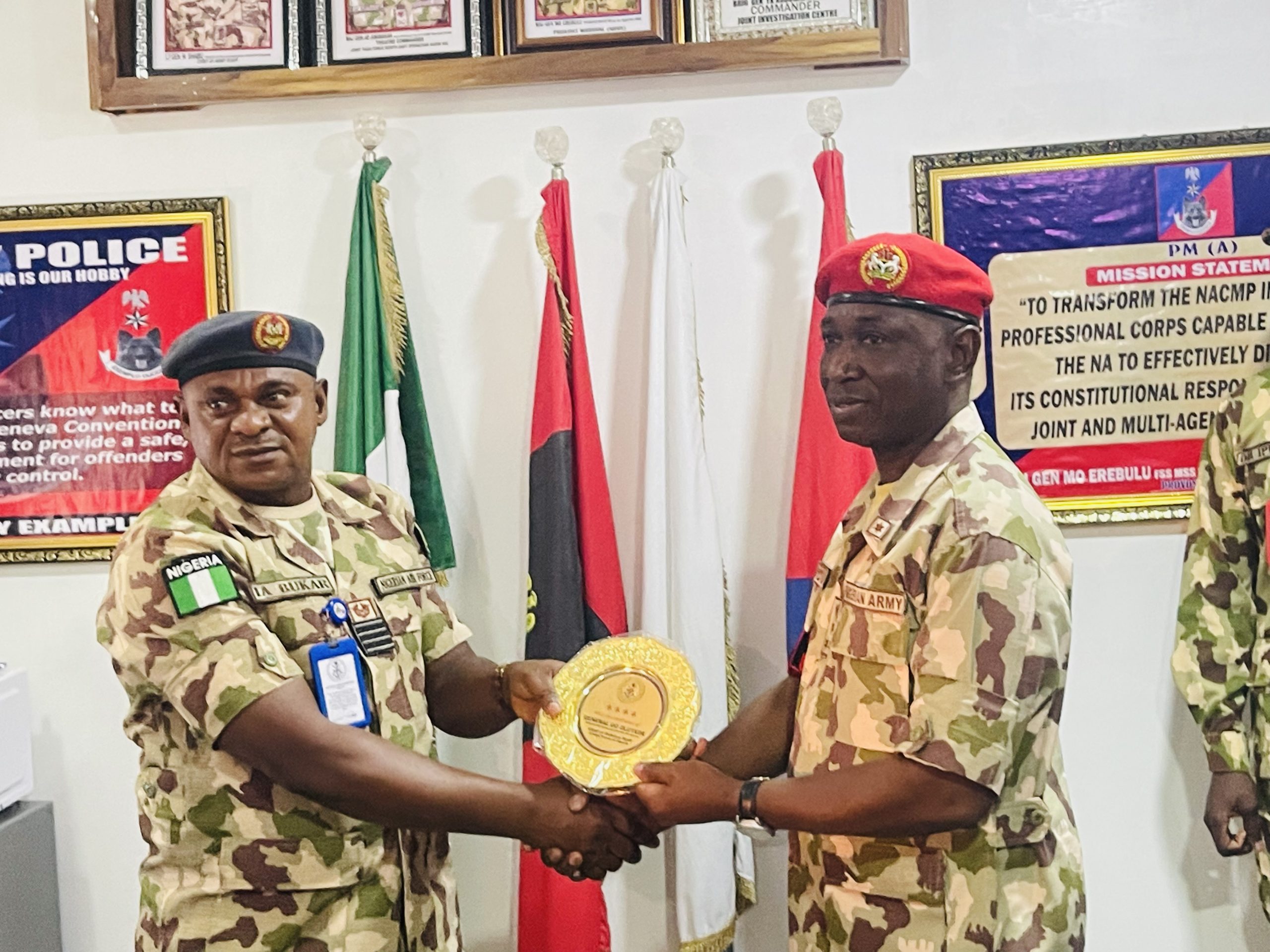
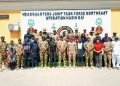
It was within this context that the Joint Investigation Centre (JIC) of Operation Hadin Kai opened its doors to Defence Correspondents in Maiduguri, offering a rare glimpse into the inner workings of Nigeria’s counter-terrorism investigative architecture. During the briefing an tour of the facility, the Commander of the Joint Investigation Centre, Brigadier General Yusuf Audu, disclosed that investigations into more than 1,250 terrorism suspects arrested across the North East have been concluded, with the suspects now awaiting trial.
Addressing journalists at the JIC facility in Borno State, Brigadier General Yusuf Audu explained that the Centre occupies a central position within Operation Hadin Kai, serving as the hub for investigating terrorism-related offences and other serious crimes linked to insurgency within the theatre of operations. According to him, the effectiveness of military success on the battlefield ultimately depends on how well suspects are lawfully processed, profiled, and subjected to justice.
The JIC Commander noted that the Centre operates through a multidisciplinary framework, drawing investigators, intelligence analysts, and language assistants from multiple security agencies. This diversity, he said, enables accurate interrogation and proper understanding of suspects drawn from different ethnic, linguistic, and ideological backgrounds across the region.
Brigadier General Yusuf Audu emphasised that all investigations conducted at the Centre strictly comply with Nigeria’s counter-terrorism legal regime, including the Terrorism Prevention Acts of 2011 and 2013 (as amended), as well as the Terrorism (Prevention and Prohibition) Act of 2022. He stressed that legality and accountability remain non-negotiable pillars of the Centre’s operations.
“Our approach is firmly rooted in respect for human rights and the rule of law,” Brigadier General Yusuf Audu said, adding that the Centre employs special investigation techniques supported by modern equipment to ensure accuracy and credibility. He further explained that the detention of suspects is never arbitrary, as all cases are backed by valid remand orders issued by the Federal High Court.
Providing an update on case status, Brigadier General Yusuf Audu disclosed that approximately 1,250 cases have been fully investigated and are pending trial, while a number of others are still undergoing further characterisation to determine the most appropriate legal or administrative pathway.
He explained that once investigations are completed, each case is subjected to a rigorous review process by a Complex Casework Group, which provides legal guidance on the appropriate outcome. Based on this review, suspects may be recommended for prosecution, rehabilitation, reintegration, or, where applicable, immigration-related actions.
According to Brigadier General Yusuf Audu, suspects approved for prosecution are transferred through established legal channels for trial, while those cleared for rehabilitation or reintegration are processed through official government programmes designed to support deradicalisation and social reintegration.
A key feature of the Centre’s operations, he noted, is the comprehensive biometric capture of every suspect processed through the JIC. This system ensures the creation of a robust and reliable database, strengthening intelligence coordination and preventing identity manipulation. He disclosed that this biometric process is supported by the International Organization for Migration (IOM).
To sustain professionalism and investigative excellence, Brigadier General Yusuf Audu revealed that personnel posted to the JIC undergo continuous training in specialised fields such as psychology, criminology, and sociology. This, he said, enhances their capacity to understand extremist behaviour, improve interrogation outcomes, and support evidence-based decision-making.
On civil–military and international cooperation, Brigadier General Yusuf Audu highlighted the Centre’s close collaboration with several global organisations, including the International Committee of the Red Cross (ICRC), United Nations Office on Drugs and Crime (UNODC), United Nations Children’s Fund (UNICEF), International Organization for Migration (IOM), and other development partners.
He disclosed that UNODC constructed a modern evidence storage facility for the Centre, donated computer systems, and supported capacity-building workshops focused on terrorism investigation and prosecution. The IOM, he added, established a fully equipped data centre to support registration, screening, and biometric documentation of suspects.
According to Brigadier General Yusuf Audu, the ICRC plays a vital humanitarian role by supporting detainee healthcare, including the treatment of malnutrition and tuberculosis, while UNICEF has contributed learning materials to enhance educational programmes for detainees within the facility.
The briefing, he said, reflects the Armed Forces of Nigeria’s broader commitment to conducting counter-terrorism operations that are intelligence-driven, legally grounded, and aligned with international best practices. “Our objective is not only to defeat terrorism militarily, but to ensure that justice is served in a manner that upholds human dignity, strengthens public confidence, and reinforces the rule of law,” Brigadier General Yusuf Audu affirmed.
As Nigeria continues to consolidate gains against terrorism in the North East, the operations of the Joint Investigation Centre stand as a reminder that lasting security is built not only on battlefield victories, but also on credible investigations, lawful prosecutions, and institutional integrity.








Thinking out of the box is the way to go about countering terrorism. All these predictive moves they’re making will only slow down the process. Also just to add. Diversity has always been our strength, so if we’re able to maximize it in times like these. I’m certain we will triumph. Very good read! Thank you