

By Nkechi Eze
Nigeria is set to strengthen the regulation of its solid minerals sector, tackle illegal mining and unlock more revenue from its vast mineral deposits with the proposed establishment of the Nigerian Mines Rangers Service, which is expected to provide specialised security and enforcement support across mining locations in the country.
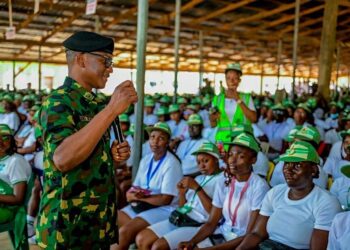
The Commandant-General of the National Unity and Peace Corps, Dr Chinedu Nneji, said the proposed agency would help address revenue leakages arising from illegal mineral exploitation while ensuring that mining activities are conducted in accordance with existing laws and regulations.
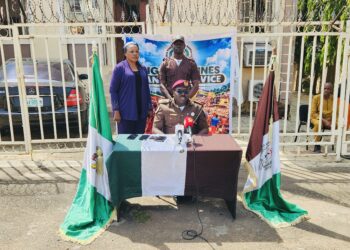
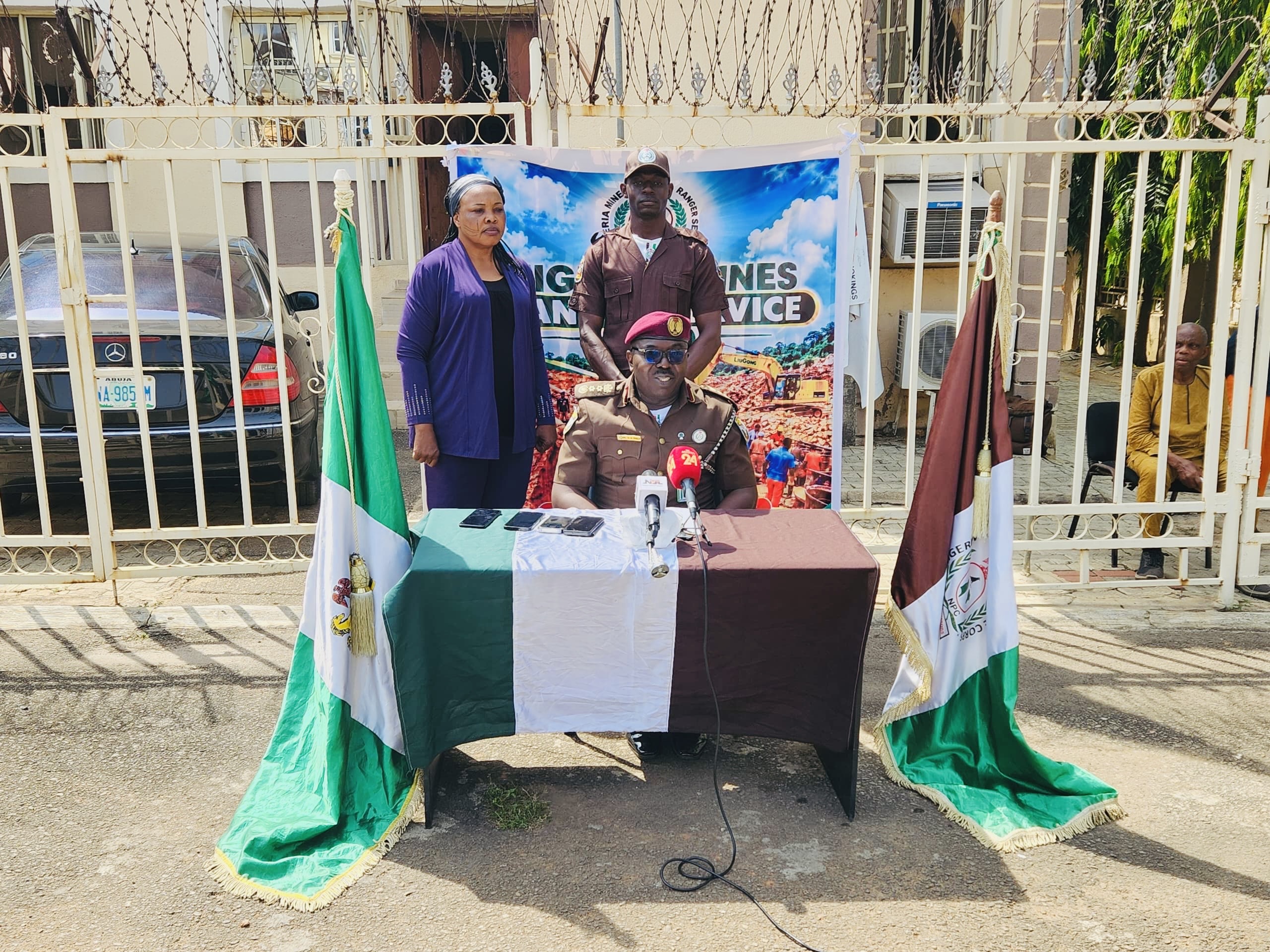
Nneji made this known on Monday, November 23, 2026, during a press briefing in Abuja following the passage of the Nigerian Mines Rangers Service Bill, SB 253, by both chambers of the National Assembly.
He disclosed that the Senate passed its version of the bill in November 2025 and transmitted it to the House of Representatives for concurrence, adding that the House passed the bill on November 18, 2026, paving the way for its transmission to President Bola Ahmed Tinubu for assent.
According to an official statement issued at the briefing, the Commandant-General appealed to President Tinubu to sign the bill into law, while urging the Minister of Solid Minerals Development, Dr Dele Alake, to support its establishment.
He explained that the proposed service, which would be domiciled under the Federal Ministry of Solid Minerals Development, was designed to regulate mining activities, protect mineral resources and strengthen government revenue generation.
Nneji expressed concern over the activities of illegal miners who exploit the country’s mineral resources without making corresponding payments to the Federal Government.
“Go to any part of the country. You see them digging all these minerals and taking them away without paying a dime to the Federal Government. This is something we no longer want to continue,” he said.
He maintained that the establishment of the Mines Rangers Service would provide the institutional framework required to bring mining operators under effective regulation and address criminal activities associated with mining locations and forests across the country.
On the financial implications of establishing the agency, Nneji dismissed concerns that it would increase the Federal Government’s wage bill, particularly against the backdrop of the recent restriction on recruitment into government institutions.
He argued that the proposed service would be self-sustaining through revenue generated from its operations, enabling it to pay personnel salaries and remit substantial revenue to the government.
“Rather, we are going to be an asset to the Federal Government,” he said.
According to him, the additional revenue that would accrue from properly regulated mining activities could reduce the government’s dependence on borrowing and provide resources for national development.
Nneji cited Canada, Ghana and South Africa as examples of countries that have developed their economies through effective management of their mining sectors, stressing that Nigeria could achieve similar benefits by establishing a dedicated institution to oversee its mineral resources.
He further disclosed that the National Unity and Peace Corps had already developed the operational framework and legal instruments for the proposed service, while some personnel had undergone training in anticipation of its take-off.
“The workforce we are coming with are well-trained personnel that will help us move into this work without mounting any form of pressure on the Federal Government,” he said.
The Commandant-General also identified the absence of a specialised institution dedicated to securing and regulating mining activities as a major gap in the country’s solid minerals sector, arguing that the proposed agency would provide the necessary enforcement structure.
He clarified that the bill was not an executive proposal initiated by the Ministry of Solid Minerals Development but a legislative initiative developed by the National Unity and Peace Corps and sponsored by lawmakers.
Nneji said he personally developed the bill on behalf of the organisation, facilitated its sponsorship in both chambers of the National Assembly and defended it before relevant legislative committees and during public hearings.
He, however, acknowledged that once signed into law, the legislation would become the property of the Federal Government rather than that of its promoters.
Nigeria is endowed with more than 44 different mineral resources, making the effective regulation and protection of the sector critical to diversifying the economy, strengthening government revenue and reducing dependence on oil.
Nneji expressed optimism that presidential assent would pave the way for the establishment of the Nigerian Mines Rangers Service and enable it to commence operations in support of the Federal Government’s efforts to harness the country’s mineral wealth.