

By Nkechi Eze
The Chief of Army Staff (COAS), Lieutenant General Waidi Shaibu, has emphasised digital transformation and continuous capacity development as critical components of efforts to strengthen administrative efficiency and improve command decision-making in the Nigerian Army.
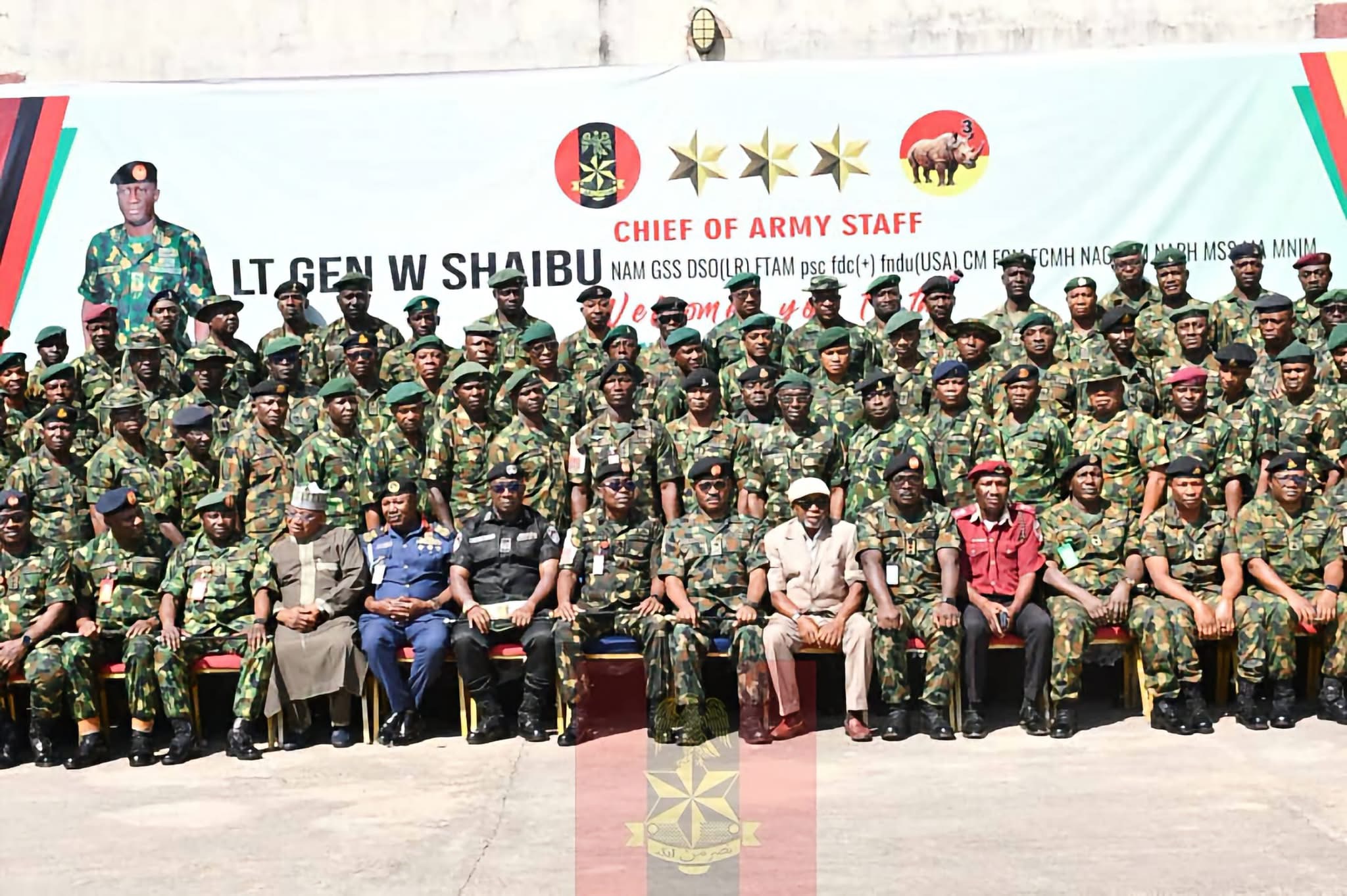
Shaibu made this known while declaring open the Second Biannual Nigerian Army Chief Clerks’ Convention 2026 in Jos, Plateau State, where he charged chief clerks to embrace technological innovation, professionalism and administrative excellence in the discharge of their responsibilities.
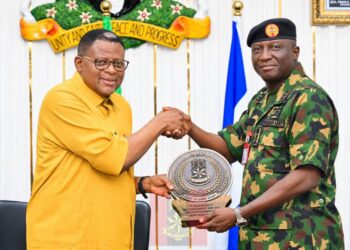
The COAS, represented by the General Officer Commanding (GOC), 3 Division Nigerian Army and Commander, Joint Task Force Operation ENDURING PEACE, Major General Maxwell Dangana, described the convention as a strategic platform for strengthening the Army’s administrative capacity and improving information management across its formations and units.
According to an official statement signed by the Acting Deputy Director, Army Public Relations, 3 Division Nigerian Army, Lieutenant Colonel Olumide Victor Olukoya, the Army Chief noted that chief clerks play vital roles in ensuring accurate record-keeping, timely information flow and effective administrative support, which are essential to informed command decisions.
With the theme, “Enhancing Clerical Effectiveness in Support of the Decision-Making Process in a Joint Security Environment,” the convention aligns with the Army’s commitment to strengthening joint operations, inter-agency cooperation and institutional efficiency.
Shaibu stressed that administrative precision, personnel accountability and effective information management were as important to mission success as firepower and manoeuvre, urging chief clerks to recognise themselves as operational enablers.
He disclosed that the Army was pursuing reforms to digitise service records, automate the administration of pay and allowances, and integrate personnel management systems across formations to promote transparency, accountability and administrative efficiency.
The COAS also underscored the need for sustained capacity development within the clerical cadre, calling for advanced training in leadership, information management and digital administration to equip personnel with the skills required to meet evolving institutional demands.
He reaffirmed his strategic vision of repositioning the Nigerian Army as an agile, adaptive and technologically empowered force, anchored on five pillars: professionalism and discipline, administrative efficiency, training and operational readiness, technological integration, and personnel welfare.
On welfare, the Army Chief reiterated the institution’s commitment to improving accommodation, healthcare and the timely administration of personnel entitlements, noting the importance of personnel welfare to overall institutional effectiveness.
He urged participants to actively engage in the convention, share professional experiences and develop practical recommendations that would strengthen administrative processes and coordination across the Army.
The COAS also commended the GOC, 3 Division, the Department of Personnel Management and the Local Organising Committee for their commitment and meticulous planning towards the successful hosting of the convention.
The convention is expected to produce practical recommendations for improving clerical effectiveness, administrative coordination and informed command decision-making in support of the Nigerian Army’s operational responsibilities.