


The Director-General of the National Information Technology Development Agency (NITDA), Kashifu Inuwa Abdullahi, has challenged African innovators, investors and policymakers to move the continent from being largely consumers of digital technologies to becoming global creators of innovative solutions and technology-driven enterprises.
Abdullahi also unveiled plans to connect Nigerian startups with investors, corporate organisations and potential customers through the forthcoming Builders’ Festival, targeting a ₦3 billion investment pipeline for promising indigenous technology businesses.
He made the call in his keynote address prepared for Moonshot 2026, organised by TechCabal at the National Theatre, Lagos, from October 28 to 29, under the theme, “Courage & Conviction Building for a New World.”
The NITDA Director-General maintained that Africa’s technological future must be driven by innovation, entrepreneurship, collaboration and measurable economic impact rather than continued dependence on technologies developed outside the continent.
“Africa’s next chapter will not be written by the technologies we consume. It will be written by the value we have the courage to create,” he declared.
Abdullahi acknowledged that Africa possesses exceptional technological talent but continues to face challenges relating to infrastructure, access to financing, mentorship and markets.
He stressed that addressing these gaps would require stronger collaboration among government institutions, universities, investors, technology companies and innovation hubs to create an enabling environment for sustainable technology businesses.
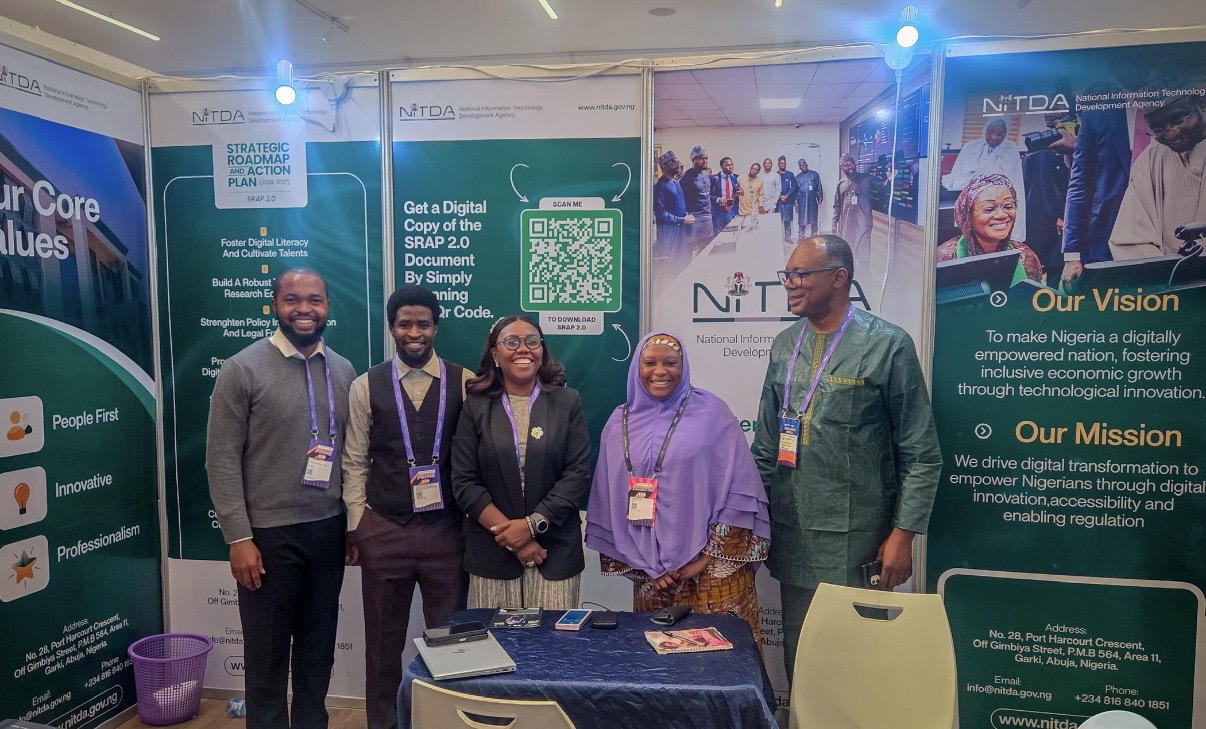
Highlighting NITDA’s evolving role in strengthening the country’s digital ecosystem, he said the Agency’s Strategic Roadmap and Action Plan (SRAP 2.0) prioritises connecting digital talent to opportunities, research to commercialisation, startups to capital, innovation to markets and technological advancement to public trust.
He urged stakeholders in Nigeria’s technology ecosystem to move beyond celebrating hackathons, pitch competitions and funding announcements to building commercially viable enterprises capable of creating jobs, addressing real-world challenges and competing in international markets.
“The true measure of an innovation ecosystem is not how many startups it celebrates. It is how many sustainable enterprises it helps create,” he stated.
As part of efforts to achieve this objective, Abdullahi highlighted the Builders’ Festival, scheduled to hold during the Digital Nigeria International Conference and Exhibition from November 10 to 12, 2026, in Abuja.
The initiative is designed to connect indigenous startups developing solutions to real industry challenges with corporate organisations, investors and potential customers, with a target of mobilising a ₦3 billion investment pipeline for promising entrepreneurs.
He, however, clarified that the ₦3 billion represents an investment mobilisation target and not funding already secured.
On artificial intelligence, the NITDA boss called for increased investment in indigenous AI capabilities, particularly in agriculture, healthcare, education, manufacturing and local-language technologies, stressing the need for Nigeria to develop homegrown solutions rather than depend solely on imported applications.
He also urged investors to support promising indigenous technology enterprises, corporate organisations to create opportunities for startup solutions, and government institutions to strengthen policies, infrastructure and strategic partnerships that would accelerate innovation.
Abdullahi identified innovation, trust and disciplined execution as critical foundations for Africa’s technological competitiveness, insisting that the continent must combine global ambition with practical solutions capable of generating lasting economic opportunities.
“The future will not belong only to those who predict it. It will belong to those with the courage to build it, the conviction to sustain it, and the discipline to make it work,” he said.
He urged African innovators to demonstrate the continent’s capacity to shape the global technology landscape through homegrown innovations, sustainable enterprises and solutions that promote economic growth and prosperity.