

By Nkechi Eze
The Police Officers’ Wives Association (POWA) has called for comprehensive mental health reforms within the Nigeria Police Force, stressing that the psychological demands of policing affect not only officers but also their spouses and children.
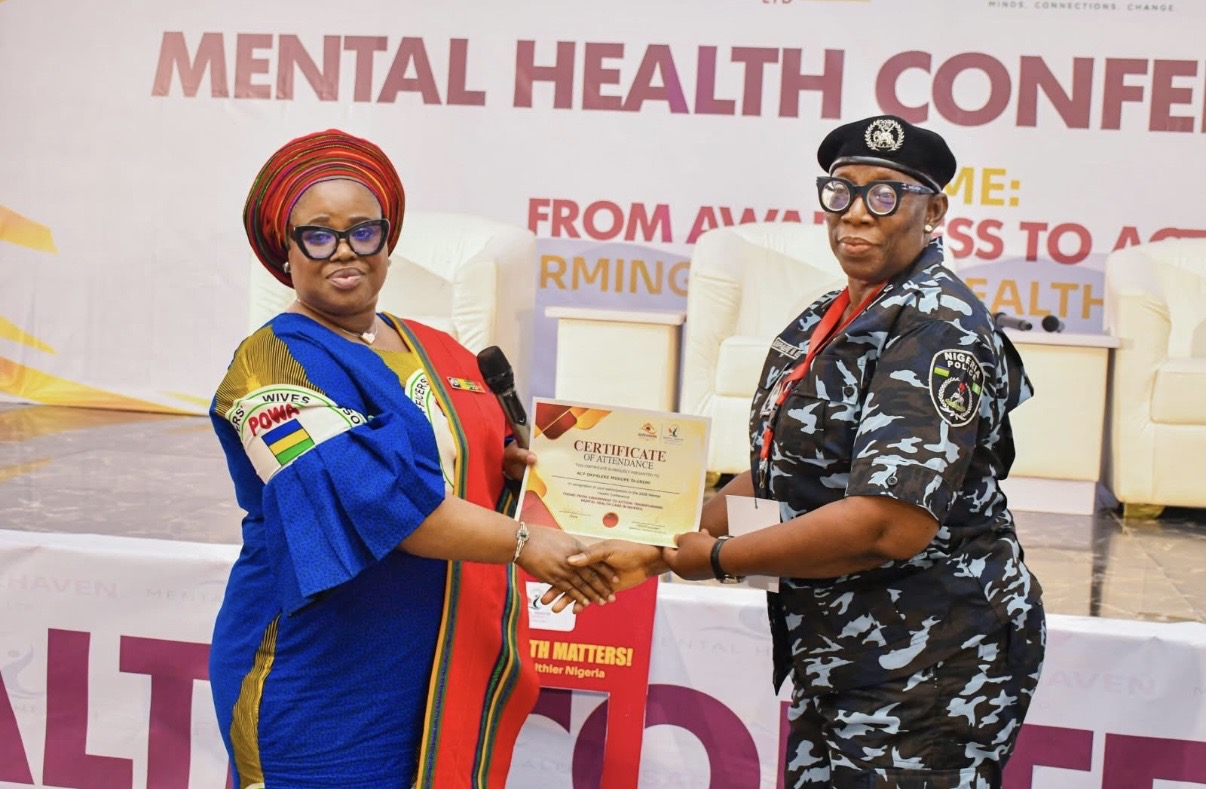
The National President of POWA, Chief Mrs. Olufunmilola Mutiat Disu, made the call while delivering a goodwill message at the Mental Health Conference Nigeria 2026, organised by Safehaven Wellness Centre with the theme, “From Awareness to Action: Transforming Mental Health Care in Nigeria.”
Disu noted that police personnel are frequently exposed to traumatic situations, including violence, loss, uncertainty and life-threatening encounters, which could leave lasting emotional and psychological effects long after their official duties have ended.
She explained that the consequences of such experiences often extend into officers’ homes, leaving family members to cope with emotional withdrawal, behavioural changes and other challenges associated with occupational trauma.
According to her, police spouses and children are sometimes unable to understand the psychological struggles of officers returning from difficult assignments, making mental health support an important component of police family welfare.
She observed that an officer could return home physically present but emotionally disconnected, with the trauma of the day’s activities continuing to affect family interactions.
The POWA president maintained that protecting police personnel must go beyond physical security and financial benefits to include deliberate measures that safeguard their mental and emotional wellbeing.
She advocated the integration of professional counselling, accessible mental healthcare services and supportive workplace policies into police welfare programmes, noting that officers and their families should be able to seek help without fear of discrimination or stigmatisation.
Disu further stressed that the welfare of police families should not be limited to material and financial assistance but must also address their emotional and psychological needs.
She called on relevant institutions and stakeholders to establish structures that encourage early intervention and provide a safe environment for officers and their relatives to discuss mental health challenges.
The POWA president also urged Nigerians to challenge negative perceptions surrounding mental health, noting that the fear of societal judgment often prevents individuals from seeking professional assistance.
She pointed out that psychological challenges affect people across different backgrounds, including young people dealing with uncertainty and parents facing personal and economic pressures.
Emphasising the need for timely intervention, Disu said individuals should not have to experience a breakdown before deserving professional care and support.
“You do not have to break before you deserve help, and you do not have to suffer in silence to prove your strength. Seeking help is not surrender; it is courage,” she stated.
She urged government institutions, communities and other stakeholders to move beyond awareness campaigns by investing in practical interventions that make mental healthcare more accessible to Nigerians.
Reaffirming POWA’s commitment to the welfare of police officers and their families, Disu said prioritising mental health would strengthen family relationships, improve individual wellbeing and contribute to a more effective police institution.
She added that sustained investment in mental healthcare would produce benefits beyond the police community, stressing that transforming mental health services in Nigeria requires collective responsibility and stronger institutional commitment.