

By Nkechi Eze
The National Council on Climate Change (NCCC) has called for an investment-driven approach to climate action, stressing the need to translate Nigeria’s climate commitments into bankable projects, economic opportunities and tangible development outcomes ahead of the 31st Conference of the Parties to the United Nations Framework Convention on Climate Change (COP31) in Antalya, Türkiye.
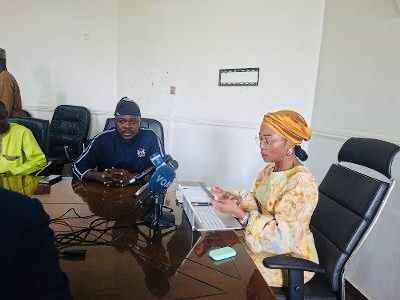
The Director-General of the NCCC, Mrs Tenioye Majekodunmi, made the call during her opening remarks at a media engagement themed “Nigeria at COP31: From Commitment to Implementation,” held at the council’s headquarters in Abuja on Thursday.
Majekodunmi said Nigeria’s participation at COP31 would focus on moving beyond climate pledges to practical implementation, investment and measurable benefits for Nigerians.
She noted that although the country had made progress in strengthening its climate policy architecture through its Nationally Determined Contribution (NDC) 3.0 and broader climate action and energy-transition agenda, the priority remained delivering results through effective policies, institutional capacity and strategic partnerships.
“Our message at COP31 will therefore be clear: Nigeria is ready to move from commitment to implementation,” she said.
The NCCC director-general emphasised that attracting investment into climate initiatives required a predictable policy environment, credible institutions and bankable projects capable of giving investors confidence in long-term commitments.
“Capital follows certainty,” she said, explaining that Nigeria would use COP31 to showcase emerging opportunities and encourage investors and development partners to participate in the country’s climate and energy-transition programmes.
According to her, climate finance must go beyond pledges to generate investments that support projects, businesses and communities.
She outlined what she described as the four Ds of climate action delivery: “Dollars. Deals. Deliveries. Dividends,” stressing that funding commitments must translate into signed agreements, projects on the ground and economic benefits such as jobs, businesses and improved incomes.
“Climate finance must become dollars committed. Dollars committed must become deals signed. Deals signed must become deliveries on the ground. And deliveries on the ground must become dividends jobs, businesses and incomes for Nigerians,” she said.
Majekodunmi identified access to climate finance, investment in energy-transition opportunities, carbon markets, green industrialisation and economic diversification as key areas Nigeria would pursue at COP31.
She said the country would also seek to strengthen opportunities under Article 6 of the Paris Agreement, which provides mechanisms for international cooperation in achieving climate targets, while ensuring environmental integrity.
The NCCC boss added that Nigeria intended to promote value addition and emerging green value chains, including opportunities linked to critical minerals, as part of efforts to position climate action as a driver of economic growth.
On preparations for the conference, she said the council had strengthened the capacity of Nigeria’s climate negotiators through targeted training and practical exercises designed to improve the country’s ability to defend its interests and secure favourable outcomes.
She disclosed that the Pre-COP31 Briefing and Negotiators’ Capacity-Building Workshop held on October 20 covered climate finance, Loss and Damage, carbon markets, multilateral negotiating tracks and the implementation of Nigeria’s climate action plans.
She also announced the conclusion of the UK PACT Workshops 7 and 8 on Enhancing Nigeria’s Capacity in Global Climate Negotiations, held from October 26 to 28, with simulations on climate finance, the Just Transition Work Programme, the Mitigation Work Programme, the Global Goal on Adaptation and Article 6.
According to her, the council had also introduced the Nigeria Climate Negotiator Network and a Digital Resource Repository to sustain the capacity developed and strengthen institutional knowledge beyond COP31.
Majekodunmi further announced the launch of the NCCC Annual Media Training Programme to improve journalists’ understanding and reporting of climate change, including issues relating to climate finance, energy transition, adaptation, carbon markets, green industrialisation and investment.
She said informed media coverage was essential to connecting international climate negotiations with the everyday realities of Nigerians and improving public understanding of the economic opportunities associated with climate action.
The director-general maintained that Nigeria’s climate transition must deliver measurable economic benefits, particularly through job creation, business development and improved livelihoods.
Citing the country’s Energy Transition Plan, she said Nigeria projected approximately 340,000 net new jobs by 2030, rising to 840,000 by 2060, particularly in the power, cooking and transport sectors.
“Nigeria’s climate transition will not be measured only in tonnes of carbon avoided. It will be measured in jobs created, businesses built and incomes improved,” she said.
She added that the transition aligned with President Bola Ahmed Tinubu’s Renewed Hope Agenda, noting that the government wanted Nigerian businesses to participate in the emerging green economy, attract climate-aligned capital and create opportunities for young people and local communities.
Majekodunmi also stressed the importance of strengthening Africa’s collective position in international climate negotiations ahead of COP32, which she described as an opportunity to advance the continent’s development priorities.
She said Nigeria would approach COP31 with a focus on negotiations, partnerships and investment, emphasising that climate ambition must be supported by policies and institutions capable of delivering results.
She reiterated that the country’s climate agenda must remain connected to development, energy access, industrialisation, employment and investment to ensure that climate action translates into sustainable prosperity for Nigerians.