

By Nkechi Eze
The Nigeria Customs Service (NCS) and key American business organisations are seeking to improve cargo clearance procedures, strengthen investor confidence and address trade bottlenecks as part of efforts to deepen bilateral economic cooperation between Nigeria and the United States.
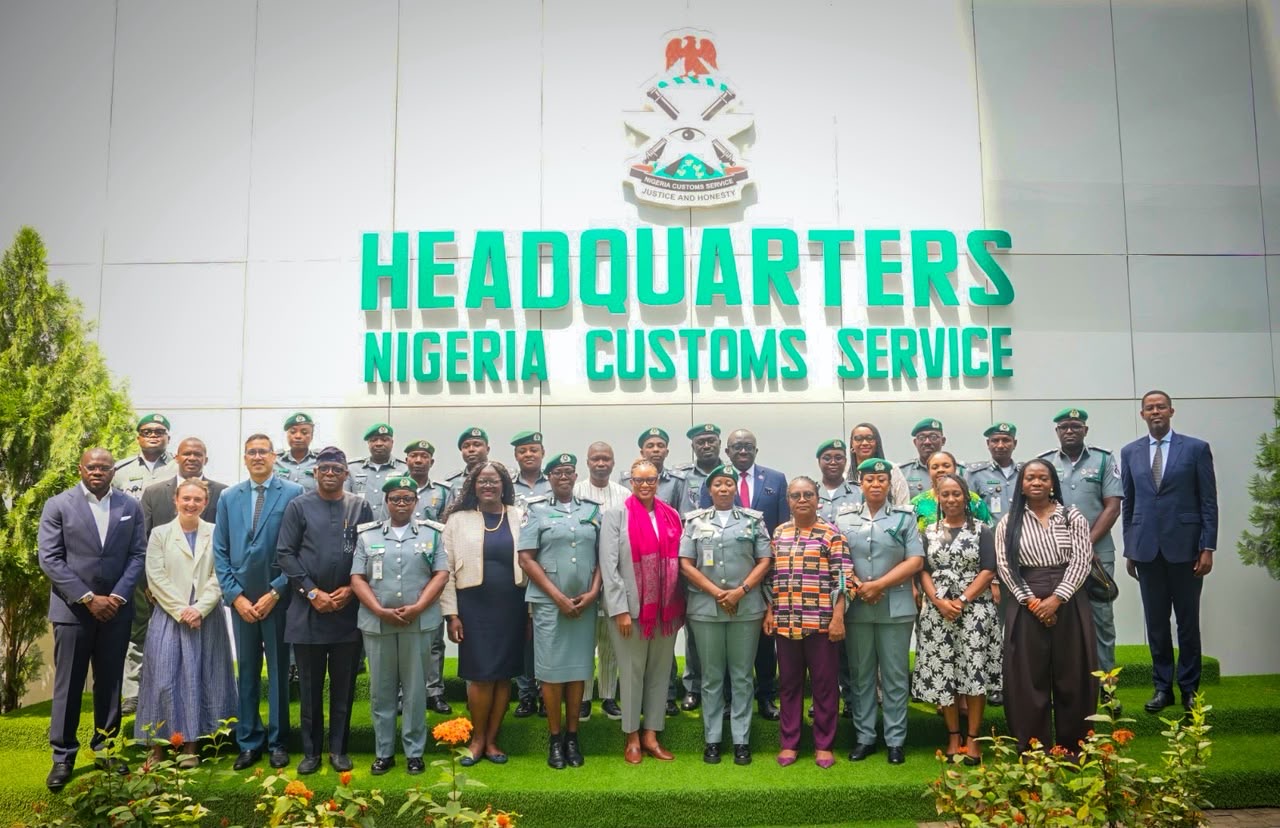
The Comptroller-General of Customs, Adewale Adeniyi, represented by the Deputy Comptroller-General of Customs in charge of Tariff and Trade, Caroline Niagwan, stated this during a quarterly engagement with the US Chamber of Commerce, the US-Africa Business Centre (USAfBC) and the American Business Council (ABC) at the NCS Headquarters’ ICT Auditorium in Maitama, Abuja, on October 28, 2026.
According to the CGC’s message delivered by Niagwan, the Service remained committed to institutional reforms, operational efficiency, digital transformation and stronger stakeholder engagement to create a predictable and transparent trade environment.
“Our objective is to build a modern, transparent, and responsive Customs administration that facilitates trade while ensuring effective revenue collection, border security, and compliance with applicable rules and regulations,” she said.
Niagwan explained that predictable Customs procedures, transparent tariff administration, timely cargo clearance and effective dispute resolution mechanisms were essential to improving the ease of doing business and enhancing investor confidence.
She added that the engagement provided an opportunity to exchange perspectives, address emerging concerns and strengthen collaboration with American businesses already operating in Nigeria and those seeking investment opportunities in the country.
As part of the modernisation drive, the Deputy Comptroller-General of Customs in charge of the ICT/Modernisation Department, Oluyomi Adebakin, highlighted ongoing efforts to automate licence and permit applications and streamline Customs operations through digital platforms.
Adebakin also disclosed plans to deploy 22 additional scanners across seaports, airports and border stations to improve cargo examination and operational efficiency.
She said the Service was transitioning towards paperless administrative processes and encouraged members of the business community to provide feedback on operational challenges to support improvements in service delivery.
Speaking at the engagement, the President of the US-Africa Business Centre at the US Chamber of Commerce, Kendra Gaither, said efficient Customs operations were crucial to facilitating trade and ensuring that businesses and the wider population benefited from improved cross-border commerce.
“When Customs works well, when trade is facilitated, people are the ultimate beneficiaries,” Gaither said.
She identified agriculture, energy, critical minerals, healthcare and the digital economy as sectors with significant investment opportunities, noting that effective Customs administration was important to advancing commercial activities in these areas.
Gaither also expressed appreciation for the continued collaboration between the NCS and the American business community, emphasising the importance of sustained engagement in resolving trade-related concerns and strengthening economic ties.
Similarly, the Chief Executive Officer and Executive Secretary of the American Business Council Nigeria, Margaret Olele, commended the Service for its progress in trade facilitation, transparency and stakeholder engagement.
Olele congratulated the NCS on its emergence as a top-ranked agency in the Presidential Enabling Business Environment Council (PEBEC) Compliance Assessment, noting the importance of institutional improvements in creating a more business-friendly environment.
The Council also acknowledged progress in the Authorised Economic Operator (AEO) Programme, Advance Rulings and dispute resolution mechanisms, stating that quarterly engagements had helped address longstanding challenges affecting businesses.
The engagement reinforced the importance of sustained cooperation between the Nigeria Customs Service and American business organisations in reducing trade barriers, improving cargo clearance processes and creating a more predictable operating environment for investors seeking opportunities in Nigeria.