


By Nkechi Eze
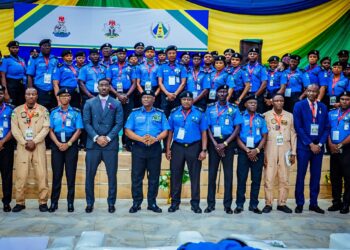
The Nigeria Police Trust Fund (NPTF) has commenced the training of 10,000 police officers on election security, stressing that the credibility of the 2027 general elections will depend not only on the electoral umpire but also on the ability of security agencies to guarantee a peaceful and safe voting environment.
The Executive Secretary of the NPTF, Mohammed Sheidu, stated this at the flag-off of the 2026 Election Security Training at the Nigeria Police Resource Centre in Jabi, Abuja, describing the exercise as a strategic investment in the operational preparedness of the Nigeria Police Force ahead of the forthcoming elections.
Sheidu said credible elections required security personnel who were adequately trained, properly equipped and capable of protecting voters, electoral officials and other stakeholders without compromising their fundamental rights.
“Electoral credibility does not rest solely on INEC; it also depends on the ability of security agencies to provide a safe and peaceful environment for citizens to exercise their democratic rights,” he said.
He identified specialised training, adequate equipment and operational mobility as critical to effective election security, noting that the programme would strengthen officers’ capacity to manage crowds, prevent conflicts, de-escalate tensions and respond lawfully to election-related incidents.
The NPTF executive secretary charged the participating officers to uphold discipline, professionalism and political neutrality, emphasising that their responsibility was to enforce the law and protect all citizens equally, irrespective of political affiliation.
He said the conduct of security personnel during elections was crucial to building public confidence and ensuring that eligible voters could participate in the democratic process without fear or intimidation.
Declaring the training open, the Inspector-General of Police, IGP Olatunji Disu, said the initiative was designed to equip officers with the skills and judgment required to make lawful decisions in high-pressure electoral situations.
Disu noted that elections could be accompanied by heightened tensions, provocation and misinformation, warning that officers must exercise restraint and avoid actions capable of aggravating disputes or undermining public confidence.
He stressed that discipline and respect for the law must guide police operations throughout the electoral period, adding that personnel must remain professional even when confronted with difficult or provocative situations.
The IGP also called for stronger collaboration among security agencies, noting that the scale of the 2027 general elections required a coordinated approach to identifying and addressing potential threats.
He highlighted the importance of cooperation with the Armed Forces and intelligence agencies to facilitate information sharing, improve threat assessment and ensure timely warnings that could help prevent electoral disruptions.
The Chairman of the Independent National Electoral Commission (INEC), Professor Joash Ojo Amupitan, SAN, represented by National Commissioner Rear Admiral Jamila Abubakar-Sadiq (rtd.), also underscored the importance of security in ensuring credible elections.
Amupitan said elections were fundamentally an exercise in public trust, which could be weakened by intimidation, physical threats, administrative disorder and security lapses.
He maintained that voters must be able to exercise their franchise in an environment free from fear, while electoral officials must be protected to carry out their responsibilities effectively.
The INEC chairman commended the focus on human rights-based and intelligence-led security management, noting that the approach reflected the police’s constitutional responsibility to protect the electoral process while respecting citizens’ rights.
The training is expected to strengthen the preparedness of police personnel for the 2027 general elections, particularly in preventing electoral violence, managing crowds, responding to security threats and ensuring the protection of voters and other electoral stakeholders.