

By Nkechi Eze
As Nigeria intensifies preparations for the 2027 general elections, Inspector-General of Police, IGP Olatunji Disu, has warned police personnel against partisan conduct, voter intimidation and other forms of electoral misconduct, declaring that officers who violate the law will face disciplinary action and prosecution.
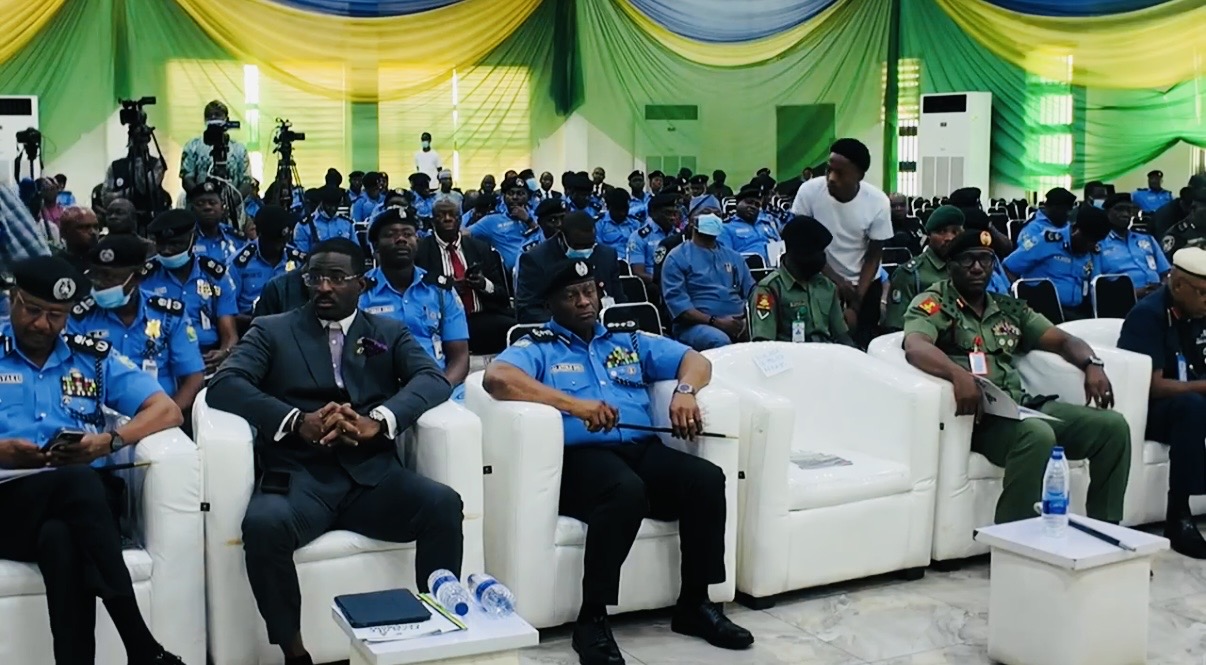
Disu gave the warning on Monday, October 19, 2026, in Abuja, while flagging off a five-day election security training programme designed to prepare 10,000 police officers for election duties nationwide.
He said the police had a constitutional responsibility to protect voters, electoral officials and materials, stressing that the success of the elections would depend partly on the ability of security agencies to provide a safe environment for citizens to exercise their democratic rights.
“Security is not an extra layer added on top of an election. It is the foundation beneath it. A voter who is afraid will stay at home,” the IGP said.
Disu explained that the training would equip middle-level officers with the knowledge and skills required to manage election-related challenges, including tension, provocation and misinformation. The exercise will also be replicated simultaneously at police zonal headquarters to ensure uniform standards across the country.
The programme covers electoral laws, police neutrality, rules of engagement, human rights and lessons from previous elections.
Emphasising the need for sound judgment during election operations, Disu told the participants that their responsibilities went beyond deployment to making lawful and professional decisions under pressure.
“We are not being trained here to deploy. We are being trained to judge, to decide correctly under pressure, and in line with the laws,” he said.
The police chief warned political parties, candidates and their supporters against violence, thuggery, ballot-box snatching and incitement, vowing that anyone attempting to disrupt the electoral process would be arrested and prosecuted.
He maintained that the Nigeria Police Force would remain neutral throughout the electoral process, insisting that its loyalty was to the Constitution and the Nigerian people rather than any political party or candidate.
Disu also disclosed that a dedicated 24-hour reporting line would be made available for members of the public to report misconduct by officers deployed for election duties, citing a similar arrangement during the Osun State governorship election.
Addressing the security challenges that could affect the polls, he identified terrorism and insurgency in the North-East, banditry and kidnapping in parts of the North-West and North-Central, as well as communal violence in some areas.
He said commanders in vulnerable locations would work with the Armed Forces and other security agencies to develop area-specific security plans, improve early-warning mechanisms and establish contingency arrangements for polling units, collation centres and electoral materials.
According to the IGP, intelligence sharing and inter-agency coordination would be critical to addressing potential threats, given the scale and complexity of a general election conducted across the 36 states and the Federal Capital Territory.
He urged the media and civil society organisations to support the electoral process through responsible reporting and public scrutiny, cautioning against the spread of unverified information capable of heightening tensions.
“In an election, a false report can do as much harm as a physical attack,” he said.
Representing the Chairman of the Independent National Electoral Commission (INEC), Rear Admiral Jamila Abubakar stressed that effective security was indispensable to credible elections, describing the training as timely in the lead-up to the 2027 polls.
She said INEC was working with security agencies at the national and state levels to develop a proactive, intelligence-driven framework for identifying and responding to electoral threats.
Abubakar added that election security required systematic planning, risk assessment and coordinated operations rather than ad hoc deployments, noting that close cooperation between electoral administrators and security personnel was essential to protecting the integrity of the process.
In his remarks, Executive Secretary of the Nigeria Police Trust Fund (NPTF), Mohammed Sheidu, said the Fund was supporting the training as part of efforts to strengthen police operational capacity ahead of the elections.
Sheidu identified training, adequate equipment and operational mobility as essential requirements for effective election security, adding that the programme would strengthen officers’ capacity in crowd control, conflict prevention, de-escalation, human rights protection and the lawful handling of election-related incidents.
He urged police personnel to conduct themselves in ways that inspire public confidence, particularly when dealing with vulnerable voters, including women, older persons and persons with disabilities.
“The success of this intervention will not be measured merely by the number of officers trained, but by the quality of service they render, the conflicts they help prevent and the confidence they inspire among Nigerians,” Sheidu said.
He further stressed that election security extended beyond voting day to include the collation of results, the management of public gatherings and the handling of post-election grievances.
The NPTF executive secretary reaffirmed the Fund’s commitment to supporting the police through investments in training, operational equipment and mobility, while commending Disu for his collaboration with the Fund.
The training initiative brings together officers and representatives of the Armed Forces, security and intelligence agencies, INEC and other stakeholders, with the objective of improving coordination and ensuring that police personnel discharge their election duties professionally, impartially and in accordance with the law.