

By Nkechi Eze
Terrorist groups are increasingly exploiting digital platforms and emerging technologies to expand their operations, recruit fighters, finance activities and coordinate across borders, prompting Nigeria’s National Counter Terrorism Centre (NCTC) and the African Union Counter-Terrorism Centre (AUCTC) to strengthen regional capacity to detect and disrupt technology-enabled terrorism across West Africa and the Sahel.
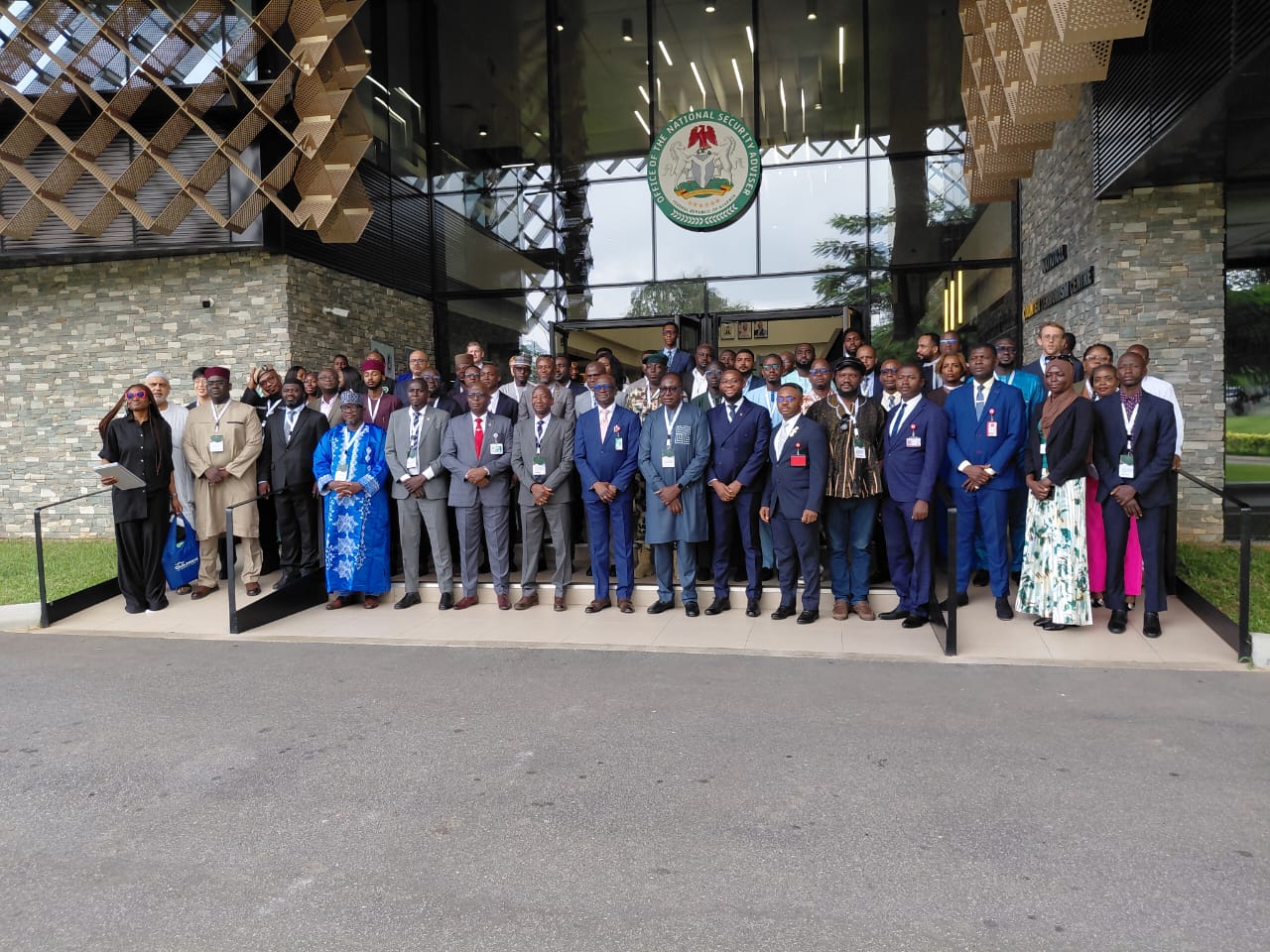
The initiative is being pursued through a three-day Regional Technical Training of Trainers on Detecting and Disrupting Terrorists’ Exploitation and Use of Information and Communication Technologies (ICT) and Emerging Technologies, organised by the NCTC, Office of the National Security Adviser, in collaboration with the AUCTC and the Sahel Fusion and Liaison Unit in Abuja.
The National Coordinator of the NCTC, Major General Adamu Laka, disclosed this while delivering the keynote address on behalf of the National Security Adviser, Mallam Nuhu Ribadu, at the opening of the programme.
Laka said terrorist and violent extremist groups were increasingly exploiting social media, messaging applications and other digital platforms for propaganda, recruitment, radicalisation, fundraising and cross-border coordination.
He added that emerging technologies, including artificial intelligence, drones, autonomous systems and virtual assets, had introduced new challenges requiring security agencies to improve their capacity to anticipate, identify, analyse and disrupt threats.
“Our objective is not merely to acquire sophisticated tools, but to develop people, institutions, processes and partnerships capable of using technology responsibly and effectively for counterterrorism,” Laka said.
He explained that the training-of-trainers model was designed to ensure that the knowledge acquired during the programme would extend beyond the participants, as they were expected to return to their respective countries to conduct national-level training and build sustainable technical expertise.
The NCTC coordinator called on participants to take ownership of the initiative by institutionalising the skills and knowledge gained and transferring them to other security and intelligence personnel.
He also emphasised the need for stronger regional cooperation, particularly in intelligence sharing, the timely exchange of actionable cyber threat information and the development of effective mechanisms for cross-border investigations.
According to him, the participation of representatives from West African and Sahelian countries, alongside the African Union, ECOWAS, the Multinational Joint Task Force and other regional and international organisations, provides an opportunity to strengthen professional relationships and operational cooperation.
“Information is most valuable when it is shared responsibly and transformed into actionable intelligence; this requires trusted relationships and effective systems,” he said.
Laka further disclosed that the NCTC was transitioning into a Regional Centre of Excellence for counterterrorism in West Africa and the Sahel, following President Bola Ahmed Tinubu’s declaration at the High-Level Africa Counterterrorism Summit in April 2024.
He said the Centre was working with the AUCTC to secure accreditation, which would enable it to extend its expertise, capacity-building programmes and coordination support to other countries in the region.
The National Coordinator also reaffirmed Nigeria’s support for the AUCTC Continental Cybersecurity Capability Programme for 2026–2030, describing it as an important framework for strengthening Africa’s ability to prevent, detect, disrupt and respond to the terrorist exploitation of cyberspace.
In his opening remarks, the Acting Director of the AUCTC, Usman Hussain, warned that terrorist organisations, including the Islamic State West Africa Province (ISWAP), Boko Haram and Jama’at Nusrat al-Islam wal-Muslimin (JNIM), were expanding their reach through digital technologies.
Hussain said the groups were exploiting social media for recruitment, mobile money and cryptocurrencies for financial transactions, darknet marketplaces for weapons procurement and satellite communications to evade detection.
He added that drones were expanding their operational capabilities, while artificial intelligence was being used to tailor propaganda and complicate efforts by security agencies to identify extremist activities.
“What makes this difficult is speed and cost. A cell with a modest budget can now reach audiences far beyond its physical presence and move faster than our procedures can respond,” Hussain said.
He, however, maintained that the technical capacity gaps among African countries could be addressed through targeted training, stronger regional coordination and collaboration with private-sector organisations.
The AUCTC acting director identified technical competence, regional coordination and private-sector collaboration as the three pillars of the initiative.
He said the training would cover cyber threat intelligence, open-source intelligence, digital forensics and blockchain analysis, equipping participants with practical skills to investigate online recruitment networks, preserve digital evidence and trace cryptocurrency transactions linked to terrorist financing.
Hussain stressed that technical findings must translate into effective investigations and prosecutions, rather than remain isolated intelligence products.
“A financial link should bring in your financial intelligence unit; properly preserved evidence should lead to a conviction, not a lost file,” he said.
He also called for stronger partnerships with social media platforms, telecommunications operators and financial service providers, noting that much of the infrastructure exploited by terrorists was privately owned.
According to him, such cooperation must be guided by applicable laws and respect for privacy and human rights to protect the integrity of investigations and maintain public trust.
Hussain further disclosed that participants would be required to conduct at least one national training session within six months of completing the programme. Full trainer certification would follow verified delivery, with toolkits, mentorship and monitoring provided by the Centre.
“You leave here not just carrying home a certificate, but a responsibility. The Centre will stand behind you. But the multiplier is you,” he said.
Earlier, the Director of Policy and Strategy at the NCTC, Commodore Rafiu Taye Oladejo, welcomed participants and urged them to maximise the training opportunity to strengthen their respective countries’ counterterrorism efforts through the effective use of existing and emerging technologies.
He expressed the hope that the programme would enhance regional capacity to detect and disrupt terrorist activities and deny violent extremist groups freedom of action in the technology domain.
The training is expected to strengthen technical expertise, improve intelligence-sharing mechanisms and establish a sustainable network of trainers to support regional efforts against terrorism and violent extremism across West Africa and the Sahel.