

President Bola Ahmed Tinubu has called on Nigerians in the diaspora to deploy their capital, expertise and global networks to support Nigeria’s drive towards a $1 trillion economy by 2030.
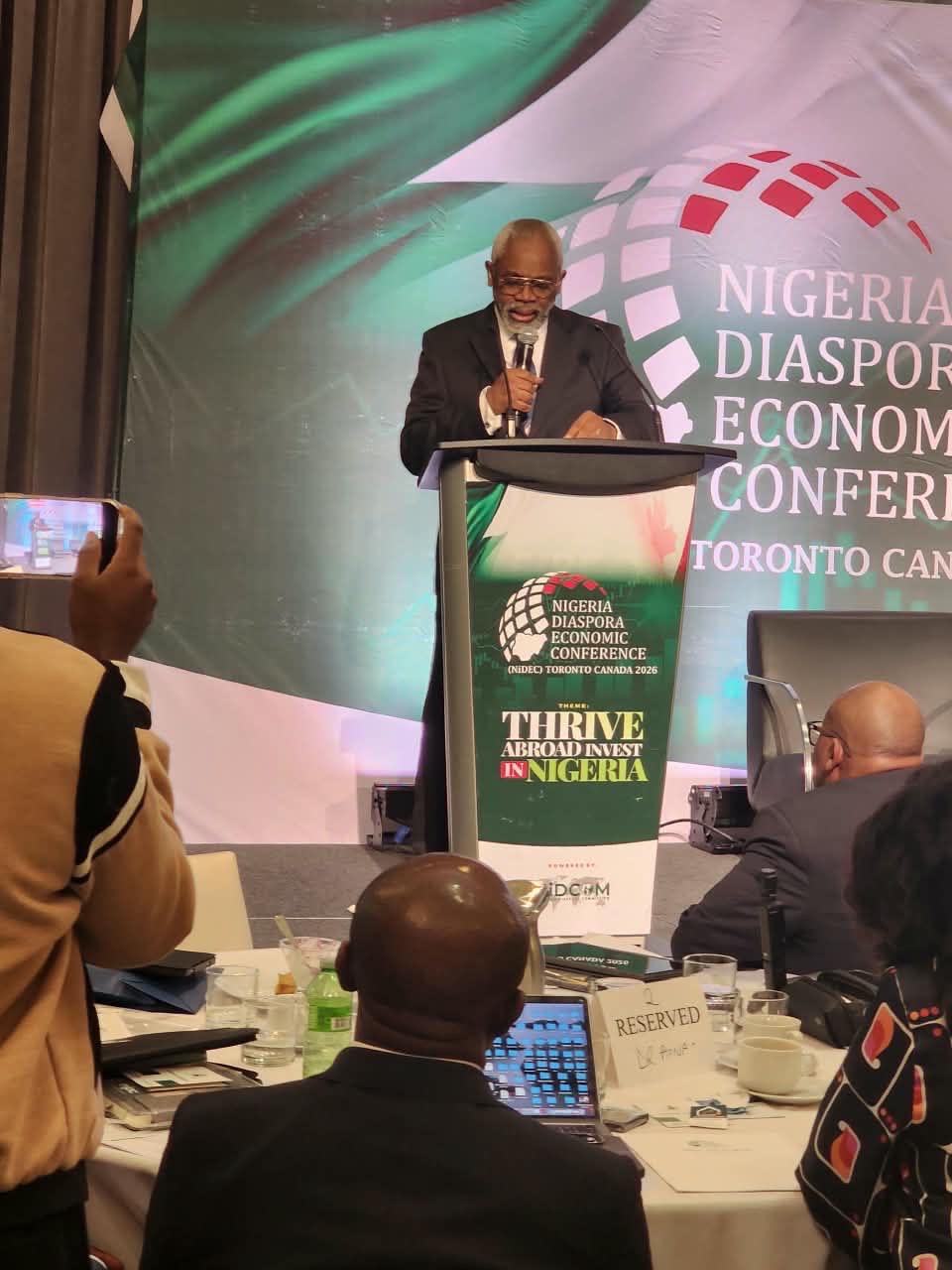
The President made the call on Thursday in Toronto, Canada, in a keynote address delivered on his behalf by the Chief of Staff to the President, Rt. Hon. Femi Gbajabiamila, at the Nigeria Diaspora Economic Conference (NIDEC) 2026.
The conference, themed “Thrive Abroad, Invest Nigeria,” brought together Nigerians in the diaspora, investors, entrepreneurs and other stakeholders to explore opportunities for stronger economic engagement between Nigerians abroad and the Nigerian economy.
According to an official statement delivered on behalf of President Tinubu, the President said Nigeria’s economic transformation could not be achieved by government alone, stressing that Nigerians abroad had a major role to play through investment, knowledge transfer and access to international markets.
“Remittances sustain consumption. Investment expands production. Expertise builds institutions. Networks open markets. Nigeria now needs all four,” President Tinubu said.
He described Nigerians in Canada as a demonstration of the capacity of Nigerians to excel globally, noting that they had distinguished themselves in medicine, technology, academia, entrepreneurship, public service, the arts and other fields.
The President said the administration’s $1 trillion economy target reflected the scale of jobs, investment, infrastructure, skills and productivity that Nigeria must generate over the coming years.
He acknowledged the difficulties created by the government’s economic reforms but maintained that the measures were necessary to correct structural weaknesses and establish a stronger foundation for sustainable growth.
President Tinubu said the administration had chosen “reform over postponement” and long-term national strength over short-term political convenience, noting that the reforms were beginning to produce measurable improvements in the economy.
He cited real GDP growth of 3.89 per cent in the first quarter of 2026, manufacturing growth of 3.29 per cent and the non-oil sector’s contribution of more than 96 per cent of total output.
He also noted that inflation had eased to 15.91 per cent, while Nigeria ended 2025 with foreign reserves of $45.4 billion, alongside improved exchange-rate stability and sustained trade surpluses.
According to the President, the International Monetary Fund had projected 4.1 per cent growth for Nigeria in 2026, while the World Bank had acknowledged progress in restoring macroeconomic stability and strengthening the country’s external and fiscal positions.
He, however, stressed that the improved indicators did not mean that Nigeria’s economic challenges had been resolved, saying the next phase of the reform programme must focus on accelerating productivity and ensuring that economic gains translate into more jobs, lower living costs and stronger domestic industries.
President Tinubu urged diaspora Nigerians to invest in productive sectors rather than limit their involvement to property acquisition or remittances.
He specifically encouraged investments in agro-processing, healthcare, technology, energy, housing, logistics, mining, education, creative industries and export manufacturing, saying Nigeria could serve as a platform for accessing the wider African market through the African Continental Free Trade Area.
He also called on Nigerians abroad to organise their investments through professionally governed diaspora investment clubs, sector funds, co-investment vehicles, venture networks and institutional partnerships.
“Pool capital. Demand audited accounts. Insist on proper governance. Conduct due diligence. Engage credible professional advisers,” he said.
The President further urged the diaspora to invest their intellectual capacity and professional experience in Nigeria, stressing that expertise could be as transformative as financial capital.
He encouraged Nigerians abroad to mentor entrepreneurs, establish research partnerships with Nigerian universities, support healthcare institutions, facilitate access to Canadian markets and connect Nigerian businesses to technology, financing and international distribution networks.
“The question should not only be, ‘How much did I send?’ It should also be, ‘What capability did I help Nigeria build?’” he said.
President Tinubu assured diaspora Nigerians that government would continue to strengthen the investment environment by providing predictable rules, transparent project pipelines, credible counterparties, efficient consular services, stronger property rights and faster dispute resolution.
He cited the Non-Resident Nigerian Ordinary Account, Non-Resident Nigerian Investment Account and non-resident Bank Verification Number as measures aimed at making it easier for Nigerians abroad to manage funds and participate in the Nigerian financial system.
He said more measures would be introduced to deepen diaspora participation in the Nigerian economy, assuring that the government remained committed to earning and sustaining the confidence of Nigerians abroad.
The President also called for an expansion of the concepts of “Nigeria First” and “Local Content” to encompass Nigerians in the diaspora investing in Nigeria.
According to him, the relationship between government and the diaspora should be based on mutual responsibility, with government providing access, accountability and predictable rules, while Nigerians abroad contribute investment, expertise and candid counsel.
He also urged Nigerians in the diaspora to support Nigeria’s stability even when they disagree with government policies, stressing that political differences should not undermine the country’s economic future.
“Elections will produce winners and losers; Nigeria must always win,” he said.
The President maintained that criticism remained an essential part of democracy but urged Nigerians abroad to ensure that their criticism was factual, proportionate and directed towards correcting national challenges.
He further called on Nigerians abroad to see themselves as ambassadors of the country, saying their professional achievements and conduct contribute to Nigeria’s global reputation.
Concluding his message, President Tinubu urged the diaspora to make concrete commitments beyond conference speeches and communiqués, including funding enterprises, mentoring young Nigerians, opening export routes, establishing research partnerships and strengthening institutions.
“Thrive abroad. Invest Nigeria. Speak of Nigeria with truth. Correct her with love. Build her with confidence,” he said.
Gbajabiamila, who delivered the address on the President’s behalf, also challenged Nigerians in the diaspora to embrace the task of making Nigeria great, saying their capital and expertise would be critical to achieving the objective.
He noted that Nigeria possessed abundant natural resources, arable land and significant human capital, urging Nigerians abroad to take advantage of the opportunities available in the country.
“Making Nigeria great is a task that must be done,” he said, adding that Nigerians in the diaspora must play a major role in accomplishing the task.
The NIDEC 2026 is being held at the Apollo Convention Centre in Toronto, Canada, from August 13 to 15, with discussions focused on strengthening diaspora investment and economic partnerships between Nigeria and its citizens abroad.