

By Nkechi Eze
The Fiscal Responsibility Commission (FRC), in collaboration with the Centre for Social Justice (CSJ) and with support from the Rule of Law and Anti-Corruption (RoLAC) Programme, has commenced the validation process for the Second Edition of the Fiscal Responsibility Index (FRI), a key initiative aimed at strengthening transparency, accountability, and fiscal discipline across Federal Ministries, Departments and Agencies (MDAs).
According to an official signed statement by Deputy Director, Strategic Communications Directorate, Fiscal Responsibility Commission, Bede Anyanwu, the validation exercise marks a significant step in assessing and benchmarking the compliance of MDAs with Nigeria’s fiscal governance framework and the provisions of the Fiscal Responsibility Act.
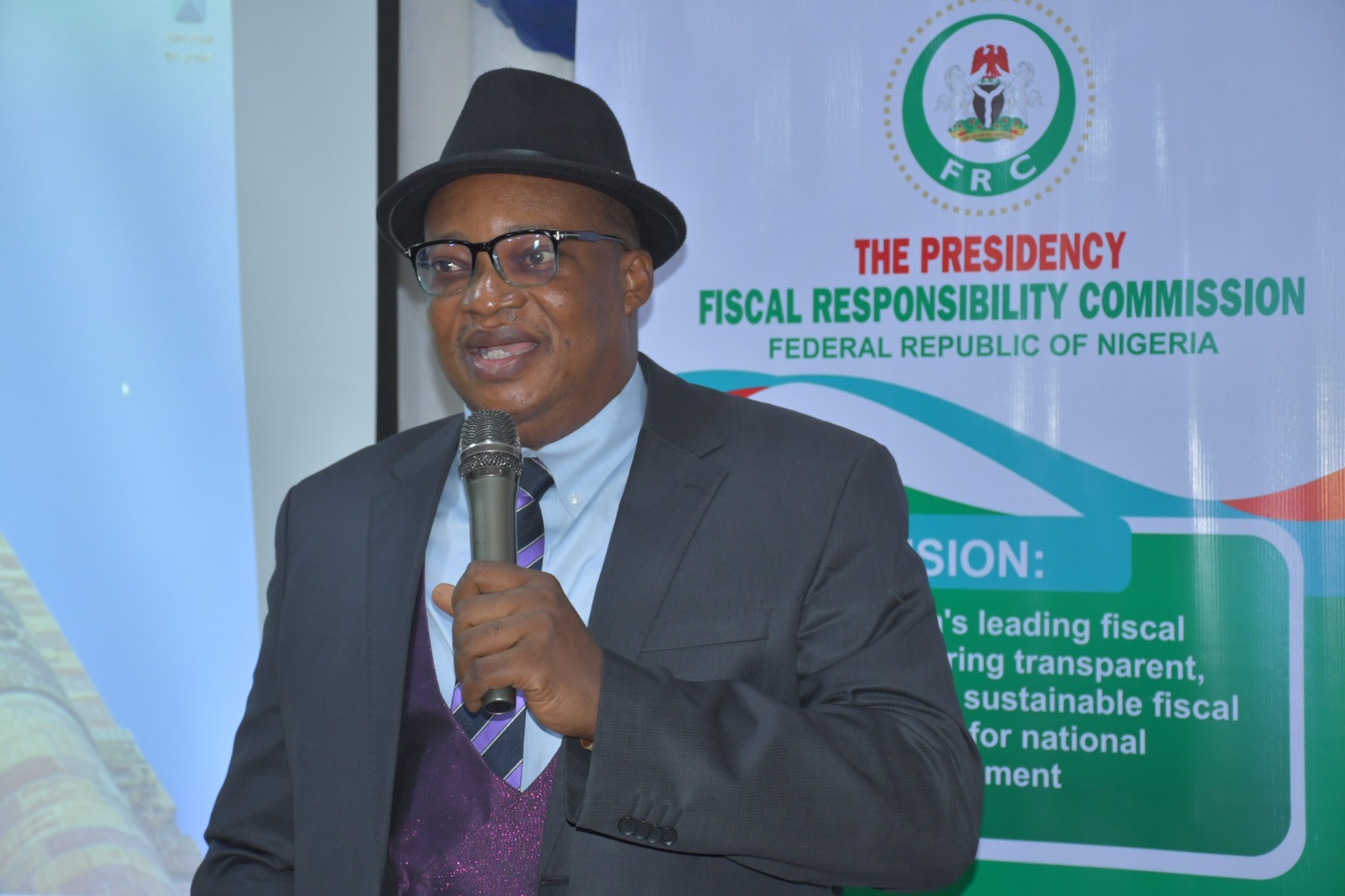
Speaking at the validation meeting in Abuja, Lead Director of the Centre for Social Justice, Eze Onyekpere, described the exercise as the second phase of a comprehensive framework designed to measure fiscal responsibility across federal institutions. He noted that the initiative comes at a critical period as Nigeria prepares to mark the 20th anniversary of the Fiscal Responsibility Act next year.
Onyekpere observed that between 30 and 32 states have enacted Fiscal Responsibility Laws to promote accountability and prudent management of public resources. He stressed the importance of sustaining public policies and legal frameworks, noting that meaningful national development depends on consistent investment in both financial and human resources.
“We must invest not only money but also human capacity to make Nigeria a country where citizens can thrive and realize their aspirations rather than seeking opportunities abroad,” he said.
He explained that the Fiscal Responsibility Index serves as an objective platform for evaluating the level of compliance of MDAs with fiscal regulations while providing evidence-based assessments that can drive improvements in institutional performance.
In his keynote address, Acting Chairman of the Fiscal Responsibility Commission, Charles Chukwuemeka Abana, described the validation meeting as a critical milestone in Nigeria’s efforts to strengthen fiscal discipline, public accountability, and transparency in the management of government resources.
Abana commended the Centre for Social Justice for its sustained partnership with the Commission and noted that the inaugural edition of the Fiscal Responsibility Index achieved notable success despite funding and institutional challenges.
He explained that the Index was developed as an innovative tool to assess compliance by MDAs with the Fiscal Responsibility Act, 2007, and other financial regulations guiding public expenditure management. According to him, the first edition generated valuable insights into institutional performance, encouraged healthy competition among public institutions, and demonstrated that transparency and accountability can be measured and improved through objective assessment mechanisms.
“The second edition builds upon lessons learned from the inaugural exercise. It incorporates stakeholder feedback, enhanced methodologies, and refined indicators to ensure greater accuracy, objectivity, and relevance,” Abana stated.
He emphasized that the exercise is not intended merely to rank institutions but to strengthen governance systems, improve compliance with fiscal regulations, and enhance public confidence in government financial management processes.
The Acting Chairman further disclosed that the Commission plans to institutionalize the Fiscal Responsibility Index as a regular assessment mechanism to facilitate continuous monitoring and evaluation of fiscal governance outcomes across MDAs.
Presenting the framework and methodology for the Second Fiscal Responsibility Index, Professor Ugochukwu Amakom, a consultant from the Institute of Development Studies, University of Nigeria, Enugu Campus, highlighted the crucial role of sound fiscal policy in driving sustainable economic growth and development.
He expressed concern over Nigeria’s growing debt burden, stressing that public borrowing must yield measurable benefits and improved living standards for citizens. He also identified several factors hindering effective budget implementation, including conflicting regulations, inadequate executive and managerial capacity, weak fiscal discipline, poor financial management systems, and ineffective management controls.
Professor Amakom further underscored the importance of transparency and accountability initiatives such as quality-based budgeting, budget comprehensiveness, and budget credibility as essential components of effective public financial management.
Stakeholders at the meeting agreed that the Fiscal Responsibility Index remains a vital instrument for promoting compliance, transparency, accountability, and value-for-money in public expenditure management.
As part of the exercise, questionnaires for the second Fiscal Responsibility Index were distributed to participating MDAs, with a one-month deadline for completion and submission to the Fiscal Responsibility Commission.
The Commission explained that the assessment is designed to encourage accountability and enable Chief Accounting Officers to better understand the impact of their decisions on institutional performance and compliance. It stressed that the exercise is not intended as an indictment of any MDA but rather as a constructive fact-finding process aimed at identifying gaps, promoting reforms, and strengthening systems for improved fiscal responsibility and good governance across the public sector.
With Nigeria facing increasing fiscal pressures and growing developmental demands, stakeholders expressed optimism that the successful implementation of the second edition of the Fiscal Responsibility Index will provide a robust framework for measuring institutional performance and advancing responsible fiscal governance throughout the country’s public sector.